
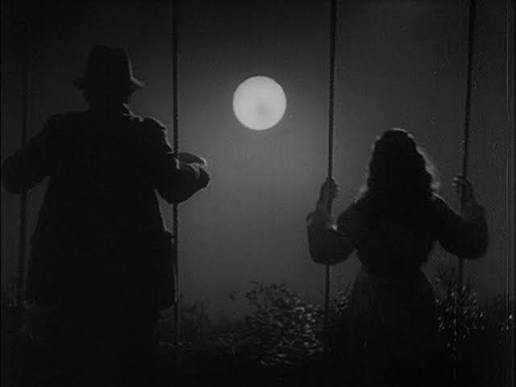
Leaving Kurosawa’s years of oppressive propaganda behind, World War II. I transitioned to the painful American occupation period after World War II. This time, there are two films on the table in which Kurosawa began to become fully liberated and laid the foundations of the social realist and human-oriented cinema we know: No Regrets for Our Youth (1946) and One Wonderful Sunday (1947). These two films, shot in the atmosphere of a shattered Japan that had just emerged from the devastation of the war, are, in my opinion, the master’s most naive but striking depiction of the resistance of the human spirit and its struggle to hold on to life.
lost his job. A Woman’s Struggle for Existence: No Regrets for Our Youth Frankly, while watching this movie, I noticed something that I am not familiar with in Kurosawa’s cinema; The focus was on a completely strong, self-sufficient female character (Yukie). I watched a huge character development, starting from the university protests before the war and extending to the harsh conditions of village life. The movie seemed so harsh and realistic to me at times that I felt sick while watching the scenes where Yukie was working in the fields covered in mud, her hands as if they were falling apart.
Here, I think Kurosawa chose to tell the war not through the eyes of the soldiers at the front, but through the eyes of those left behind, those who sacrificed everything for their beliefs. In my opinion, Yukie’s effort to leave the bourgeois life and write her own destiny was one of the most powerful “rising from her own ashes” stories I have watched in the history of cinema. Being Happy When We Don’t Have a Penny in Our Pocket: One Wonderful Sunday One Wonderful Sunday put me in a completely different mood.
We watch how an engaged couple (Yuzo and Masako) with only 35 yen in their pockets try to spend a whole Sunday in the ruined, poor streets of post-war Tokyo. I think the movie had an incredibly sweet, melancholic, yet hopeful tone. They look at cheap house advertisements, run an imaginary cafe, conduct an imaginary orchestra behind a makeshift theater… While watching, it made me feel like I was watching the tale of two lovers trying to build a small shelter for themselves with the last shred of hope in a post-apocalyptic world, just like Pink Floyd’s The Final Cut album.
The famous scene towards the end of the movie, where Yuzo is standing against the wind, conducting an imaginary orchestra in the middle of an empty, amphitheatre-like ruin, was, in my opinion, simply fascinating. Philosophy and Symbolism Notes In these two films, I tried to capture Kurosawa’s secret symbols and philosophical inquiries about life. Yukie’s Piano (No Regrets for Our Youth): I think the piano that Yukie played at the beginning of the movie was a symbol of her comfortable, carefree and elite youth life.
It seemed to me that after the war and the realities of life intervened, the sound of the piano faded away and was replaced by the sounds of hoeing in the field, actually depicting the transition from a fake artistic aesthetic to the raw and harsh reality of life. Muddy Soil and Hands: I think Yukie’s stubborn digging of muddy soil in the village, despite the exclusion of the villagers, embodied a complete Zen philosophy.
The land here is not just an agricultural area; It was as if it were a symbol of the purification of the soul, the effort to get rid of the sins and pain of the past and take root. Masako’s Look at the Camera (One Wonderful Sunday): In the imaginary orchestra scene, Masako’s movement when she turns and looks directly at us, the audience, at the camera, as if to say, “Please applaud, too, so we don’t lose hope.” In my opinion, it was one of the purest, most sincere “breaking the fourth wall” moments in the history of cinema.
I think Kurosawa was directly addressing not only the couple in the movie, but also all the Japanese people who survived the war, saying, “Despite everything, don’t stop dreaming.” Rain and Shelters: The makeshift buildings where the couple took shelter from the rainstorm made me feel, in a very naive way, that the only real castle in which one can take shelter against the great economic and social storms that life brings is “love and being together”.
Final Word With these two films, I can now see more clearly how Kurosawa’s genius of “pointing out social wounds and dealing with people in their simplest form” began to shine. In terms of tempo, it was a viewing session that caught me much more than the first films and had a very high emotional rhythm. Thus, I think we have left the apprenticeship and transition phases of the early Kurosawa behind us. Now, I feel ready to move on to that real dark, haunted world of Kurosawa cinema, the streets of crime and the birth of the legend of Toshiro Mifune.
In his next diary, Kurosawa is about to dive into the streets of crime and conscience with the famous Drunken Angel.





Comments
You can write your views about this story. Comments may be moderated according to site settings.