
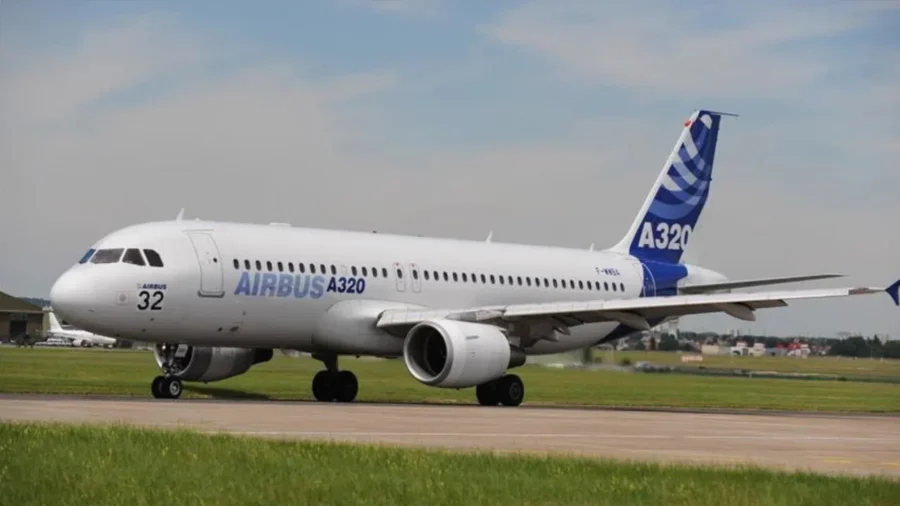
Airbus signed a new partnership agreement with Mistral AI, one of Europe’s leading artificial intelligence companies. The agreement covers Airbus’ broader use of advanced, ethical and reliable artificial intelligence in its operations and processes, from the initial design stage to on-board systems. Airbus agreed with Mistral AI for aircraft and defense systems. The partnership will expand Airbus’ use of artificial intelligence in commercial aircraft, helicopters, defense and space activities.
The company will adhere to security and sovereignty requirements throughout this process. Critical, highly confidential and military aviation applications are also included in the scope of the agreement. Airbus Vice President of Digital Catherine Jestin said that the partnership paves the way for high-impact applications for the reliable and responsible use of artificial intelligence in aviation. Jestin stated that they created the necessary foundations for Airbus’ current and future products and services with Mistral AI’s high-performance models and expert support.
Mistral AI Co-Founder and Technology Director Timothée Lacroix stated that they are proud to cooperate with Airbus. Lacroix said that Mistral’s fully integrated artificial intelligence infrastructure will be used in Airbus’ critical industrial operations, accelerating innovation processes, contributing to flight safety and providing more value for customers. Within the scope of the agreement, Airbus will receive a license for all product packages of Mistral AI.
Thanks to these licenses, the models can be used in on-premises systems, in reliable cloud environments, or in different infrastructures suitable for Airbus and its customers. The partnership will also provide Airbus with access to Mistral AI’s leading researchers and influence on the artificial intelligence product roadmap. This structure will pave the way for the development of special solutions for complex aviation problems.
Airbus and Mistral AI have identified several main areas for cooperation. Work has started on some of these. Simplification of complex workflows in industrial operations and automation of technical document production, especially for commercial aircraft and helicopters, are discussed. Artificial intelligence-supported simulations will be used on the engineering and design side. This includes optimizing aircraft parts, accelerating design cycles, and providing special support to engineers in the development, testing and certification stages.
In new generation products, the use of artificial intelligence models on spacecraft and aircraft, that is, with an end-point artificial intelligence approach, is being considered. Applications such as automatic object recognition fall under this heading. These areas of use will be evaluated in systems related to situational awareness and flight safety. In the field of defense, artificial intelligence solutions specific to military needs are on the agenda.
Applications such as cyber review and coding assistant will be supported by highly secure in-house installations.


Comments
You can write your views about this story. Comments may be moderated according to site settings.