
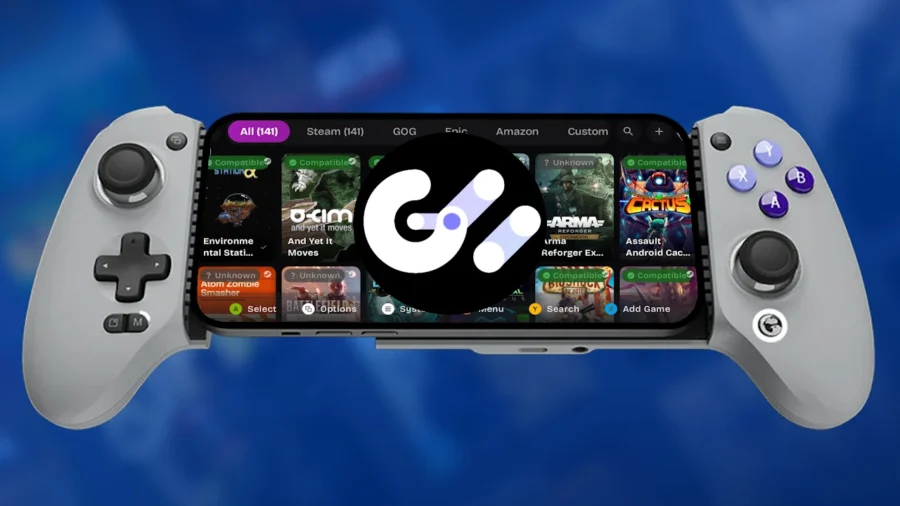
On the Android side, applications that run PC games locally without an internet connection are becoming increasingly visible. GameNative, one of the most notable projects in this field, offers support for Epic Games Store, GOG and independent game files as well as Steam games. Utkarsh Dalal, the developer of the application, says that Android devices can become a real alternative to portable gaming PCs with GameNative.
GameNative competes with portable gaming PCs. GameNative is an application built on the Pluvia project and uses Proton, FEX and different software components to run PC games on Android devices. The application allows games owned via Steam to be installed and run on Android devices. However, support is not limited to Steam alone; Epic Games Store, GOG and independent game files can also be used in GameNative. The idea of running PC games on Android is not new.
Applications such as Winlator have created great interest in this field by 2023. GameNative, on the other hand, differs with its structure that reduces the installation and adjustment burden on the user side. The known configs feature in the application automatically selects the optimal settings in terms of performance and stability for certain games. Thus, users do not need to manually configure each game. GameNative’s developer, Utkarsh Dalal, states that in their long-term road map, they want to make Android devices an option that can replace portable gaming PCs with GameNative.
According to Dalal, a two-year timeframe for this transformation is realistic. However, today, devices such as Steam Deck and ASUS ROG Ally continue to have an advantage in terms of game compatibility. The main reason for this is that these devices use x86 processors and offer a more natural architectural compatibility with PC games. The majority of Android devices come with ARM-based processors. Therefore, translation layers, compatibility tools and additional software components are needed to run PC games natively.
GameNative and similar applications offer these components to the user in a single structure. Dalal admits that portable gaming PCs are currently better on the performance and compatibility side; However, he says that Android-based handheld consoles are rapidly developing in terms of price, portability and processor power. One of the examples Dalal gives is the $ 400 Odin 3. According to him, these types of Android-based portable devices can become more powerful, cheaper and wider game compatibility options within two years.
GameNative is also expected to develop in the same period to offer better compatibility on different devices. Snapdragon 8 Elite and Snapdragon 8 Elite Gen 5 processors hold an important place in this table. Qualcomm’s new high-end chips bring serious performance increases on the CPU side and significant improvements on the graphics side. However, these processors initially offered limited potential for GameNative and high-end emulation applications due to the lack of open source Turnip drivers.
This situation began to change with the release of the first Turnip drivers for the Snapdragon 8 Elite series in early 2026. Turnip drivers play a critical role in high-end emulation and running PC games on Android, with community-developed optimizations and bug fixes, especially on Adreno GPUs. Dalal says that they got very good results from the first Turnip builds on Snapdragon 8 Elite and especially 8 Elite Gen 5.
The developer states that it can run games such as Hitman World of Assassination and Cyberpunk 2077, but there are occasional freezes in Cyberpunk 2077. GameNative developer recommends Snapdragon 8 Elite series devices to users who want to run PC games on Android, but adds that the drivers are still in the maturation process. Problems may persist in some games. On the other hand, Dalal sees these processors as a better choice in terms of performance and long-term use.
Valve’s work on Linux and ARM is also directly effective in the development of GameNative. Valve’s Proton compatibility layer allows Windows games to run on Linux. This is also a key component for applications that run PC games on Android, such as GameNative and GameHub. FEX, supported by Valve, converts x86 commands used in PC games into ARM commands. Valve’s release of a native Steam client for ARM-based Linux platforms also opens a new door for GameNative.
Dalal says that they have prepared a Proton 11-based compilation for GameNative and users are trying it. The fact that the native Steam client can run on ARM devices with almost no additional load provides a significant gain for GameNative in terms of online gaming, Steam integrations and store features. Dalal is also testing a version in which the Steam ARM Linux client is integrated into GameNative. It is stated that this integration can be released together with GameNative v1.0 if everything goes as planned.
GameNative’s official GitHub page also includes information that the application can run games owned via Steam, Epic and GOG on Android devices, offers cloud saving support and is still in its early stages. One of the most important features of GameNative is the known configs system. This system brings together the feedback and technical data received from the user after exiting the game. Users can leave a star rating and tick options such as crashes or controller issues.
The system also collects technical signals such as the device’s GPU family and the FPS range in the gaming session. This data is used to determine the optimal setting for a particular game, device and GPU combination. Algorithm; It takes into account factors such as freshness of feedback, session duration and user ratings. Dalal states that GameNative has achieved significant gains in compatibility and popularity after the known configs feature became the default in February.
GameNative will remain free and open source. Dalal says that no advertising, user data revenue model or paywall is planned for the application. On the revenue side, collaborations with game stores, game discovery and purchase flows within the platform, and new access channels, especially for independent game developers, are being evaluated. Deeper integrations with hardware manufacturers are also on the agenda. GameNative’s open source structure ensures that external contributions to the project come faster.
Dalal also reminds that one of the rival applications, GameHub, was criticized for its tracking tools and wide permission list. On the GameNative side, community contribution plays a decisive role in the development of both new features and hardware compatibility. The application is not limited to Snapdragon devices only. GameNative took its first support step for the Pixel 10 family this year. The Pixel 10 series is in a hardware line that generally receives more limited attention in the emulation community because it uses the Imagination PowerVR GPU.
Dalal states that this support is provided by the open source community and developer pipetto-crypto through the Mesa graphics wrapper. Google making GPU drivers more open could offer a wider optimization area for projects like GameNative. Dalal cites Qualcomm’s community-supported Turnip project for Adreno drivers as an example. On the Samsung side, there is also support for the Xclipse GPU in Exynos processors. This support is again provided by the work of pipetto-crypto, and better compatibility on the Exynos side is included in the GameNative road map.
The expansion on the Android side can also be seen in the official release notes of GameNative. v0.9.2 adds the first PowerVR GPU support for Pixel 10, auto-optimization support for Epic, GOG, and Amazon, Steam Workshop app, support for Steam game versions and branches, download and storage manager, Samsung DeX support, and various fixes for Steam cloud saves.




Comments
You can write your views about this story. Comments may be moderated according to site settings.