
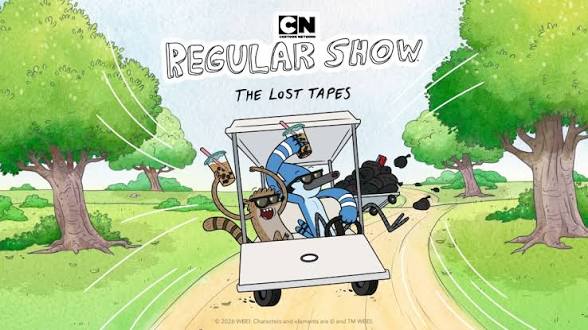
Regular Show: Lost Tapes reintroduces the park dynamics we know in a very solid, technically rich and nostalgic framework. Going beyond the classical animation narrative we are used to, this new season focuses on a period full of maturation pains, where characters learn to accept the chaos in the world instead of fighting it. The team is more professional and well-established. Below, I have mentioned the summaries of the events that took place through the official episode list of the season and the deep internal changes that the characters went through during this process, if you are interested.
Episode 1: “Fix That Tape / Skips’ Luau” In the season opener, Mordecai and Rigby mess up as usual while trying to fix an old video tape in the park. Meanwhile, Skips is organizing a traditional Hawaiian Luau in the park. The process of repairing the tape and Skips’ party become absurdly connected. In this episode, the characters first experience that trying to fix something that is broken in a hurry and forcefully actually makes things more complicated.
Episode 2: “Blade Games” The atmosphere of a nostalgic street game or arcade tournament begins to prevail in the park. Mordecai and Rigby go overboard with their rivalry and completely disrupt the park’s daily operations. Despite Benson’s harsh warnings, the duo succumb to the temptation of the game. However, as the episode progresses, they realize that this game is not just a simple entertainment, but a tool that triggers the hidden childish rivalry between them and their ambition to defeat each other.
Episode 3: “Nap Spot” This is definitely the clearest and most talked about episode of the season. The story, which begins with Rigby looking for a quiet place to take a nap in the park, suddenly evolves into a process where control is lost. The episode relies entirely on “dreamcore” aesthetics and “lucid dreaming” themes. Rigby is trapped in that uncanny dream labyrinth created by his own mind, where time and space bend.
Mordecai makes a great effort to get his friend out of this mental loop. With its visual language and psychological depth, this episode is a candidate to be one of the most successful works in the history of Regular Show. Episode 4: “Coffee Shop Wars” An absurd polarization begins among the park residents over coffee consumption and local coffee shops. Mordecai and Rigby take different sides, turning it into a war of prestige.
The episode, which shows how a small consumption habit can lead to a huge crisis, reveals how quickly the characters can organize and turn against each other even in simple disagreements. Episode 5: “Boba or Bo-Bust” The Park team is forced to confront the latest popular culture and new generation trends (via boba tea). The consumption craze of the modern world comes face to face with park employees who are used to living the old-fashioned way.
While the characters follow this popular trend, they begin to question how much they have sacrificed their own identities. Episode 6: “Corpse Flower” The team is alarmed when a rare and very smelly corpse flower blooms in the park. The smell of this flower and the discomfort it creates reveal the old notebooks that the park residents have long swept under the rug and their resentments towards each other. While trying to escape from a physical odor, they actually face their inner uneasiness.
Episode 7: “Beginson” The most refined episode of the season in terms of popular culture literacy and music history. The episode features a major crossroads and intra-group conflict between Benson and the park team. This process led to one of the most famous events in the music world; It contains very clear and clever references to Dave Mustaine’s harsh expulsion from Metallica. The ambitious feeling of revenge brought about by being excluded from the band/team and the subsequent internal collapse are told with a subtlety that can only be captured by those who truly know the subject, while remaining faithful to the musical background of the series.
But I may have over-read too much, after all, Benson is the drummer, Dave Mustaine is the guitarist, a very good drum machine comes to Benson’s band, but pickaxe guitarist Kirk Hammett comes to Metallica. Episode 8: “Good Mitch Spiking” In this episode focusing on Muscle Man (Mitch), the character’s past, habits and position in the park are discussed. Behind Muscle Man’s reckless and rude exterior, his more vulnerable and caring side to his friends emerges.
The team learns to respect Muscle Man’s decisions and re-accept that he is part of the park in his own way. 9. Episode: “Stilt Walkers” In the season finale, park residents reach physical and metaphorical heights by trying to balance on stilts. The tension brought on by looking down, the effort to stay in balance, and the fear of falling spreads throughout the episode. The characters close the season by understanding in the most concrete way in this episode how much they need each other to maintain the balance in their lives.
Character and Changes This Season Mordecai: Mordecai, who made those hasty and impulsive decisions in the previous seasons, is replaced by a much more stoic and constructive character in this season. Especially the patient and protective attitude he displays in the “Nap Spot” episode, where Rigby reaches a mental impasse, proves his maturity in friendship bonds. This season, Mordecai learned to accept the situation as it is and stay calm, instead of solving life crises with panic.
Rigby: Rigby, whom we know with his selfish nature that avoids responsibility, is going through a serious internal growth phase in this season. The fact that he personally experiences the harms of being alone in his own dream cycle makes him a more careful observer of his environment. This season, Rigby learned to know his limits and take responsibility, realizing that his steps and laziness affected not only himself but the entire park.
Benson: That old, constantly yelling and outbursts of anger manager figure is replaced by deeper fatigue and questioning in this season. Those ostracism and management crises, especially in the “Beginson” episode, caused him to reevaluate his authority and his human relations with his employees. Benson has learned this season that she cannot control everything and everyone perfectly, and that setbacks are a natural part of life.
Skips: Skips, the park’s traditional source of knowledge that finds radical solutions to every problem, realized this season that his own knowledge has limits in the face of new generation problems and complexities. Realizing that he could not have complete control, he learned to trust the methods of young people when necessary and to keep up with the changing world. Pops: Pops, the pure and clean soul of the park, was the only figure that kept the human and emotional side of the team alive in this season.
He silently reminded his friends who were lost in trends and fights that friendship and pure intentions are more permanent than anything else. Result: Regular Show: Lost Tapes was a season in which the characters faced not only absurd threats from outside, but also their own internal weaknesses and maturation processes. This production, which successfully incorporates niche details such as the dreamcore aesthetics in “Nap Spot” and the musical history references in “Beginson” into the plot, offers a completely new breath without boring the fans.
It has become a series not to be missed for Frpnet readers and comic lovers, showing how the series can evolve in such a high quality way while remaining true to its roots. I will be back with other cartoons and cartoon network content. We have completed 10 seasons of Adventure Time. Let’s continue with Distant Lands and stay tuned. I would be very happy if you follow me and frpnet on Instagram. My name is BraveStrikeTR.




Comments
You can write your views about this story. Comments may be moderated according to site settings.