
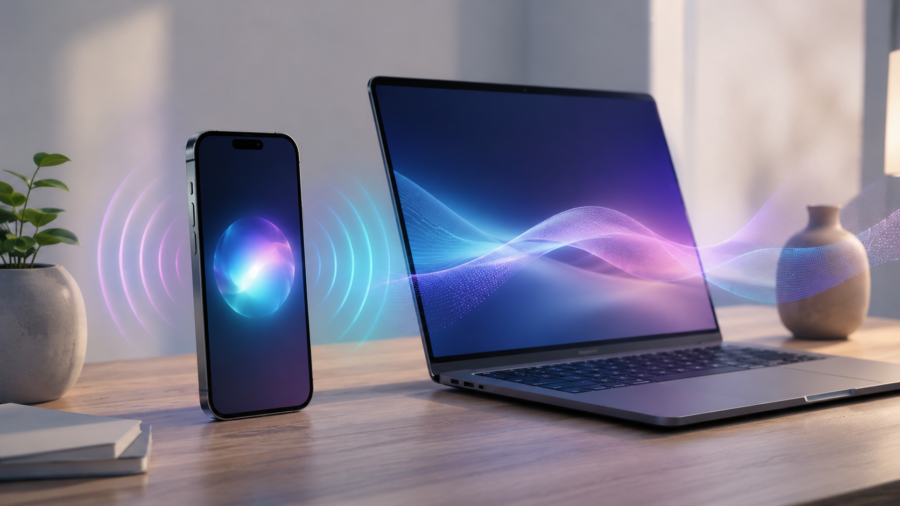
Apple Intelligence has already arrived on Apple devices, but for many users, one big question remains: when will Siri feel truly smarter?
That question could become the main story of WWDC 2026.
Apple is widely expected to show a major AI upgrade for Siri at its developer conference. According to TechCrunch, the revamped Siri is expected to become more conversational, better at understanding context and more capable of handling multi-step tasks across apps and services.
That would be a major shift for Apple. Siri has been part of the iPhone experience for years, but it has often felt limited compared with modern AI assistants. While chatbots can summarize documents, answer follow-up questions and understand longer prompts, Siri has still been strongest at simple commands like setting timers, sending messages or checking the weather.
Apple’s challenge is clear. If Apple Intelligence is going to matter to everyday users, Siri needs to become the place where those AI features actually feel useful.
Why Siri matters so much
Apple does not need to convince people that AI exists. Users already see AI features in search, photo editing, writing tools, chatbots and productivity apps.
What Apple needs is a smoother way to bring AI into the devices people already use every day.
That is where Siri matters.
A smarter Siri could connect AI features across the iPhone, iPad, Mac and Apple Watch. Instead of opening several apps or typing long prompts, users could ask Siri to complete tasks in a more natural way.
For example, a more capable Siri might help summarize a message thread, find a photo from a specific trip, schedule a plan using information from multiple apps or answer a follow-up question based on what is already on screen.
Those are the kinds of tasks that would make Apple Intelligence feel less like a feature list and more like a useful assistant.
What the new Siri is expected to improve
The biggest expected change is context.
Current voice assistants often struggle when a request depends on previous information. They can answer simple commands, but they may fail when the user asks something more natural or layered.
A more advanced Siri could understand what the user is looking at, what app they are using and what they asked a moment earlier. That would make conversations feel less robotic.
TechCrunch reports that Siri’s makeover is expected to focus on conversational ability, context awareness and multi-step actions. Those three areas matter because they address the biggest weaknesses of older voice assistants.
A useful AI assistant should not only hear words. It should understand the situation.
That does not mean Siri will suddenly become perfect. Apple will still need to limit what the assistant can do for privacy, safety and reliability. But even a moderate improvement could make a big difference if it works consistently.
Why Apple is under pressure
Apple is entering this moment later than some competitors.
OpenAI, Google, Microsoft, Anthropic and Meta have moved quickly in generative AI. Google has Gemini across search, Android and Workspace. Microsoft has Copilot in Windows and Office. ChatGPT has become a familiar name even outside the tech world.
Apple’s strength is different. It controls the hardware, software and ecosystem for hundreds of millions of devices. If Apple gets AI right, it can make those tools feel deeply integrated.
But if Siri still feels slow or limited, Apple Intelligence may struggle to feel important to ordinary users.
That is why WWDC 2026 matters. Apple does not only need to announce AI. It needs to show that AI can make daily iPhone and Mac use easier.
The privacy angle
Apple will likely frame its AI strategy around privacy.
TechCrunch previously reported that Apple’s Siri revamp could include privacy-friendly design choices such as auto-deleting chats. Apple has already promoted Apple Intelligence as using on-device processing where possible and Private Cloud Compute for more complex requests.
This could become one of Apple’s strongest arguments.
Many users like AI tools but worry about what happens to their data. A personal assistant may need access to messages, calendar events, photos, files and app activity. That makes privacy more important than in a normal chatbot.
If Apple can make Siri smarter while keeping sensitive information protected, it could create a clear difference from cloud-first AI assistants.
The key word is “if.” Privacy claims need to be matched by clear controls, simple explanations and reliable user trust.
Could Siri use Google Gemini?
Several reports suggest Apple may use Google Gemini technology as part of Siri’s AI upgrade.
That would be interesting because Apple usually prefers to control core technologies tightly. But advanced AI models are expensive and difficult to build. Partnering with Google for some model capabilities could help Apple improve Siri faster while focusing on the device experience and privacy layer.
This should still be treated as reported information until Apple confirms the details.
For users, the provider matters less than the result. A smarter Siri needs to be fast, accurate and useful. If it depends on a mix of Apple models, on-device processing and outside model support, most users will care mainly about whether it works.
What users should expect carefully
The biggest mistake would be expecting Siri to become a flawless personal assistant overnight.
AI assistants can still misunderstand instructions. They can make mistakes, miss context or fail inside apps. Apple also tends to roll out major features gradually, especially when privacy and reliability are involved.
So the better question is not whether Siri will become “the best AI assistant” immediately.
The better question is whether Apple can make Siri noticeably more useful for everyday tasks.
If users can ask more natural questions, complete actions across apps and trust the assistant with personal context, that would be a meaningful step forward.
Why this could affect the iPhone
A stronger Siri could also make future iPhones feel more different from older models.
In recent years, many smartphone upgrades have felt incremental. Better cameras, brighter screens and faster chips are useful, but they do not always change how people use the device.
AI could become a stronger reason to upgrade if new features depend on newer chips, more memory or improved on-device processing.
That does not mean everyone should rush to buy a new iPhone. But it does mean AI may become part of the next major smartphone upgrade cycle.
If Siri becomes the main interface for Apple Intelligence, then the iPhone’s AI hardware and software will become much more important.
The bigger takeaway
Apple’s expected Siri AI makeover is not just about a voice assistant. It is about whether Apple Intelligence can become useful in daily life.
A better Siri could connect AI to messages, photos, calendars, apps, files and device actions in a way that feels natural. That would make Apple’s AI strategy easier for ordinary users to understand.
But Apple has to prove three things: Siri must understand context better, complete real tasks reliably and protect user privacy clearly.
If Apple gets that balance right, Siri could finally become more than a simple command tool. It could become the front door to Apple Intelligence.
WWDC 2026 may show whether Apple is ready to make that jump.




Comments
You can write your views about this story. Comments may be moderated according to site settings.