
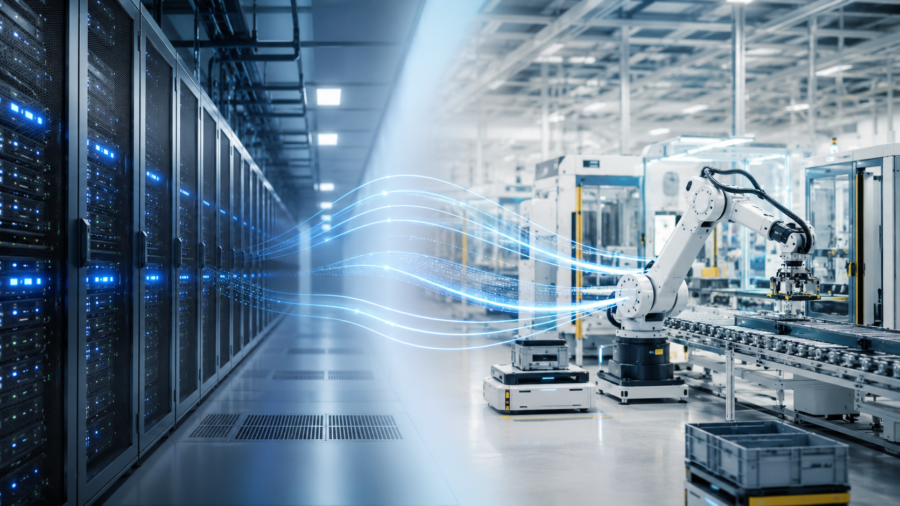
AI is often described through chatbots, apps and new laptop features. But behind every useful AI tool is a much larger physical system: chips, servers, cooling, networking, power and manufacturing.
That is why the new Foxconn and Intel partnership matters.
Foxconn and Intel have announced a strategic collaboration to develop next-generation AI infrastructure and intelligent computing platforms. According to Reuters, the partnership will focus on AI data center systems, Intel Xeon processor-based server racks, AI accelerator chips, high-speed interconnects, cooling designs and energy efficiency.
That sounds like a data center story, but it is bigger than that.
The companies also plan to explore AI systems for factories, smart cities and robots. In other words, this is not only about making cloud AI faster. It is also about building the hardware foundation for AI to move into the physical world.
Why AI infrastructure matters
AI does not run on ideas alone.
Every AI model needs computing power. When someone uses a chatbot, an image generator, a coding assistant or a business automation tool, the request is processed by hardware somewhere. That hardware may be inside a giant cloud data center, a company server room, a local workstation or eventually an edge device near a factory machine.
As AI demand grows, infrastructure becomes more important.
Companies need systems that can process more AI requests, use less energy, stay cool and scale reliably. That is especially important as AI moves from training large models to running them for millions of users every day.
This is where Foxconn and Intel’s partnership fits in. Intel brings processors, AI accelerator technology and software expertise. Foxconn brings manufacturing scale, system integration and global supply chain experience.
Together, they want to build more complete AI systems, not just individual chips.
What Foxconn brings to the partnership
Foxconn is best known as one of the world’s largest electronics manufacturers. Many consumers know it indirectly because it has produced devices for major technology brands.
But Foxconn’s role is broader than assembling consumer electronics. The company has been expanding into electric vehicles, smart manufacturing, robotics, AI infrastructure and industrial technology.
For AI infrastructure, this experience matters.
Building server racks is not only about placing chips on boards. Companies need power delivery, cooling, networking, mechanical design, telemetry, manufacturing quality and supply chain coordination. Foxconn’s strength is turning complex hardware designs into large-scale systems.
Reuters reported that Foxconn will work with Intel on systems that target AI data centers and intelligent computing platforms. Intel’s Computex announcement also said Foxconn will provide system integration capabilities for rackscale AI infrastructure.
That means Foxconn could help turn Intel-powered AI systems into production-ready hardware.
What Intel gains
Intel is trying to strengthen its position in the AI infrastructure market.
The company has strong data center CPU technology with Xeon processors, but it faces intense competition from NVIDIA, AMD, custom AI chips and cloud provider hardware. AI infrastructure is now one of the most important battlegrounds in computing.
By partnering with Foxconn, Intel can push more complete systems rather than only selling chips.
That matters because AI customers increasingly want integrated solutions. A company building an AI data center does not only ask which chip is fastest. It also cares about rack design, energy use, cooling, software support and deployment speed.
Intel’s Computex AI announcement highlighted rackscale systems combining Intel Xeon processors with AI acceleration hardware. Foxconn’s system integration role can help make those systems easier to deploy at scale.
For Intel, this partnership is a way to compete deeper in the AI infrastructure stack.
Why this goes beyond data centers
The most interesting part of the announcement is the wider ambition.
Reuters reported that Foxconn and Intel plan to expand AI beyond traditional data centers into factories, smart cities and robots. This connects directly to the larger trend known as edge AI and Physical AI.
Edge AI means more AI processing happens closer to where data is created. A factory machine may analyze sensor data locally. A robot may need to make quick decisions without waiting for a cloud server. A smart city system may process traffic or safety data near the source.
Physical AI goes one step further. It connects AI to machines that act in the real world, such as robots, automated factory tools or warehouse systems.
Those use cases require reliable hardware, low latency and efficient computing. A cloud data center alone is not enough.
This is why AI infrastructure is becoming more distributed. Some AI will run in giant data centers. Some will run on laptops. Some will run inside factories and industrial systems.
Why cooling and energy matter
AI computing uses a lot of power.
As AI workloads grow, energy efficiency and cooling become central problems. Data centers must manage heat, electricity costs and environmental pressure. Industrial AI systems also need reliable thermal design, especially when they operate in factories or edge locations.
That is why the Foxconn-Intel partnership includes cooling and energy efficiency.
This may sound less exciting than AI models, but it is essential. A faster AI system is not useful if it is too expensive to run or too difficult to cool.
For ordinary users, this affects the cost and availability of AI services. If AI infrastructure becomes more efficient, companies can run more AI workloads with lower operating costs. That can influence pricing, performance and access.
The future of AI may depend as much on cooling systems and power design as on model breakthroughs.
What this could mean for smart factories
Smart factories are one of the clearest places where AI infrastructure could matter.
A factory can use AI to inspect products, predict machine failures, optimize energy use, guide robots and manage production lines. But many of those tasks require fast local processing.
If a camera detects a defect on a production line, the system may need to respond instantly. Sending everything to a distant cloud server may not be practical.
That is where edge AI infrastructure becomes useful.
Foxconn’s manufacturing background makes this especially relevant. The company understands factory systems because manufacturing is at the center of its business. Intel can provide computing platforms that support AI analysis, automation and industrial workloads.
Together, they could build systems that help factories use AI more directly.
Why robots are part of the story
Robots need AI infrastructure too.
A robot may use cameras, sensors, mapping systems and language models. It may need to understand its environment, plan movements and respond safely around people.
Some of that processing can happen inside the robot. Some may happen on a local server nearby. Some may happen in the cloud. The best setup depends on latency, safety, cost and task complexity.
Foxconn and Intel’s mention of robots shows how AI infrastructure is expanding from cloud computing into physical machines.
This does not mean humanoid robots will suddenly become common. The more realistic near-term use cases are industrial robots, warehouse robots, factory automation and inspection systems.
But the direction is clear: AI hardware is moving closer to the real world.
What is still unknown
The partnership sounds important, but several details are still missing.
Reuters reported that the companies did not disclose financial terms, customer names or a launch timeline. That means it is too early to say how quickly the collaboration will affect the market.
It is also unclear how the systems will compare with NVIDIA-based AI infrastructure, AMD platforms or custom chips built by major cloud providers.
The announcement is best understood as a strategic move, not a finished product that customers can buy immediately.
Still, the direction matters. Intel wants stronger AI infrastructure relevance. Foxconn wants a larger role in AI systems. The market needs more hardware capacity and better deployment options.
The bigger takeaway
The Foxconn and Intel partnership shows that AI competition is moving beyond individual chips.
The next stage of AI infrastructure will depend on complete systems: processors, accelerators, racks, cooling, networking, energy efficiency and manufacturing scale.
This matters because AI is no longer limited to chatbots in the cloud. It is moving into factories, smart cities, edge systems and robots. Those environments need hardware that is powerful, efficient and reliable.
Foxconn and Intel are trying to build part of that foundation.
For ordinary readers, the takeaway is simple. The AI tools people use every day depend on a hidden world of physical infrastructure. As AI becomes more common, that infrastructure will need to expand beyond data centers and into the places where real work happens.






Comments
You can write your views about this story. Comments may be moderated according to site settings.