
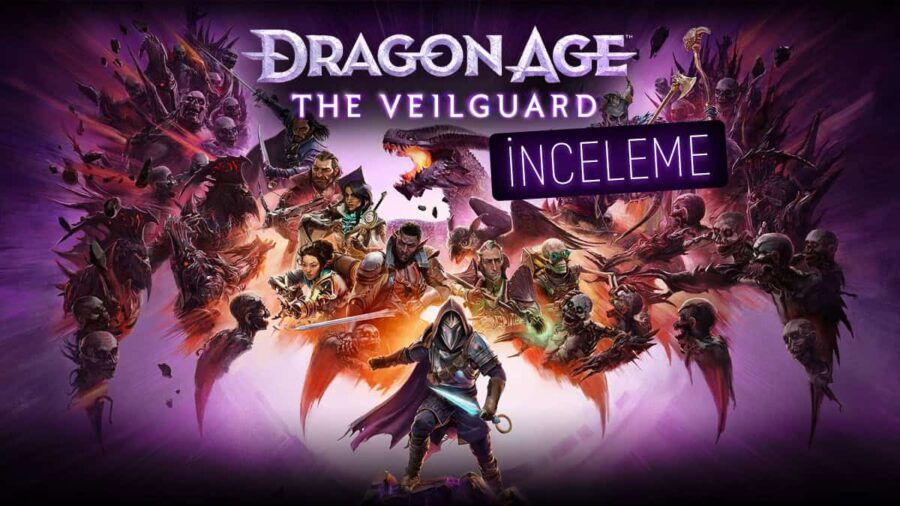
Dragon Age: The Veilguard is the newest installment of the series, which started 10 years later with Dragon Age: Origins, the king of dark RPGs. The release of The Veilguard is actually a big event for both RPG lovers and fans of the genre. Because the release of a new Dragon Age game that will take us to Thedas again means that the sleeping giant BioWare has also woken up.
But after nearly 60 hours of gameplay with Dragon Age: The Veilguard, I wish BioWare would continue to sleep, and I wish Thedas and its heroes would remain as we remember.
Because although Dragon Age: The Veilguard offers wonderful views with its magnificent graphics, A far cry from the hopeless, dark and deep Thedas depicted in Dragon Age: Origins. It was a production filled with airbags in every aspect, avoided taking risks in its narrative, became repetitive with its combat formula, and became unbearable with its dialogues.
But behind the blunt dialogue and the new veneer that throws away the brutal unreality of Thedas, there’s still something to love about Dragon Age: The Veilguard. The maps that make the exploration experience very enjoyable, the detailed character design and development system, and the admirable accessibility options are among the game’s strongest aspects.
But these are not all the things I have to say about the new Dragon Age games that I have been waiting 10 years for. Let’s give The Veilguard a full rating and discuss all its aspects.
The Evolution of BioWare Magic
The only reason why we hold BioWare games to the highest places in our hearts is the believability of the worlds they depict.
BioWare achieves this credibility not with high-end graphics, high production values or strange cinematic sequences, but with well-constructed characters and deep dialogues. That’s why remembering a scene from Mass Effect 2 is like remembering an impressive book I’ve read before.
your characters Even the dialogues he makes outside of the cutscenes bear traces of both his own stories and Thedas. Although the impressiveness of these traces decreases with each new Dragon Age game, I think even Dragon Age 2, the weakest link of the series before The Veilguard, has achieved this to some extent.
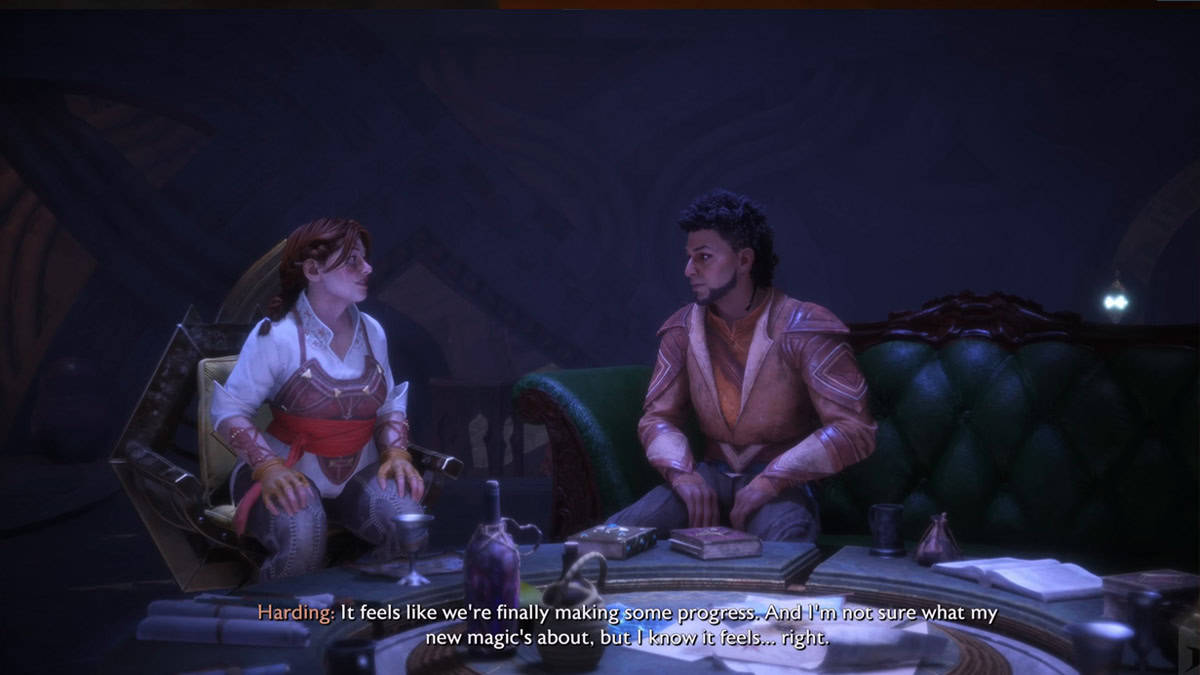
The Veilguard’s report card on this issue is mixed. Because it feels like half of the game’s dialogues were written by designers who worked long hours at BioWare, and the other half was written by an intern who was asked to write test dialogues in a modern youth series.
But the rawness of the conversations and the tones that feel very modern compared to a dark fantasy world are not the only problems of the dialogues. In addition, the formula of “your decisions affecting the game”, which is the most basic element of an RPG, is almost absent in the dialogue decisions you choose in the first part of the game.
It’s hard at first to feel like the things you say to other characters and the dialogue decisions you make actually have an impact. However, we should not be harsh here. Because the dialogue system of Dragon Age: The Veilguard becomes relatively better in terms of both fiction quality and its impact on the story at later points.
However, The Veilguard has a problem, especially with the Rook character and his RPG muscles that feel relatively limited. slow-burner, so I think it is a game that shows its effect slowly and will slowly gain your sympathy. But For those who loved Dragon Age: Origins, I’m sure this will take much longer, or maybe even never happen.
A Toned Down RPG-lite
I’m definitely not happy with the direction Dragon Age is going with The Veilguard. With this decision, I understood from the first marketing elements of the game that it wanted to appeal to a new audience, not the old fans of the series. However, I think that the audience The Veilguard appeals to does not really exist.
The game erases everything you did as Warden and Hawke in the Dragon Age games, which take place in a dark and brutal universe, and restarts the series in a universe that is much easier to look at and softened in every aspect. But there is a paradox here.
Because players who love the series with The Veilguard, Whatever I’ve done up to this point won’t matter. He won’t want to look at previous games. It will also be difficult to get used to the difference in tone from previous games. Players who experienced wonderful stories in Origins and its sequels will find almost nothing to connect with in The Veilguard. Then who is the audience of this game? Who did you play this game for?
If your goal is to make an RPG-lite that everyone can play but no one will love, and in the process strip away almost everything that makes the series great, I congratulate BioWare. Because they’ve made a forgettable action game that you can consider buying on sale, that looks good and feels more like a hack-and-slash game than an RPG.
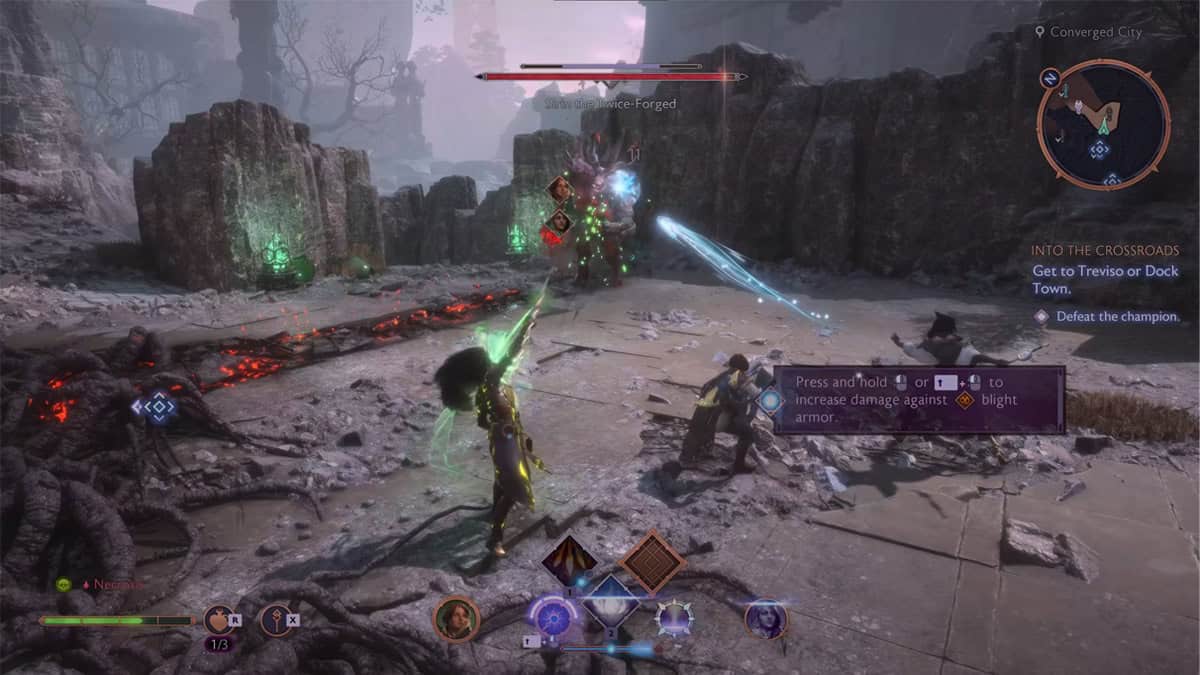
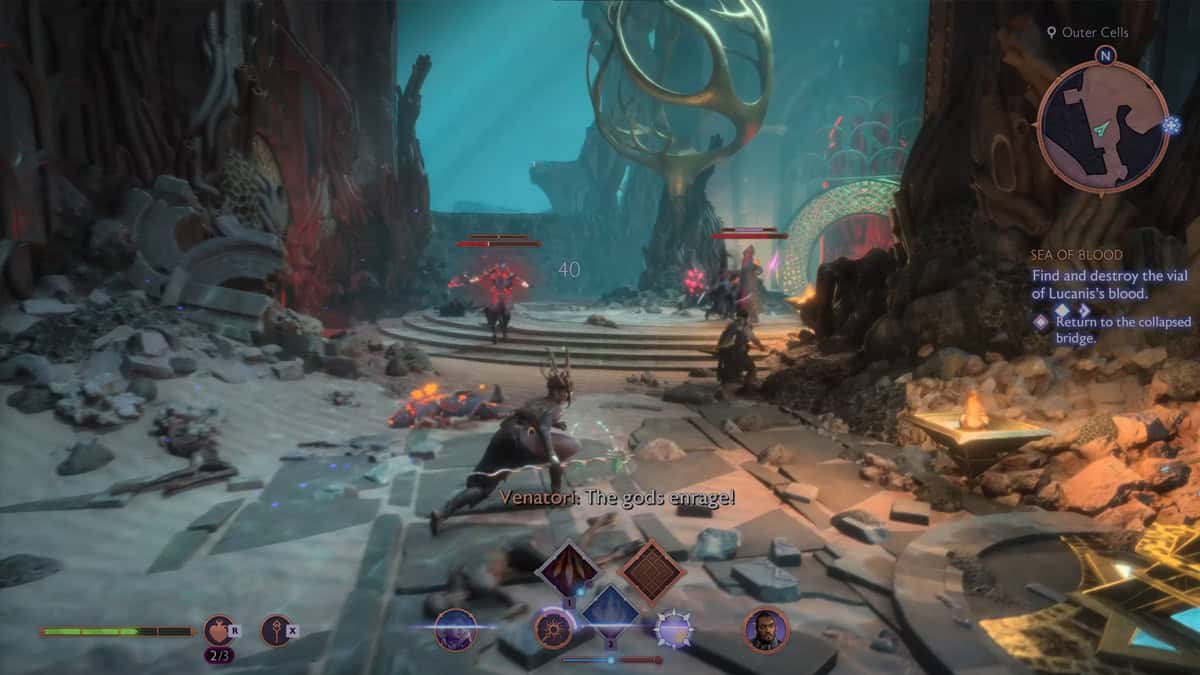
But fortunately, the combat system is the game’s strongest, perhaps even its only, strength. Although it’s a combat formula heavily diluted with an RPG aspect, The Veilguard’s action system becomes enjoyable and rewarding as you unlock new skills.
A Game Afraid of Depth

In terms of map design, The Veilguard took the limited but full world of Origins as an example, as opposed to the large but repetitive levels of Dragon Age: Inquisition.
Despite the game’s rhythm problems, exploring these areas is enjoyable. But the combat system, like almost all other aspects of The Veilguard, loses its impact and reveals its superficial side. Contrary to the breadth in character design, being experimental in any action sequence can often cause battles to last too long and become more boring.
Here, successfully designed leveling mechanics come into play. A large and flexible skill tree, similar to what we saw in Path of Exile, is supported by item upgrades that you directly feel strengthen your character. Thus, you can create your own play style and create different fighting combinations with your companions.

Action and character development aspects are the only aspects that make Dragon Age: The Veilguard better than the previous parts of the series. But when it comes to an RPG – and it is a BioWare RPG – I prefer a believable world and realistic dialogue to great combat mechanics. Therefore, as an RPG game, what should have brought The Veilguard forward was not the combat system, but a good mix of the elements that make a good RPG.
It’s Like It’s Impossible Not To Understand The Veilguard’s Problem

I feel like The Veilguard’s main story is making fun of the players’ cognitive skills as well as the legacy left behind by the series. Not only was the entire main story shallow and predictable; He snuggled into the eyes of the player at every opportunity.
In an environment where giants like Elden Ring, which do not say anything to the player, let alone explain their problems to the player, have conquered the industry, The Veilguard treats you as if you have just learned the alphabet.
As an RPG game, it does not allow you to add depth to your character. Therefore, what is left is where everything is thrust into your eyes and you are literally surrounded by it. just good or good and angry There remains a story in which you can become someone.
The bad guys are depicted as if they were washed with chemicals. There is no ethical gray area left in The Veilguard. In the first game of the series, we could befriend a convicted Qunari who murdered a family and witness his mental journey, and in Dragon Age 2, we could have mercy on a murderer who had lost his mind.
These decisions directly affected our character’s story and created various realistic ethical dilemmas in a fantastic unreality. The old Dragon Age remained modern and realistic by depicting the events that disturb us on a fantastic level. The new Dragon Age, on the other hand, has appeared with a series of dialogues that imitate Netflix’s youth series in order to be modern.
Don’t give a message here and woke culture Let me underline that I am not talking about your goals. Moreover, even when such messages are exposed to the eye, if I can find something meaningful in the essence of the product, of course I am not bothered by any problem of representation. Why would I be?
However, if the essence of the product consists solely of messages – whatever the message is – I do not feel that it has passed on to me, nor do I believe that those who place the messages there are sincere.
Last Word
Although BioWare has produced its best game in terms of production values since Mass Effect 3, it is a shame that it avoids risks even in action formulas. So much so that God of War has been poorly imitated at many points, from the way Rook opens the chests to the presentation choices of the game. What remains is a game that has nothing original about it, has no connection with Dragon Age, and will barely be enjoyable for players new to the RPG genre.
There are no great aspects of The Veilguard that can overcome its frequently glaring negative aspects and make you ignore its shallow dialogues loaded with modern goals. However, it can keep you satisfied for a while with its dynamic combat system, level mechanics, cinematic sequences and great graphics.
However, BioWare’s Dragon Age legend, which started with Dragon Age: Origins, stumbled with Dragon Age 2, and signaled that it could grow much more with Dragon Age: Inquisition, has almost crashed to the ground with The Veilguard, a product that is shallow in every aspect, does not know where to appeal, and has a bright but hollow packaging.
Positive
- Thedas looks great
- Detailed character editor
- Leveling and progression experience is great
- Dozens of different accessibility options
Negative
- Unconvincing, shallow dialogues
- Simple main story that is predictable in every way
- Characters out of depth
- Diluted RPG mechanics that turn their back on everything that made the Dragon Age series great






Comments
You can write your views about this story. Comments may be moderated according to site settings.