
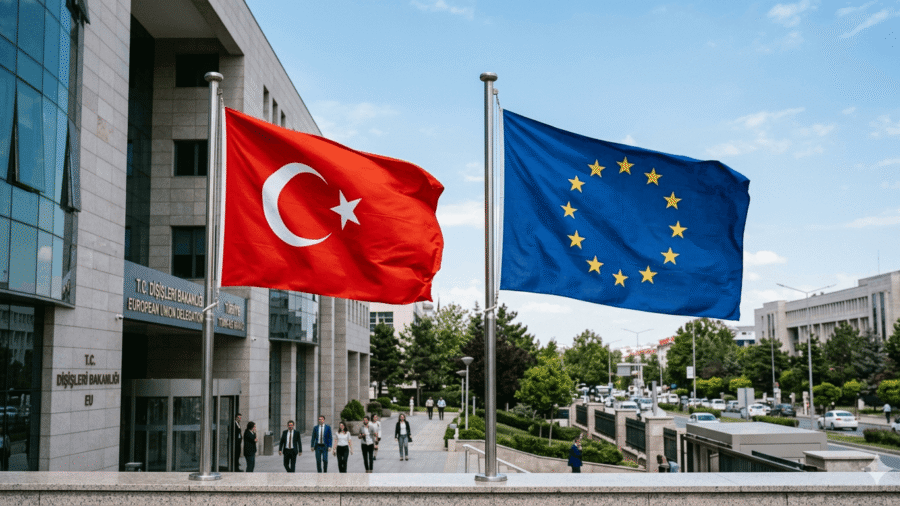
Hello, as you know, as automotive manufacturers, we have been living with the made in EU doctrine since the beginning of the year. The Draft Industrial Accelerator Act (IAA), officially announced by the European Commission last March, clearly demonstrated the EU’s will to transform the “Made in EU” doctrine into a legal and financial shield. The intense diplomatic traffic and critical bureaucratic developments experienced in last April and May also began to clarify the limits of this new protectionism shield and the rules of the game.
The most concrete development of the last two months was the completion of the official public consultation process regarding the draft law as of May 20, 2026. During this process, hundreds of actors, from European industrialists to global trade partners, from think tanks to non-governmental organizations, presented their position papers to Brussels. At the center of the discussions is a rather radical article: The obligation to use “Made in EU” or equivalent parts, ranging from 40 percent to 100 percent, in public procurement and strategic state supports.
Leading European think tanks such as Bruegel warned in their reports published in April that these strict domestic content rules could conflict with World Trade Organization (WTO) norms. Industrialists continue to worry that hasty protectionism could send supply chain costs skyrocketing. However, despite all these objections, the idea of increasing the share of the continent’s manufacturing industry in gross domestic product (GDP) from 14.3 percent to 20 percent by 2035 shows that the EU will not step back.
So, what are we doing as Türkiye in the face of these developments? We are undoubtedly one of the countries where the “Made in EU” doctrine is felt most warmly. The Customs Union partnership between Türkiye and the European Union actually paved the way for products of Turkish origin to be considered “EU origin” within the scope of this law, in principle. The comprehensive position document prepared in April under the coordination of the Ministry of Commerce and the Turkish Exporters’ Assembly (TİM) was submitted to the EU Commission and the rights of the Turkish industry were tried to be protected.
So where is the critical threshold? Although Türkiye is a member of the Customs Union, it is a country that does not have a “reciprocal public procurement agreement” with the EU. The protectionist walls of the new law risked completely excluding Turkish companies from EU tenders. Fortunately, the intensive shuttle diplomacy carried out in May seems to have been in our favor in order to ensure that Turkish export products do not lose this “priority supplier” status.
In this way, the strict rules brought by the doctrine, on the other side of the coin, become a huge foreign direct investment (FDI) opportunity for Türkiye. The interest of Chinese automotive and battery giants, who have had difficulty entering the European market recently, in Turkey will gain a new dimension with this draft law. A production to be made in Turkey will be treated as “Made in EU” in the European market, thanks to the Customs Union.
This could accelerate global manufacturers’ positioning of Turkey as a “safe haven” and “production base” to avoid harsh customs duties and protectionist quotas. For example, regarding the automotive industry, there is a 0 “Made in EU” requirement for commercial and corporate electric vehicle support. At least 50% of the components other than the battery will be required to be supplied from the EU or equivalent market.
This means new investments coming to us. In summary, what awaits us? The draft law, which has completed the public consultation process as of June 2026, is now on the table of the European Parliament and the Council of the European Union. It will take its final shape through negotiations and votes by the parties in the coming months. A period of global trade is about to come in which uncertainties for industrialists decrease but walls of protectionism rise.
Thus, the process of regaining the economic sovereignty of the EU community will begin. As long as we read this transformation correctly, accelerate green industry investments and strengthen our place in diplomacy, we will continue to be one of the EU’s most indispensable partners in this new era. However, we must always pay attention to our contacts and work hard. I hope we succeed.


Comments
You can write your views about this story. Comments may be moderated according to site settings.