
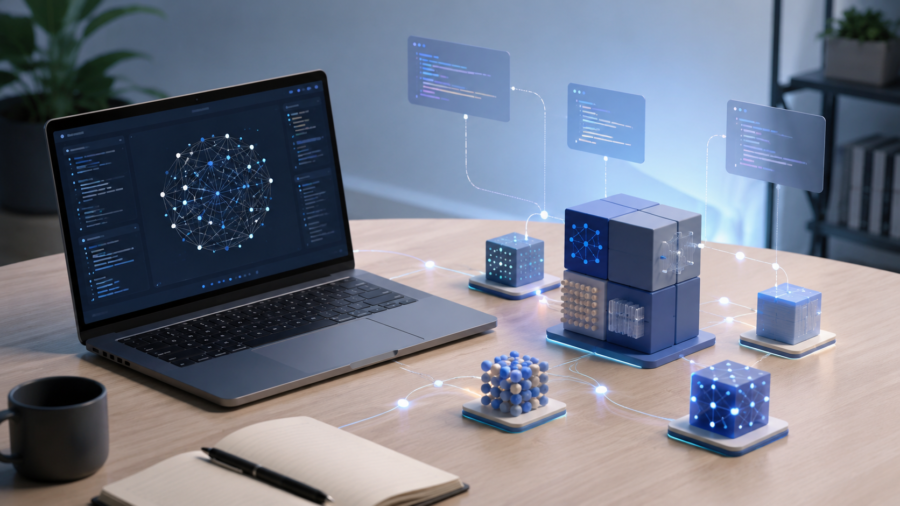
Artificial intelligence used to feel like something controlled mainly by a few large companies with huge data centers and closed platforms.
DeepSeek helped change that conversation.
The Chinese AI startup gained global attention not only because its models performed well, but also because it released important models and technical materials in a way that developers could study, test and build on. DeepSeek announced R1 as a fully open-source model with its technical report, saying the code and models were released under the MIT License.
That matters because open-source AI can make advanced models more accessible to researchers, startups and developers who cannot afford to build frontier systems from scratch.
But open-source AI is also a complicated phrase. Not every “open” AI model is open in the same way. Some models release weights. Some release code. Some release papers. Some allow commercial use. Others have restrictions.
So the real question is not only whether a model is called open source. The better question is: what can people actually do with it?
What open-source AI means
In software, open source usually means the code is available for people to inspect, modify and reuse under a license.
AI makes that idea more complicated.
An AI model is not just normal code. It may include model weights, training methods, datasets, inference code, evaluation tools and technical documentation. A company might release one part but not another.
For example, a model may be called open because its weights are available. That means developers can download and run the model. But the original training data may not be fully public, so outsiders may not be able to recreate the model from the beginning.
This is why some experts prefer the term “open-weight” for many AI models. It is more precise. The model can be used and adapted, but the full training process may not be completely open.
Still, for many developers, open weights are extremely useful. They allow AI systems to be run locally, tested privately and adapted for specific tasks.
Why DeepSeek attracted attention
DeepSeek’s R1 release stood out because it combined strong reasoning performance with a more open approach.
DeepSeek said R1 delivered performance comparable to OpenAI’s o1 on some reasoning tasks and released the model, code and technical report under the MIT License. The company also released smaller distilled models, allowing developers and researchers to experiment with lighter versions.
That release helped push open-source AI into a bigger public debate.
Before DeepSeek, many people assumed the best AI models would always come from closed labs with massive budgets. DeepSeek showed that strong open or open-weight models could compete in important areas, especially when efficiency and cost were treated as core design goals.
Reuters later reported that DeepSeek’s low-cost, open-source approach pushed Chinese rivals to release upgrades and lower prices, making open-source and low-cost AI more common in the market.
Why open-source AI matters for developers
For developers, open-source AI can reduce dependence on a small number of platform companies.
If a developer can run a model directly, they may have more control over cost, customization and privacy. They can fine-tune the model for a specific task, test it inside their own infrastructure or build products without sending every request to an external provider.
This can be especially useful for startups.
A small company may not have the budget to train a large AI model. But if a strong open model is available, the company can build on top of it. That can speed up product development and reduce costs.
Open models also support research. Universities, independent researchers and developers can study model behavior, test safety methods and compare techniques more easily when models are available.
That helps the wider AI ecosystem learn faster.
Why open-source AI matters for users
Most ordinary users will never download a model from GitHub. But they may still benefit from open-source AI.
Open models can make AI features cheaper for apps. They can help smaller companies compete with big platforms. They can support tools that run locally on laptops or company servers. They can also encourage more language support, niche tools and specialized products.
For example, a small education app could use an open model to build tutoring features. A developer tool could run a code assistant locally. A business could deploy a model internally for document search without sending sensitive files to a public chatbot.
This does not mean every open-source AI product is automatically better. But open models can create more choice.
More choice can lead to lower prices, faster innovation and products built for specific communities instead of only mass-market platforms.
The safety debate
Open-source AI also raises safety questions.
When powerful models are widely available, more people can use them for good purposes, but some may use them for harmful ones. This is one reason some AI companies and researchers argue that the most capable models should not be fully open.
The debate is not simple.
Closed models can be monitored and controlled more easily by the company that runs them. Open models can be studied and improved by the wider research community, but they may also be harder to restrict after release.
That creates a real tension between openness and safety.
The best answer may not be the same for every model. Smaller models, research models and specialized tools may be easier to open safely. Very powerful frontier models may require more careful release planning, testing and documentation.
For readers, the key point is that open-source AI is not only a technical choice. It is also a policy and safety debate.
Open does not mean free forever
Another common misunderstanding is that open-source AI means AI will always be free.
That is not true.
Even if model weights are free to download, running them still costs money. Developers need servers, GPUs, electricity, storage, engineers and maintenance. A large model can be expensive to operate at scale.
Open-source AI reduces some barriers, but it does not remove all costs.
This is why many companies offer both open models and paid API services. Developers can choose whether to run a model themselves or pay for hosted access.
DeepSeek’s pricing strategy is part of the same conversation. Lower API prices and open model releases both put pressure on the market, but they solve different problems.
Open models give control. Cheap APIs give convenience.
Why this changed the AI race
DeepSeek changed the conversation because it challenged the idea that only closed, expensive models could matter.
Its approach showed that efficiency, open releases and lower pricing can become competitive weapons. That forced other companies to respond, either by lowering prices, releasing more open models or improving the value of their paid services.
This is good for the AI market because competition matters.
If only a few companies control the most useful AI models, prices can stay high and innovation may concentrate. If open models continue improving, more developers and businesses can participate.
That does not mean open-source AI will replace closed models. The future will likely include both.
Closed models may lead in some frontier capabilities, enterprise support and managed services. Open models may lead in customization, transparency, local deployment and developer flexibility.
What users should watch next
The next stage of open-source AI will depend on three things.
First, model quality. Open models need to keep improving in reasoning, coding, multilingual support and reliability.
Second, usability. Developers need easier ways to run, fine-tune and deploy models without complex infrastructure.
Third, trust. Users and companies need clear information about licenses, data handling, safety testing and limitations.
DeepSeek’s rise shows that open-source AI can influence the whole market. But the long-term winners will be the models and tools that are not only open, but also useful, reliable and affordable.
The bigger takeaway
Open-source AI matters because it changes who can participate in the AI race.
Instead of leaving advanced AI only to the largest companies, open models give developers, researchers and smaller businesses more room to build. They can lower costs, support local deployment and create more specialized tools.
DeepSeek helped bring that debate into the mainstream by showing that open and lower-cost models can attract global attention.
But openness is not magic. It does not remove infrastructure costs, safety concerns or quality challenges. It simply gives more people a chance to work with the technology directly.
That is why DeepSeek changed the conversation. It made the AI race feel less like a closed contest between a few giants and more like a broader ecosystem where open models can shape what comes next.



Comments
You can write your views about this story. Comments may be moderated according to site settings.