

Exactly 25 years ago, Audi made design history: Audi TT. From the moment it first appeared on the scene in 1998, this sports car has been the center of attention all over the world for 3 generations, thanks to the entertainment it promises to drivers and its simple but attractive design language. “Auto Europe” named it the best new car of the year in 1999.
In the mid-1990s, Audi launched its luxury class model, the Audi A8, and the brand moved to a higher position. This also gradually led to a renaming of the model range. First the Audi 80 became the Audi A4. Audi 100 continued on its way as Audi A6. Introduced in 1994, the Audi A4 was the first model to incorporate Audi’s new design language. It was followed by the premium compact car Audi A3, which was introduced to the market in 1996, and the second generation Audi A6, which was introduced to the market in 1997.
In the brand’s process of evoking emotions with a fresh, progressive design, American designer Freeman Thomas, under the direction of then Head of Design Peter Schreyer, created the Audi TT Coupe as a thoroughbred sports car. Audi presented the work to the audience at the Frankfurt Motor Show in September 1995. The model name “TT” was reminiscent of the legendary Tourist Trophy in the Isle of Man, one of the oldest motorsport events in the world, where NSU and DKW enjoyed great success with their motorcycles. “TT” was also reminiscent of the sporty NSU TT model of the 1960s. The departure of the Audi TT Coupe from the usual Audi terminology also emphasized that the model was completely new.
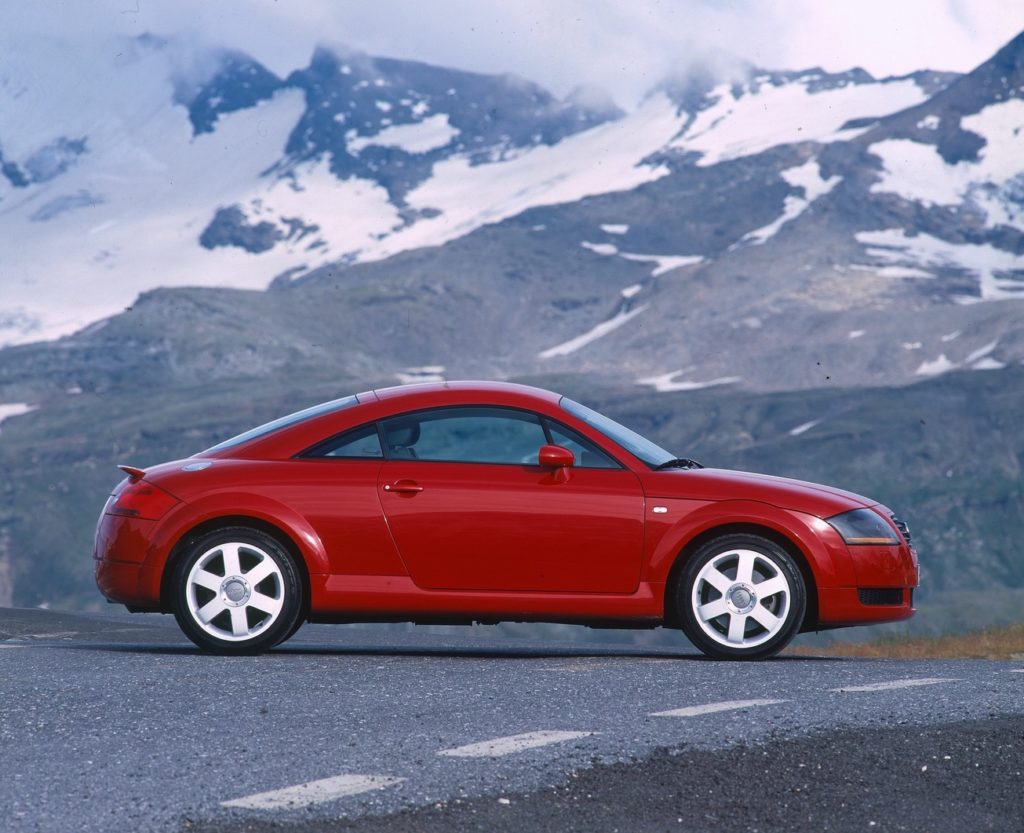
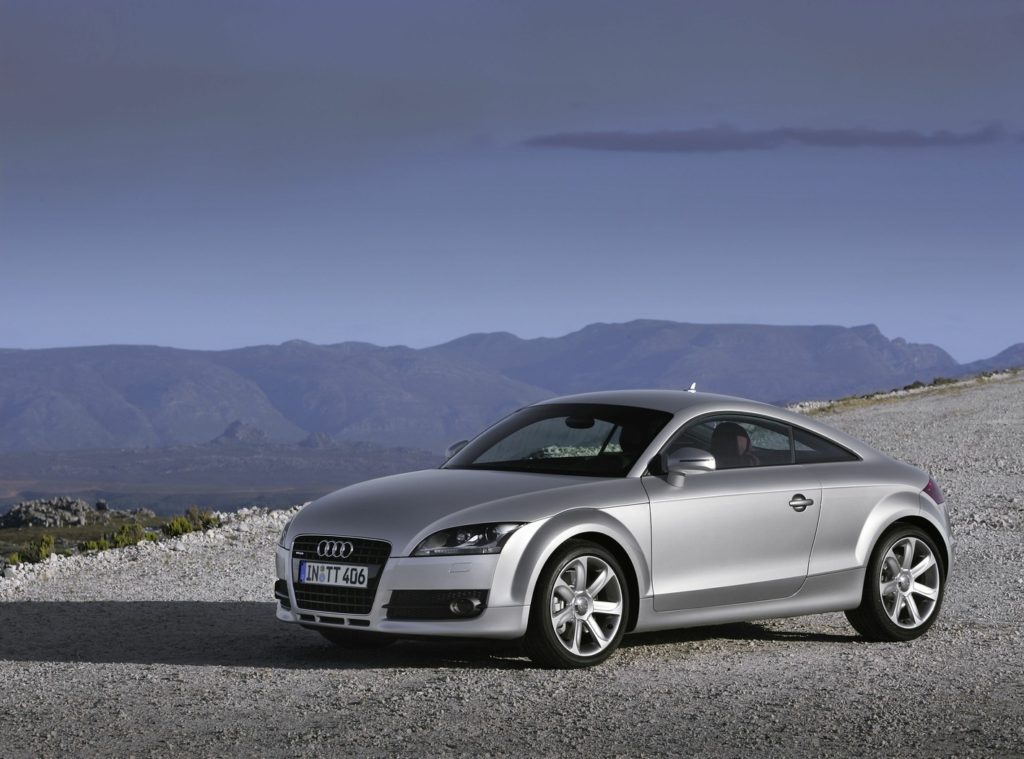
Two anniversaries in one year: Audi Hungaria celebrates together with the Audi TT
In 1998 the Audi TT Coupe entered series production. A year later, Audi launched the TT Roadster version. The show car on display and the Audi A3 sports car launched in 1996 were also based on the transverse engine platform of the VW Golf IV. The TT was produced in Hungary by Audi Hungaria Motor Kft from the very beginning. The painted TT body elements were transported by rail from Ingolstadt overnight to Győr, where final assembly took place. This inter-plant production method between Ingolstadt and Győr was unique in the automotive industry at the time.
Audi Hungaria, a wholly owned subsidiary of AUDI AG, also celebrates its 30th anniversary in 2023. Founded in February 1993 as a purely engine production facility, Audi Hungaria undertook the assembly of the Audi TT in cooperation with the Ingolstadt factory in 1998. The company grew into a full-fledged automobile factory in 2013. Since its founding, Audi Hungary has produced more than 43 million engines and nearly two million vehicles.
The engine variety in the first generation Audi TT was very rich. Of course he was always sporty. For example, the first generation TT hit the roads with four-cylinder turbo engines with a power range of 150 to 225 PS and a V6 with 250 PS. Additionally, the Audi TT quattro Sport had a four-cylinder engine producing 240 PS. 1,168 units of this version were produced. First generation TT customers also had many options when it came to special equipment. Apart from special colors such as Papaya Orange or Nogaro Blue, the TT could be equipped with special accessories from the factory. For example, the “baseball glove” design of the leather seats, which attracted attention in the Audi TT Roadster show car, was put into mass production. Over its eight years in production, 178,765 units of the first generation Audi TT Coupe (Type 8N) were produced by mid-2006. Exactly 90,733 Audi TT Roadsters were produced between 1999 and 2006.
TT product range expanded further with RS versions in the second generation
Designers continued the “reduce to the basics” design philosophy over the next two generations. This meant, for example, a minimalist exterior design and a stylish, driver-focused interior. Round forms and circular shapes became typical features of the TT product range and stood out as unifying elements in the exterior and interior design. For example, in the aluminum fuel filler cap, round air vents, shift frame and gear knob.
The second generation TT was introduced to the market in 2006 with the Coupe and in 2007 with the Roadster body type. Additionally, the second generation TT was based on the Audi A3 platform. Adaptive shock absorbers were used for the first time with the Audi magnetic ride feature. Offered as an option, this technology constantly adapted the shock absorbers to the road profile and driver’s style. In 2008, the sports version TTS with a 2-liter turbo engine and 272 PS was launched on the market. This was followed a year later by the Audi TT RS plus with a 2.5-litre five-cylinder turbo engine with 340 PS and the TT RS with 360 PS. The four-ringed brand launched the TT 2.0 TDI quattro, the world’s first mass-produced sports car with a diesel engine, in 2008.
The third generation Audi TT was launched in 2014. Once again, Audi has deployed additional solutions to reduce weight. The TT Coupe with a 2.0 TFSI engine and manual transmission weighed only 1,230 kg. It was about 50 kg lighter than the previous generation. For the new TT and TT RS, designers have reinterpreted the unmistakable lines of the original TT from 1998 for the modern age. Many elements have been strengthened with dynamic accents. But the round fuel filler cap with the typical TT lettering has remained the same throughout the generations. Many details consciously recalled the first generation design. The third generation TT offered many technical innovations. For example, this generation was the first to feature the Audi virtual cockpit, with its highly advanced, fully digital instrument panel with multiple displays replacing the analogue instruments and MMI display. In 2016, a new era began in automotive lighting technology with the Audi TT RS. Audi used organic LED technology, known as OLED, for the first time. The engine options of the sports car were also exciting. At the top of the product range was the Audi TTS, which produced 310 PS with its 2-liter turbo engine. This was followed in 2016 by the TT RS with a 2.5-liter five-cylinder turbo engine. It was one of the most exciting engines the four-ring brand had to offer. This engine had a sporty sound with its 400 PS power. It was also named “International Engine of the Year” nine times in a row. Audi celebrates the anniversary of the Audi TT in 2023 with the Audi TT RS Coupe special series in Nardo Gray color and limited to 100 units, and emphasizes a quarter century of design and technology.






Comments
You can write your views about this story. Comments may be moderated according to site settings.