
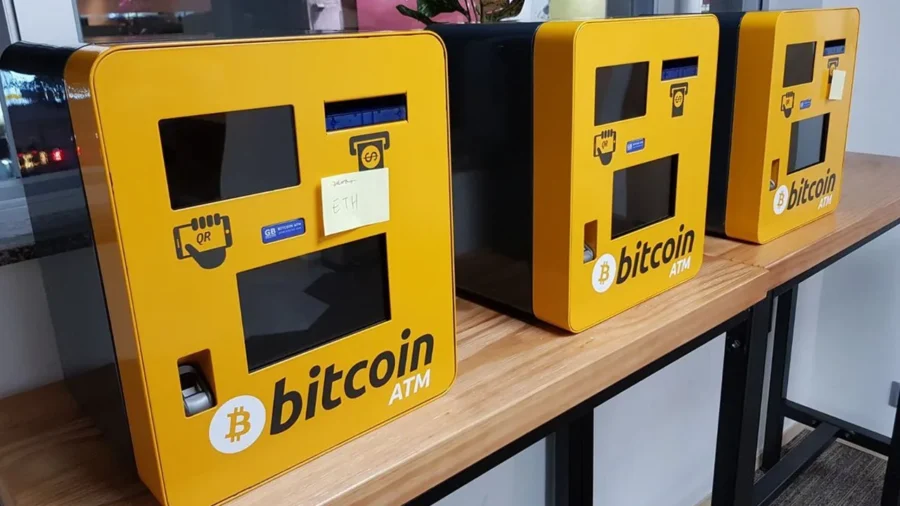
Bitcoin Depot filed for Chapter 11 bankruptcy protection in the US and shut down its Bitcoin ATM network. The company will terminate its operations in an orderly manner and put its assets on sale during the process, which will be carried out under court supervision. Bitcoin Depot is closing its crypto ATM network. US-based Bitcoin ATM operator Bitcoin Depot announced that it has initiated the voluntary Chapter 11 process.
The application was filed in the U.S. Bankruptcy Court for the Southern District of Texas. With this process, the company will close its operations in an orderly manner and sell its assets under court supervision. Bitcoin Depot’s Bitcoin ATM network was also taken offline. Bitcoin Depot operated with a kiosk network that allowed users to buy Bitcoin in exchange for cash. The company stood out as one of the operators with the largest market share in North America.
As of August 2025, there were more than 9 thousand kiosk locations globally. According to information provided by Gizmodo, the company operated 9,276 kiosks across the USA, Canada and Australia. Alex Holmes, the company’s CEO, stated that the regulatory environment for Bitcoin ATM operators has changed seriously. According to Holmes’ statement, states have introduced stricter compliance obligations, new transaction limits, and outright restrictions or bans in some regions.
The company also announced that increasing litigation and sanction processes affected the financial position and that the current business model became unsustainable under these conditions. Bitcoin Depot’s companies in Canada were also included in the court-supervised process in the USA. The company also announced that it will initiate a restructuring process in Canada. Other company units outside the USA will be closed in accordance with the laws of the countries in which they are located.
Behind the decision is not only financial pressure, but also increasing legal scrutiny regarding the use of crypto ATMs in fraud cases. The Massachusetts Attorney General’s Office filed a lawsuit against Bitcoin Depot, claiming that the company did not adequately protect users, overcharged customers with misleading pricing practices, and failed to prevent fraudulent transactions. In the case file, it is claimed that a significant portion of the money passing through Bitcoin Depot kiosks in Massachusetts between August 2023 and January 2025 was related to fraud.
According to the allegations on the Massachusetts side, the prosecutor’s office contacted hundreds of customers who spent 10 thousand dollars or more during the period in question. The review stated that more than 80 percent of these customers used the kiosks for fraudulent transactions, and that these transactions generated $10.6 million in volume and accounted for almost 60 percent of the kiosk revenue in Massachusetts.
Bitcoin Depot, on the other hand, stated in its previous statement that it does not agree with the evaluations that it facilitates fraud or misleads users. The pressure on crypto ATMs is not limited to Bitcoin Depot only. According to AARP based on FBI data, more than 13,460 complaints were made in fraud cases using crypto kiosks in 2025, and the reported loss exceeded $389 million. The same source stated that as of May 2026, 30 states have passed laws on crypto kiosks, Indiana is the first state to impose a statewide ban, and Tennessee and Minnesota have taken similar steps.
The company’s recent financial outlook also increased the pressure. According to data provided by Digital Transactions, Bitcoin Depot experienced a 49 percent annual revenue decrease in the March quarter and announced a net loss of $ 9.5 million. In the same period last year, the company’s net profit was 12.2 million dollars. The company also announced in its notification to the SEC in April that approximately 50,903 Bitcoins were transferred from company-controlled wallets as a result of unauthorized access, and the incident corresponded to a preliminary loss of approximately $ 3,665 million as of the report date.






Comments
You can write your views about this story. Comments may be moderated according to site settings.