
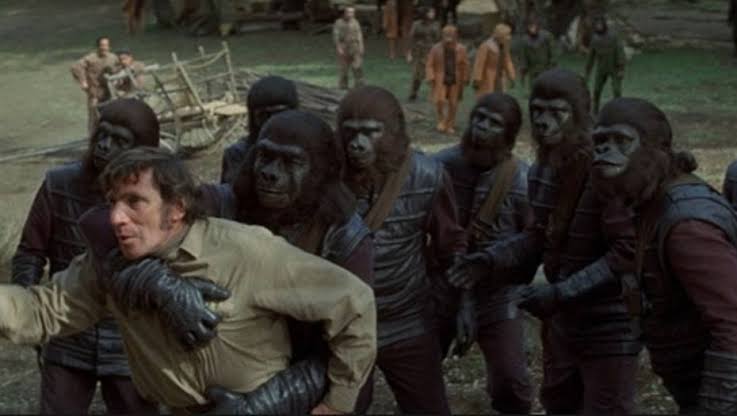
We have come to the last stop of the magnificent journey that started in 1968 in the original series. To be frank, Battle for the Planet of the Apes is the weakest link in the series in terms of production quality and budget. The smallness of the sets and the dullness of the action are evident. But our concern on these pages has never been just visual effects; We look at the sociological decay and philosophy in the subtext of the work.
This movie is exactly at this point, ending the complex timeline and message of the series on a bittersweet ground. New Hierarchy and Class Revenge Years have passed since the rebellion initiated by Caesar, and a nuclear war has wiped human civilization off the map. There is now a primitive society in the forest, ruled by monkeys, and the surviving humans are “second-class citizens”. The film asks us this ancient and painful question: When the oppressed take power, can they avoid turning into a copy of their oppressors?
Although Caesar tries to be a peaceful, wise leader who advocates living together; The rise of militaristic gorilla General Aldo changes things. Aldo’s desire to completely destroy people shows that racism and fascism are not unique to humans; It shows that every structure that holds “power” is doomed to be poisoned. Monkey Doesn’t Kill Monkey (Right?) The most shocking aspect of the movie is definitely based on this law.
The cornerstone of the new society Caesar built is a single rule: “Ape shall never kill ape.” However, when the ambitious and bloodthirsty Aldo breaks this taboo for the sake of power, it ends the innocence of the monkeys forever. The monkeys succumb to the sick nature of the people they hate so much. This is the most tragic reflection of the Cain and Abel story in this universe. Radiated Past: While they are going through this civil war with Aldo, on the other hand, they have to face the people who survived among the nuclear ruins (Forbidden Zone), are exposed to radiation and are burning with the fire of revenge.
(Which are the ancestors of those nuclear bomb-worshiping mutants we saw in the second movie, Beneath). Governor Kolp’s hatred and attack underscore how militarism and warmongering bring destruction on both sides. Changing Destiny and The Crying Statue The “determinism” theme that runs in the background throughout the entire series comes to an end here. Caesar knows the absolute apocalypse (the destruction of the world in the second movie) that his parents told him about.
So can Caesar change this fate by breaking the cycle of violence? Can the timeline be rewritten at will? The famous final scene of the movie, which takes place in the year 2670, does not actually give us a clear answer. On the one hand, we find hope in seeing human and ape children living together in peace; But that single tear falling from the eye of Caesar’s statue standing in the background whispers to us that everything depends on a thread, peace is very fragile and the dark nature of man/monkey can wake up at any moment.
Conclusion If you put aside its technical shortcomings, cheap decorations and slow pace; Battle for the Planet of the Apes makes a philosophical and melancholy conclusion, befitting the five-film giant “collapse of civilization” saga that oscillates between hope and despair about how to break the spiral of violence.




Comments
You can write your views about this story. Comments may be moderated according to site settings.