
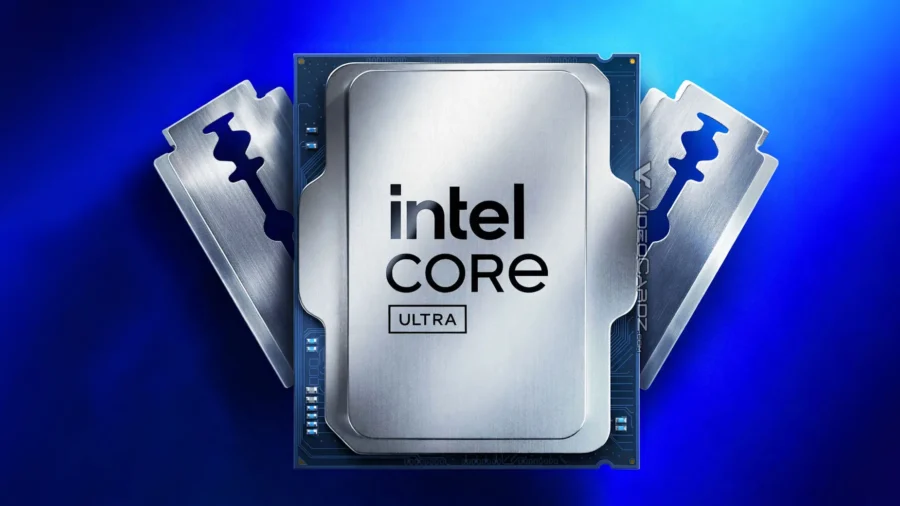
The new leak about Intel’s next generation processor plans has brought the on-package memory design, which the company thought to have been shelved after Lunar Lake, back to the agenda. According to the information shared by Haze2K1, Razor Lake-AX comes with a design that hosts the memory on the processor package. Intel may return to the memory approach in Lunar Lake with Razor Lake-AX. The new information revealed for Razor Lake-AX attracts attention due to Intel’s previous statements.
The company moved the LPDDR5X memory onto the processor package in the Lunar Lake processors that came with the Core Ultra 200V series. Razor Lake-AX uses on-package memory— Haze (@Haze2K1) May 11, 2026 This design saves space on the motherboard in laptops, reduces the physical distance between the memory and the processor, and brings advantages in terms of power consumption. However, the same approach put pressure on Intel’s profit margin as it increased the production cost and required the processor to be sold with its memory.
On the Lunar Lake side, Core Ultra 200V processors came with 16 GB or 32 GB LPDDR5X-8533 memory. These memories were included in the processor package via a 128-bit interface. The clearest result of the design was the elimination of the memory upgrade option on the user side. Memory capacity is fixed at the time of purchase and cannot be increased later. This situation created a limiting structure, especially for users who need higher RAM capacity and manufacturers who want to offer different configurations.
Intel’s former CEO, Pat Gelsinger, described the on-package memory approach in Lunar Lake as a one-time choice in his evaluation in 2024. In that statement, it was stated that bulky memory would remain outside the processor package in Panther Lake, Nova Lake and subsequent generations. Therefore, the Razor Lake-AX claim shows that a different path may be followed in a certain high-end processor class, rather than a general return for Intel’s entire product family.
In the leaks, Razor Lake-AX is referred to as a separate class from standard laptop and desktop processors. It is reported that this series was developed for high-performance mobile platforms and systems using powerful integrated graphics units. In this type of processors that use a large iGPU, memory bandwidth directly affects graphics performance. For this reason, moving the memory to the processor package becomes critical, especially for compact computers that offer high graphics performance without the need for a separate graphics card.
It is also included in the leaks that Razor Lake-AX is positioned as a competitor to AMD’s Halo class APUs. On AMD’s side, Strix Halo class products stand out with their powerful integrated graphics unit, high memory bandwidth and high processing power in a single package. Intel’s placement of the AX class in this area is read as a step that shows that the company focuses not only on CPU performance but also on graphics, artificial intelligence and memory architecture in the high-end mobile processor market.
There is no definitive information on the memory type yet. Sources mention the possibility of LPDDR5X or LPDDR6. However, the first leak says that only Razor Lake-AX will use on-package memory. For this reason, capacity, speed, memory bus width and manufacturer-specific configuration options are not clear for now. According to BenchLife, a packaging structure for Razor Lake-AX in which manufacturers could choose the memory capacity was previously on the agenda, but it is not known whether this option will actually be offered.
On the calendar side, Razor Lake is expected to arrive after Nova Lake. Current road map claims state that Nova Lake will be an important product family for Intel in 2027, and Razor Lake will follow it. The evaluation by Wccftech indicates around 2028 for Razor Lake-AX.






Comments
You can write your views about this story. Comments may be moderated according to site settings.