
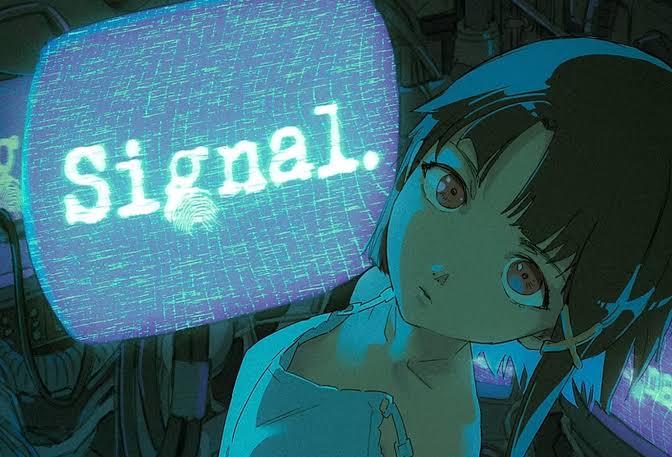
Present day. Serial Experiments Lain, published in present time.1998, asks us the following throughout 13 episodes (Layer): Where does the border between the real world and Wired end? Wired is not just the crawling internet of the 90s; It is a metaphysical layer where consciousness, memories, thoughts and even the collective unconscious flow freely. While preparing this article, I delved a little into the history of the internet (I am still learning about it, so I have no claim).
Everything started with ARPANET in 1969: The first “LO” message went between UCLA and Stanford, and scientists were dreaming of free flow of information. E-mail was introduced in 1971, Tim Berners-Lee proposed the World Wide Web in 1989, and the first site went live in 1991. The internet was commercialized in 1995, and Google was born in 1998. The year Lain was published, everyone was shouting about the internet as a utopia of freedom, that is, those with computers: Borders will disappear, states will weaken, information will belong to everyone.
But cyberpunk literature (which exploded with William Gibson’s Neuromancer in 1984, coining the concept of “cyberspace”) had warned long ago: High technology will bring low life. Mega-corporations and states will seize, censor and control this utopia. Lain is the anime version of this exact transition. Wired is both the hope and the nightmare of that promise of freedom. States (for example, China’s Golden Shield Project, that is, the Great Firewall, which started in 1998) had already begun to build walls around the internet at its birth.
Censorship, ban, surveillance… Cyberpunk’s dystopia was revived in Lain as Wired in 1998. Is the body a prison? Can consciousness exist independently of the body? And most importantly: Will the states steal this new freedom too? Lain Iwakura starts out as a shy girl but turns into a god in Wired. In this article, we will dive into each episode’s story arc, character development, symbolism, and especially Wired’s philosophy.
Because there is no Wired without Lain, and there is no Lain without Wired. They are two sides of the same coin. Layer 01: WEIRD Chisa Yomoda commits suicide but emails Wired: “I’m not dead. I just left my body. God is here.” Lain opens her Navi and connects to Wired for the first time. Bleeding cables on the train tracks, steaming fingers… The curtain between the real world and Wired begins to tear. Wired is still an inviting call here.
Chisa’s message declares the insignificance of the body: Is death a salvation in Wired Even Lain’s family is not “real”; His father deliberately pushes him into Wired by giving him away Navi. The episode alludes to Jung’s collective unconscious: Wired is the new form of society in which everyone is interconnected. Lain’s shyness is the first step in her disappearance into Wired. Reality is distorted; Phones ring, cables flow like veins.
Wired has infiltrated Lain’s subconscious. This asks the series’ central question: Which one is real? Body or data? I think the data is my own opinion. Layer 02: GIRLS At school, girls exclude Lain, but at Wired, Lain suddenly becomes popular. “Another Lain” emerges: Confident, sexy, fearless. It mixes the Real Lain with the Wired Lain. Rumors circulating among girls spread through Wired. Wired is the laboratory of identity crisis here.
Lain’s “I” disintegrates; Which one is real? In Gnostic philosophy, the body is an illusion, while the soul is free in Wired. The girls’ suicides are the first wave of leaving their bodies and escaping into Wired. “Everyone is connected to Wired,” says Lain’s father; This is the new organization of society. The episode predicts the future of the internet: the online me crushes the real me. For the first time, Lain feels that the traces left in Wired are changing the real world.
Layer 03: PSYCHE Men in Black (MIB) appears, asking questions. Lain’s house becomes an extension of Wired; walls are covered with cable. Her sister Mika sees Lain’s shadow. Wired now physically infiltrates Lain’s mind. Jung’s collective unconscious is embodied here: Lain feels everyone’s memories. The Psyche episode proves that consciousness can exist independently of the body. Lain’s “I” dissolves in Wired’s collective flow.
The symbolism is at its peak: the teddy bear represents innocence, but even in Wired it bleeds. This is the first hint of Lain’s divine nature. Layer 04: RELIGION Is God in Wired? The concept of “God” rises in Wired. The group called Knights plans to combine Wired with the real world with Protocol 7. Eiri Masami declares himself the god of Wired. Wired evolves into a religious dimension here. Like the Demiurge of Gnosticism, Eiri wants to transcend the body.
Is Lain the rival of this “god”? The episode questions Wired’s version of belief: Is true belief in the data stream? Lain’s family falls apart; Even “family” is an illusion created by Wired. Collective consciousness creates a new religion. Layer 05: DISTORTION Lain questions her past. MIBs call Eiri. Wired distorts reality. This is where Wired’s power is reflected in the physical world: Memories are altered, people go crazy.
Lain questions her own existence. This episode is a rehearsal of simulation theory in 1998. Wired connects everything; distortion, the pain of the merging of two worlds. I don’t understand why the name of the episode is distortion, it seems like Jimi Hendrix is here. Layer 06: KIDS Children create a collective consciousness through Wired. Lain becomes their “god”. Eiri’s plan becomes clear. Wired is the destruction of innocence.
Jung’s archetypes come to life here: Children are the pure form of the collective unconscious. By uniting them, Lain acknowledges his divinity. The episode envisions the impact of the internet on children; Here is the seed of everything we see on TikTok today. Layer 07: SOCIETY Society is the new order created by Wired. Rumors and rumors come true. Lain’s existence sits at the center of society. Wired is the dark side of McLuhan’s global village.
Society is governed by the flow of data. Lain becomes the collective ego of society. This is the opposite of gnostic salvation: Even if the body is abandoned, does suffering end? Moreover, states had already begun to monitor and censor this new society; As cyberpunk predicted, the utopia of freedom was turning into state control. Layer 08: RUMORS Rumors destroy Lain. The real world and Wired completely blend together.
The “bad” version of Lain spreads. Wired is where rumors become concrete. The collective unconscious rewrites reality. Lain cannot control her own image; This is social media’s darkest prophecy. Layer 09: PROTOCOL Protocol 7 is explained: Wired meets the real world. Eiri wants to destroy Lain. Lain understands his own divinity. Wired’s protocol resembles the sefirot of Kabbalah. Lain is born as the embodiment of the collective unconscious.
Chapter, “Who is God?” It brings the question to the top: It is us. But Knights’ plan also shows an effort by states and power groups to take over Wired; The network that promised freedom was turning into a new tool of control. Layer 10: LOVE Lain seeks human connection. Love gets stuck between the body and the data. Alice (Arisu) steps in. Wired transforms even love. Lain wants to be human, but he is god. This is the height of tragedy: love is immortal but lonely in Wired.
Layer 11: INFORNOGRAPHY Lain absorbs all data. Infonography is a perversion of information satisfaction. Wired overwhelms us with information porn. Lain knows everything; This is the curse of divinity. The episode is the most brutal critique of the internet age. Layer 12: LANDSCAPE Lain reshapes the landscape. Alice is the last bridge.Wired swallows the landscape. Lain is everywhere and nowhere. This is the death of the ego.
Layer 13: EGO Lain deletes everything. “I am everywhere” he says and forgets himself. He says goodbye to Alice. With Wired, the real world is balanced. The last part is the disappearance of the ego. Lain turns to the collective unconscious. Wired exists without the need for God. Gnostic salvation is complete: the body is abandoned but the memories remain. Lain watches us; “Present day. Present time.” the cycle closes.
But the cyberpunk warning is still in our ears: States had already started to build walls around that utopia of freedom. General Evaluation: Serial Experiments Lain transforms Wired from being a tool into existence itself. It is still relevant in 2026 because we are in that Wired today: Social media, AI, digital identity… The internet started as a utopia of freedom, but cyberpunk literature was proven right. States (from China’s Great Firewall to other countries’ censorship laws) control, ban and monitor this network.
Wired, which promised freedom, turned into a new dystopia. Lain dissolved Jung’s collective unconscious, the gnostic soul-body war and the layers of Kabbalah in 13 chapters. Lain becomes a god but remains alone. Wired wins. We are Anonymous. We are Legion. We do not forgive. We don’t forget. Expect us. We are Anonymous. We are the army. We do not forgive. We don’t forget. Wait for us.




Comments
You can write your views about this story. Comments may be moderated according to site settings.