
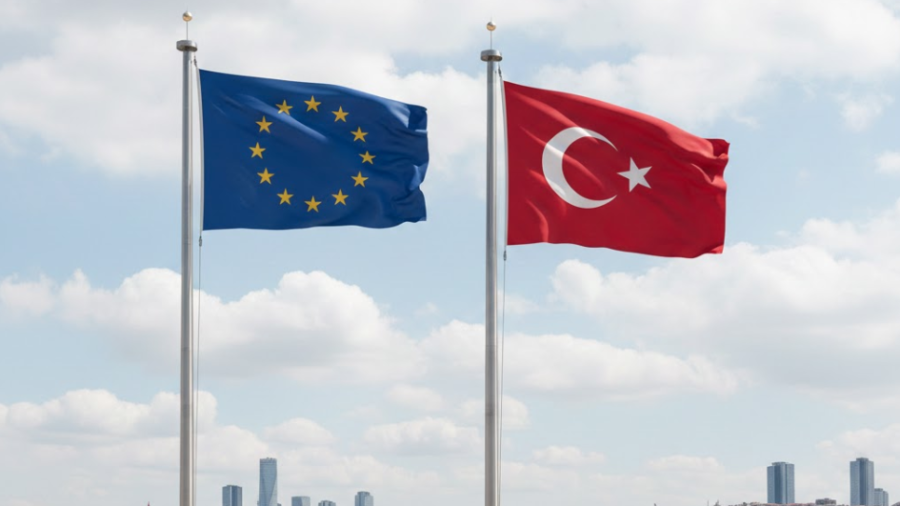
Hello, for the last few weeks, we automotive industry have been busy with the question of how the ‘Made In Europe’ doctrine will become law. Finally, on Wednesday, March 4, the relevant bill of the EU commission, the Industrial Acceleration Law, came to light and the name of the doctrine was clarified as ‘Made In EU’. The ‘Made in EU’ doctrine, which is also very critical for the Customs Union between us and the European Union, has now become a sharp trade barrier and incentive mechanism as of March 4, 2026.
Let’s look in detail at what the emerging legal regulation bill means for Turkey: New Era After March 4: Strategic Protectionism The European Union has moved the issue of supply chain security, which it has been discussing since the pandemic, to a new phase. As of this date, the EU has decided to increase the European content rate obligation above @ not only in critical raw materials, but also in green energy technologies (solar panels, wind turbines) and artificial intelligence chips.
There are three main issues here: Subsidy Race: Against the US’s Inflation Reduction Act (IRA), the EU provides huge tax facilities and energy subsidies to its local producers with the Industry Acceleration Act. Carbon Border Regulation (CBAM): The carbon tax that products without the ‘Made in EU’ stamp will pay when entering the European market is now more strictly controlled. Raw Material Independence: Internal sourcing is required to reduce dependence on third countries (especially China).
Implications for Turkey: Risks and Opportunities Although Turkey is one of the EU’s biggest business partners thanks to the Customs Union, the ‘Made in EU’ doctrine is a double-edged sword for our country. Let’s look at it in order: 1. Positive Decoupling: Near-shoring The EU wants to shift its supply chains from distant geographies such as China to friendly and neighboring countries. Türkiye is the country that can most easily integrate into the ‘Made in EU’ ecosystem with its logistics advantage and production capacity.
If our industrialists produce at EU standards, they will have the potential to be treated as intra-EU producers. 2. The Need for Modernization of the Customs Union Although the current Customs Union agreement covers industrial products, it does not fully meet the EU’s new digital and green economy. The decisions taken after March 4 require Turkey to comply with norms and standards as well as trade goods with Europe. Otherwise, Turkish products that are not ‘Made in EU’ may face additional customs duties or bureaucratic obstacles.
3. Green Transformation Pressure While producers in the EU reduce costs with renewable energy supports, if producers in Turkey continue to use carbon-intensive energy, they may no longer be price competitive. Let’s not forget that this new doctrine will also allow EU companies to participate in tenders in our country under the same conditions. Therefore, Border Carbon Adjustment Mechanism (CBAM) is no longer an option for our industrialists but becomes a matter of survival.
In short, the ‘Made in EU’ doctrine, which became clear after March 4, and the Net Zero Industry rules added to it, directly affect Turkey’s locomotive sectors. The EU now requires ethical and green origin certification as well as quality. What are the opportunities and threats specifically for our automotive industry? Let’s look at it. While the EU keeps its distance from Chinese origin batteries regarding battery origin and recycled material quota in the automotive industry, Türkiye can be a safe haven.
This is an important opportunity. We must ensure that domestic battery investments are fully integrated with the EU ecosystem. Steel Therefore, this new process should not be interpreted as the closing of the doors of Europe for Türkiye, but as an increase in the price of the entrance ticket. Türkiye will be strongly included in this new protectionist shield to the extent that it can digitalize its production processes and integrate them with green energy.
Then, as a country, in this new economic map formed after March 4, we have to move on to becoming a strategic technology and green energy partner of Europe, rather than just a production workshop. With the hope and wish that the war environment in the Middle East will end as soon as possible and return to normal days,




Comments
You can write your views about this story. Comments may be moderated according to site settings.