
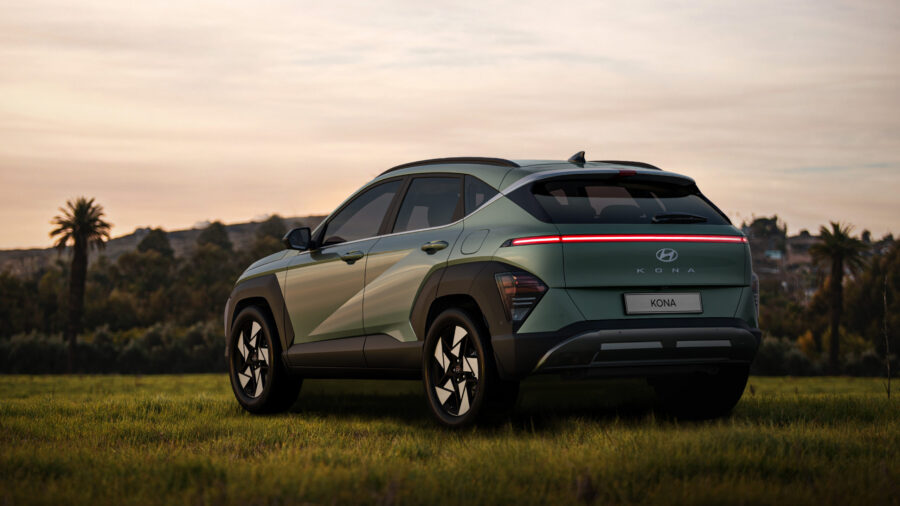
Hyundai Motor Company shared the technical features and details of the KONA model, which it will launch in the first half of the year.
Hyundai KONA, which gives the impression of a higher class car by increasing its premium feeling, draws attention with its futuristic design and also reflects the brand’s electrification strategy in the best way. The combination of the front and rear lighting system and sharp and soft lines reminiscent of a shark’s nose starts from the front and continues to the trunk lid. Hyundai’s EV variant also becomes more differentiated with Horizontal Pixelated Seamless Horizontal Lamps, and this iconic design is used for the first time in the KONA model.
KONA’s sporty SUV character is embodied by the fender dowels with integrated front and rear lights, side panels with dynamic proportions and the characteristic chrome strip starting from the A-pillar to the rear spoiler. The specially designed multi-spoke 19-inch wheel design is also considered a first for the KONA model.
Gasoline and Hybrid options differentiate and offer many design features of the electric model. The radiator grille on the front bumper offers a three-dimensional design and stands out well. Gasoline and Hybrid options also stand out with their black fender dots for more design emphasis.

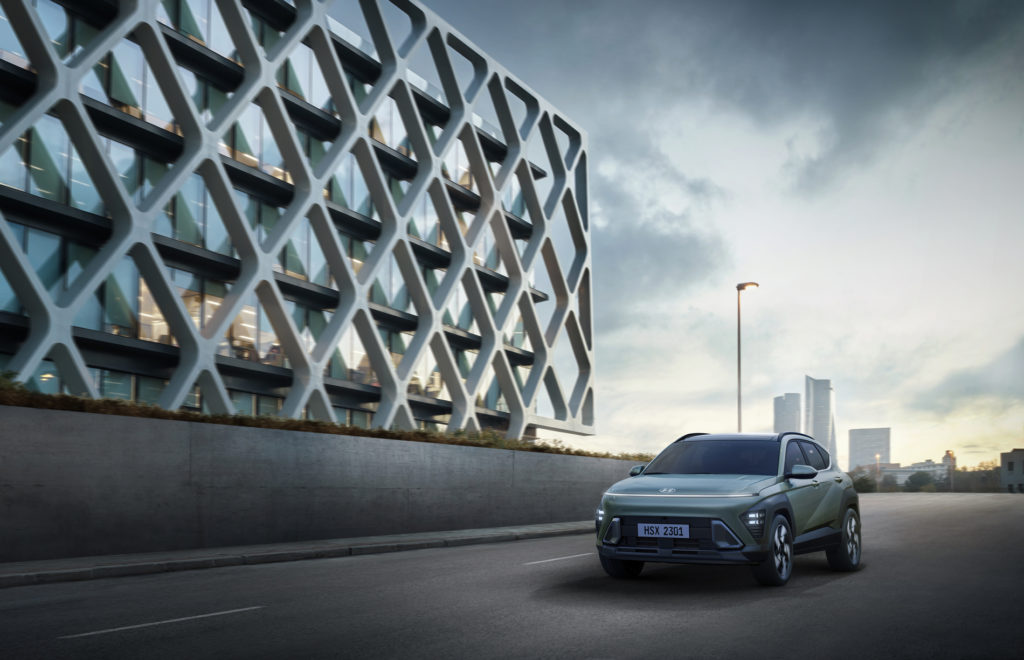
KONA Hybrid uses upper and lower active air flaps (AAF) and offers a better drag coefficient than the gasoline version. The external active air wing improves the aerodynamic performance of both engine options and also provides the feeling of a fully electric car.
The performance-inspired N Line equipment option, on the other hand, displays a more aggressive stance with a wing-shaped bumper, double silencer and silver-colored side sills to emphasize its sporty appearance. Additional options in this equipment include a black roof and 19-inch N Line special alloy wheel design. Inside, there are metal pedals offered specifically for the N Line and a gear lever with the N logo.
The new KONA offers a larger and more versatile interior for greater passenger comfort and convenient loading. KONA also offers a best-in-class living space with a 60 mm longer wheelbase, 77 mm longer legroom and 11 mm more headroom in the second row seats compared to the previous generation. Shoulder room in the second row, which is the largest in its class, is 1,402 mm. KONA’s thin and hard seats, which are only 85 mm thick, also provide more living space for second-row passengers.
In addition to all these innovations, the column-type electric gear lever placed behind the steering wheel, cup holders and storage areas for large bags provide more space for a simple console structure. The fully foldable second row seat and the rear compartment go up to 723 liters (according to SAE) to meet the highest level of customer needs with improved loading ease. The 12.3-inch integrated dual screen in the Hyundai KONA supports ergonomically comfortable use, while also being optimized for “weightless” body pressure distribution to help relieve fatigue after long-distance driving.
Best-in-class technologies for greater convenience.
Maintenance and system updates of the new generation KONA are carried out electronically thanks to Over-the-Air (OTA) software technology. Ambient light, periodic maintenance and new features are also supported by OTA updates. The customizable smart electric tailgate offers additional convenience for customers. Drivers can adjust the opening height and speed of the trunk lid from the infotainment system screen.
Users can also adjust the preferred height of the tailgate by pressing the close button for three seconds. An integrated memory system is also used for KONA’s seat position settings. Multiple charging ports, including the wireless charging system, also offer more comfortable experiences while driving. As part of electronic control technology, near field communication (NFC) is used in smartphones or smart watches. Thus, the New KONA can be locked, unlocked or started remotely from a phone via Digital Key 2 Touch, which provides a high level of security.
Hyundai will stand out in the European market with the 1.6T-GDi engine option. Although it has not been clearly announced yet, the power of the 1.6T-GDi gasoline turbo engine is expected to produce an estimated 198 horsepower and up to 265 Nm of torque. KONA Hybrid, on the other hand, will come with a 141 horsepower 1.6-L GDi engine and is expected to offer up to 265 Nm of torque.
Hyundai will announce all technical specifications of KONA in March. The new KONA will try to break new records in the B-SUV segment by going on sale in Turkey.





Comments
You can write your views about this story. Comments may be moderated according to site settings.