
Wear OS 7 could make Android smartwatches more useful in the moments when people do not want to pull out their phones.
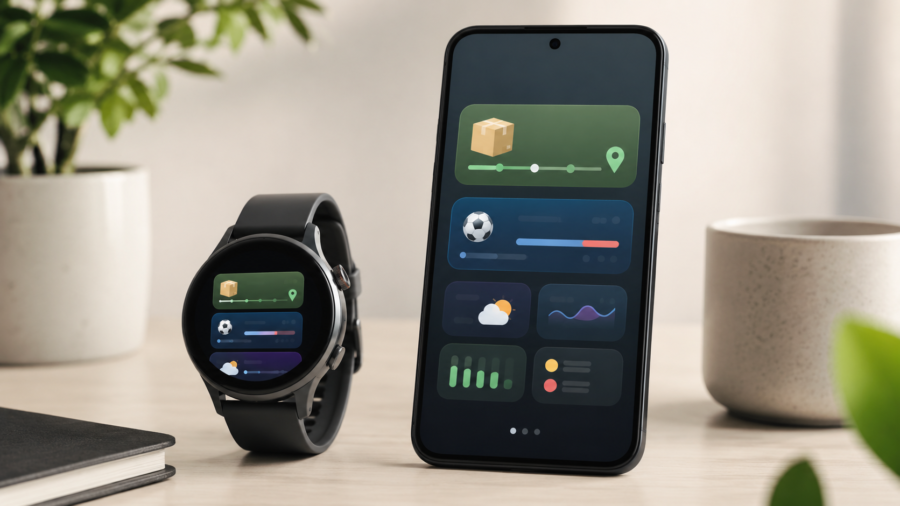
Google’s next major smartwatch update is adding features designed around quick, glanceable information: delivery progress, sports scores, automated tasks and more flexible widget layouts. The idea is simple: a watch should show the right information quickly, without forcing users to dig through apps.
According to The Verge, Google shared details about Wear OS 7 during Google I/O 2026. The update will bring Live Updates to Wear OS, allowing users to track things like deliveries and sports scores from their wrist. These updates can appear on both the watch and smartphone.
That is a practical change because smartwatches work best when they reduce small phone checks. A delivery update, ride progress, timer, score or task status is often useful for only a few seconds. If a watch can show that information clearly, the device becomes more valuable during everyday routines.
Wear OS 7 is also expanding beyond the older Tiles system. Google is adding Wear Widgets, which The Verge says look more like Android widgets and can appear in small or large layouts that align with Android’s 2×1 and 2×2 widget formats.
This matters because smartwatch interfaces can feel cramped. A good widget layout can make a watch face or side panel more useful without overwhelming the small screen. Users may be able to see weather, calendar details, fitness progress, music controls or app information in a more flexible way.
The update also includes AI features. The Verge reports that Gemini Intelligence will come to select watches later this year, bringing Google’s personalized and proactive Gemini features to Wear OS.
For most users, the key question will not be whether a smartwatch has AI branding. It will be whether the watch becomes better at anticipating useful information. If Gemini can surface reminders, context-aware updates or quick actions without being intrusive, it could make the watch feel more helpful.
Battery life is another important part of the update. Google is promising up to a 10 percent battery improvement for average users upgrading from Wear OS 6 to Wear OS 7, according to The Verge. The company says this comes from power optimizations, though real-world performance will depend on the watch model and user habits.
That battery claim is important because smartwatch users often care more about reliability than flashy features. A watch that needs charging too often becomes less useful, especially for sleep tracking, travel and long workdays. Even a modest battery improvement can matter if it helps the device last through more of the day.
The broader trend is that smartwatches are becoming less about apps and more about timely information. Many people do not want to open full apps on a tiny screen. They want quick answers: when the package arrives, whether the game score changed, when the ride is near, whether the next meeting starts soon or whether a timer is almost done.
Wear OS 7 appears built around that idea.
This also puts more pressure on smartwatch app developers. Instead of simply shrinking phone apps for the wrist, developers may need to create useful live cards, widgets and glanceable actions. The best smartwatch apps are likely to be the ones that understand the watch as a quick-information device, not a miniature phone.
For Android users, Wear OS 7 could make the smartwatch experience feel more connected to the phone. Live Updates already appeared on Android, and bringing them to the wrist makes the ecosystem feel more consistent. If a user starts tracking something on the phone, continuing that information on the watch can feel natural.
For Google, this is also a way to keep Wear OS competitive against Apple Watch. Apple’s watch platform has long emphasized glanceable information, complications and live activities. Wear OS 7’s Live Updates and new widgets suggest Google is pushing harder in that same direction.
The update will not make every old smartwatch feel new. Some features may depend on device compatibility, and Gemini Intelligence will only come to select watches at first. But the direction is clear: Wear OS is becoming more focused on context, quick updates and useful information at a glance.
For everyday users, that may be exactly what a smartwatch needs. The best wearable does not have to do everything. It has to show the right thing at the right time.
Wear OS 7 could make Android smartwatches better at that job.



Comments
You can write your views about this story. Comments may be moderated according to site settings.