
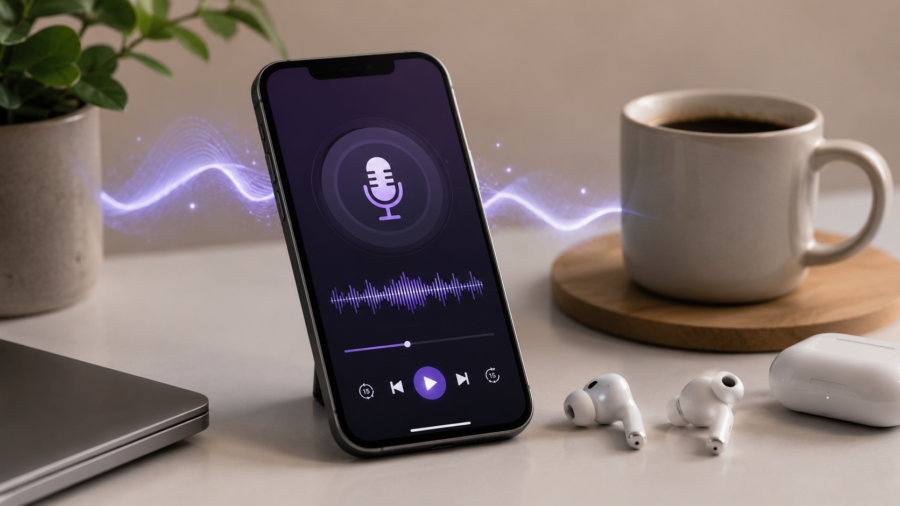
YouTube’s latest podcast features show how audio and video listening are becoming more personalized, faster and more mobile-friendly.
The company is adding new podcast tools for Premium users, including an AI-powered recommendation feature, an “Auto speed” setting and a new on-the-go listening mode. According to TechCrunch, the update is part of YouTube’s effort to compete more directly with podcast platforms such as Spotify and Apple Podcasts, while also strengthening its position in video podcasts.
The most interesting part of the update is not just that YouTube wants more podcast listeners. It is how YouTube is trying to change the listening experience itself.
Podcast discovery has always been a problem. People may follow a few favorite shows, but finding the next useful or entertaining episode can be difficult. YouTube’s new AI-powered recommendation tool is designed to suggest podcasts based on genres, mood or shows users already enjoy.
That could make podcast discovery feel more like music discovery. Instead of searching manually or relying only on charts, users may be able to describe what they want and get more relevant suggestions. For casual listeners, that matters because podcasts are often long, and choosing the wrong one can feel like a bigger time commitment than choosing a short video.
The Auto speed feature may be even more practical. Users can already manually change podcast playback speed, but that is not always ideal. Some hosts speak slowly, while others move quickly. Some episodes include relaxed conversation, while others contain dense information. TechCrunch reports that YouTube’s Auto speed feature is designed to adjust playback speed intelligently during slower speech or information-heavy segments.
That is a small but useful idea. Many listeners want to get through more content without making voices sound unnatural or missing important details. If Auto speed works well, it could make long episodes easier to fit into commutes, workouts and daily routines.
The new on-the-go mode is aimed at exactly those moments. YouTube says the mode gives Premium users listener-friendly controls for running, commuting or multitasking. It includes quick actions such as skipping forward or backward and moving to the next episode, making background playback easier to manage.
This is important because podcast listening often happens away from a screen. People listen while walking, driving, cleaning, cooking or working. A video-first platform like YouTube has to make that experience feel less like watching a video and more like using a proper audio app.
That is the bigger shift. YouTube is no longer only competing for screen time. It is competing for ear time.
The company already has a major podcast audience. TechCrunch reports that YouTube Premium users watched more than 800 million hours of podcasts in April 2026, and that YouTube Podcasts has more than 1 billion monthly active users.
Those numbers explain why YouTube is investing in podcast tools. Podcasts are not a side category anymore. They are part of how people consume news, interviews, education, entertainment and creator content.
Video podcasts also give YouTube a natural advantage. Many creators already upload full video episodes, clips and shorts from the same recording. That allows YouTube to connect long-form listening with short-form discovery. A viewer may discover a podcast through a clip, then listen to the full episode later.
But YouTube’s challenge is different from traditional audio apps. Spotify and Apple Podcasts were built around listening. YouTube was built around video. To win more podcast time, YouTube needs to make the app feel comfortable when the phone is locked, when users are moving and when attention is split.
The new features suggest YouTube understands that.
For creators, better recommendation tools could help podcasts reach new audiences. If AI suggestions connect listeners with shows that match their interests, smaller podcasts may have more ways to be discovered beyond search and subscriptions.
For listeners, the benefit is convenience. A good podcast app should reduce friction: find something relevant, play it at a comfortable pace and make controls easy while moving. YouTube is trying to improve all three.
There are still questions. AI recommendations can be helpful, but they can also narrow what people hear if the system keeps suggesting similar content. Auto speed could be useful, but only if it preserves natural speech and does not make conversations feel rushed. On-the-go controls will also need to be simple enough to use without staring at the screen.
Still, the direction is clear. Podcast listening is becoming more adaptive. Apps are no longer only hosting episodes; they are shaping how people discover, speed through and manage them.
YouTube’s new podcast tools are not a dramatic reinvention. They are practical changes aimed at the way people actually listen: in short windows of time, on phones, while doing something else.
That may be why the update matters. The future of podcasts may not be defined only by better shows. It may also be defined by smarter listening tools that make those shows easier to find and easier to fit into daily life.




Comments
You can write your views about this story. Comments may be moderated according to site settings.