
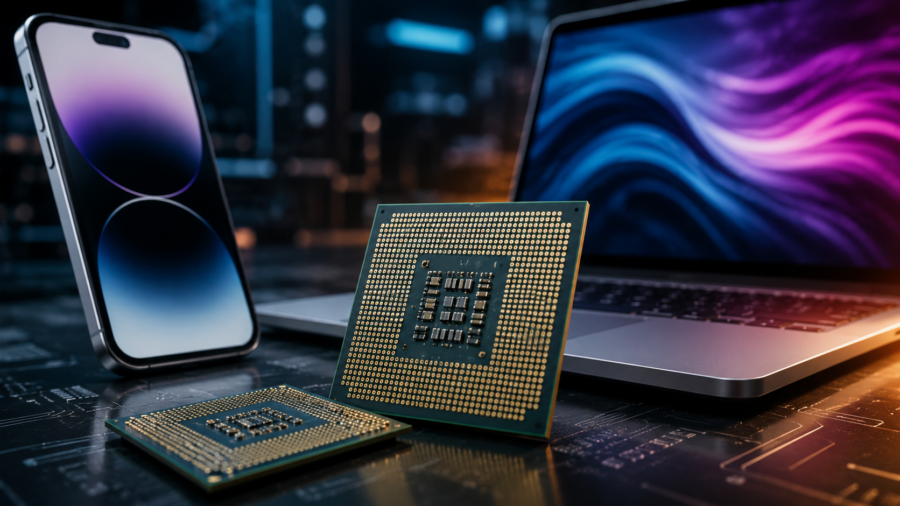
AI is not only changing apps and chatbots. It is also putting pressure on the tiny chips inside the devices people buy every year.
TSMC, the world’s largest contract chipmaker, says demand linked to artificial intelligence remains very strong. According to Reuters, TSMC CEO C.C. Wei told shareholders that the company is working hard to avoid becoming a bottleneck in the semiconductor supply chain as customers race to secure advanced chips for AI systems.
Wei also said TSMC would like to raise prices because costs are increasing, although he indicated the company does not want sudden or unsustainable price hikes. That distinction matters. It does not mean phone or laptop prices will immediately jump tomorrow. But it does show how AI demand is creating pressure behind the scenes.
For ordinary buyers, the issue is simple: the same advanced manufacturing capacity needed for AI servers is also important for premium phones, laptops, graphics cards, tablets and next-generation AI PCs. When demand rises sharply in one part of the market, the rest of the device world can feel the pressure.
Why TSMC matters to everyday devices
Most people never buy anything directly from TSMC. They buy phones, laptops, game consoles, smartwatches and tablets from familiar brands. But many of those devices depend on chips made by companies like TSMC.
TSMC manufactures advanced chips for major technology companies, including firms in the smartphone, PC and AI hardware markets. The company does not usually appear on the box, but it sits near the center of the global electronics supply chain.
That is why comments from TSMC matter. If the company says AI demand is extremely strong and supply is difficult to manage, it tells us something about the pressure inside the device industry.
Modern chips are not easy to make. Advanced processors require expensive factories, complex machines, specialized materials and long planning cycles. A company cannot instantly build enough new capacity just because demand rises.
This is one reason AI has become such a big supply chain story. The demand is growing quickly, but chip manufacturing expands more slowly.
How AI servers can affect consumer gadgets
At first, AI servers and smartphones may seem like separate markets. One powers massive data centers. The other sits in a pocket.
But both can compete for advanced manufacturing capacity. AI companies need powerful processors, accelerators and memory systems. Phone and PC makers need efficient chips that can run apps, games, cameras and increasingly on-device AI features.
As more companies add AI tools into everyday products, advanced chips become more valuable. A laptop advertised as an AI PC needs enough processing power to run local AI features. A phone with advanced photo editing, translation or assistant tools also depends on capable silicon.
This creates a chain reaction. If AI infrastructure keeps absorbing huge amounts of chip capacity, device makers may face higher component costs or tighter supply. Those costs do not always reach consumers directly, but they can influence product pricing, upgrade cycles and availability.
The result may not be a dramatic one-time price increase. It could be more subtle: premium models staying expensive for longer, entry-level devices improving more slowly, or AI features being reserved for higher-priced products.
Why this does not mean every device will suddenly cost more
It is important not to overstate the story. AI chip demand does not automatically mean every phone, laptop or tablet will become more expensive next month.
Consumer device prices depend on many factors: competition, currency changes, memory prices, display costs, tariffs, shipping, brand strategy and local market conditions. Chip demand is only one part of the equation.
TSMC also appears cautious about pricing. Reuters reported that Wei said the company does not want to suddenly raise prices the way some memory companies have done. That suggests TSMC is thinking about long-term stability, not only short-term profit.
Still, even gradual cost pressure can matter. When companies design a new phone or laptop, they make decisions months or years before the product reaches stores. If chip costs rise, they may adjust features, margins or product tiers.
That is where consumers may notice the impact. A future device might keep the same price but offer fewer upgrades than expected. Another model might get more expensive because it includes a newer AI-capable processor. A brand might separate AI features into premium versions to protect profit margins.
AI PCs are part of the pressure
One reason the timing matters is the rise of AI PCs.
At Computex 2026, several companies highlighted new PC hardware designed for AI workloads, gaming and local assistants. The Verge reported that Nvidia announced RTX Spark chips for laptops and mini PCs, while Intel introduced new chips for handheld gaming devices. PC Gamer also described Computex 2026 as a major event for AI PCs and gaming hardware announcements.
This shows how quickly AI branding is moving into consumer products. AI is no longer limited to cloud services. Companies want laptops and desktops that can run more AI tasks locally, without sending everything to a remote server.
That shift could be useful. Local AI can improve privacy, reduce latency and make features work even when internet access is limited. But it also increases demand for more capable chips inside consumer devices.
If every laptop maker wants stronger AI hardware, chip suppliers face another layer of demand on top of data centers. That could keep advanced components expensive, especially in the early years of the AI PC transition.
Phones may feel the effect through premium features
Smartphones are already deeply connected to AI. Modern phones use machine learning for photography, voice recognition, translation, battery management and spam protection. The next step is more on-device AI, where phones process more tasks locally instead of relying only on cloud servers.
That requires powerful and efficient processors. It also requires memory and storage that can support more complex tasks.
Premium phones are likely to get these features first because they can absorb higher component costs. Mid-range phones may receive some AI tools later, or may use cloud-based versions that require less local hardware.
This does not mean budget phones will disappear. It means the gap between premium and cheaper models could become more visible if AI hardware becomes a major selling point.
A buyer may eventually have to ask: does this phone run AI features on the device, or does it depend mostly on cloud processing? That question was not common a few years ago, but it may become more important.
The gaming hardware angle
Gaming is another area to watch.
High-performance chips are important for graphics cards, handheld gaming PCs and future consoles. AI is also becoming part of gaming hardware through upscaling, frame generation and smarter performance tools.
If AI chip demand keeps growing, gaming hardware makers may face competition for advanced manufacturing capacity. That could affect graphics card pricing, handheld gaming devices and premium gaming laptops.
The situation is not exactly the same as past GPU shortages. Today’s pressure is more about AI infrastructure, advanced packaging, memory and leading-edge production. But the consumer feeling may be familiar: powerful hardware stays expensive, and buyers wait longer for prices to fall.
For gamers, the most realistic impact may be slower price drops on high-end devices rather than an immediate shortage of every product.
What buyers should do
Consumers do not need to panic or rush into buying a new phone or laptop because of AI chip demand. But they should understand the trend before making expensive purchases.
If a current device works well, there is no need to upgrade only because a product has “AI” in the name. Many AI features are still developing, and some may become more useful over time through software updates.
When buying a new laptop or phone, users should look beyond marketing terms. The useful questions are practical:
Does the device have enough performance for the next few years?
Are the AI features actually useful today?
Will the manufacturer support the device with updates?
Is the price increase justified by real improvements?
For many people, battery life, display quality, storage, software support and repairability may still matter more than early AI features.
The bigger takeaway
AI demand is changing the electronics market from the inside out.
The most visible part of AI may be chatbots and image tools, but the deeper story is hardware. Data centers need more chips. PC makers want AI-ready processors. Phone brands want on-device intelligence. Gaming companies want more powerful and efficient hardware.
TSMC’s latest comments show that this demand is not slowing down. The company is trying to expand capacity and avoid becoming a supply chain bottleneck, but advanced chip manufacturing cannot grow overnight.
For consumers, the impact may be gradual rather than dramatic. Future phones, laptops and gaming devices may stay expensive for longer, especially when they include the newest AI hardware. Some features may first appear on premium models. Some upgrades may arrive more slowly in cheaper devices.
That does not make AI bad for consumers. Better chips can bring better cameras, faster laptops, smarter assistants and more useful software. But it does mean the AI boom has a cost side as well as a feature side.
The next time a company announces an AI phone or AI PC, the real story may not only be what the device can do. It may also be how much pressure the AI race is putting on the chips inside it.





Comments
You can write your views about this story. Comments may be moderated according to site settings.