
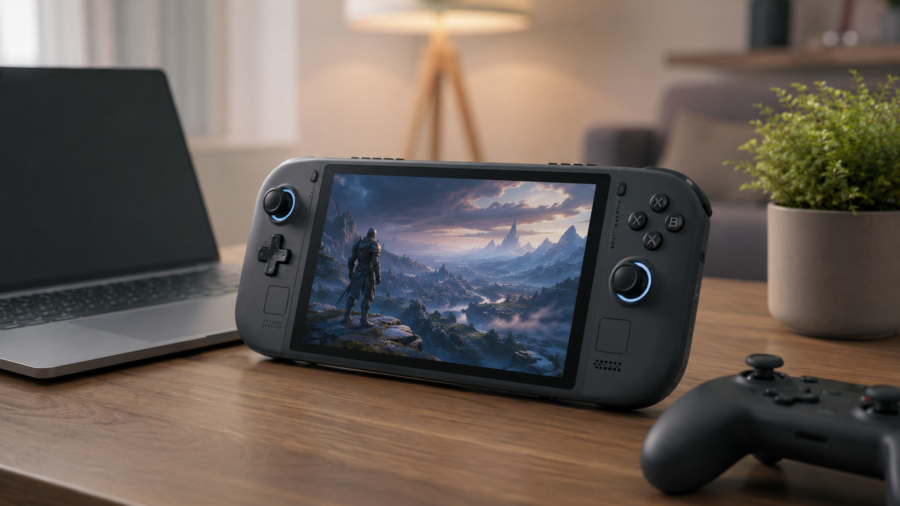
Handheld gaming PCs are no longer a strange experiment. In 2026, they are becoming one of the most active parts of the gaming hardware market.
At Computex 2026 in Taipei, several companies showed new portable gaming devices, chips and AI-ready PC hardware. The event, officially scheduled from June 2 to June 5, has become a major stage for the next wave of gaming laptops, compact PCs and handheld devices.
The main message is clear: handheld gaming PCs are getting faster, more capable and more serious. But there is still one major problem for many buyers. They are expensive.
Reports from Computex point to better performance, stronger graphics and improved battery life in new handheld models. The Verge described the latest generation as a real step forward for portable PC gaming, especially compared with earlier devices that often struggled to balance power, heat and battery drain. Tom’s Hardware also highlighted new handheld gaming systems such as the MSI Claw 8 EX AI+, which uses Intel’s latest gaming-focused hardware.
For gamers, this is exciting. But it also raises a practical question: are these new handheld PCs finally ready for mainstream buyers, or are they still mostly for enthusiasts?
Why handheld gaming PCs are growing fast
The handheld gaming PC market changed after the success of the Steam Deck. Before that, portable PC gaming existed, but it felt niche. Devices were often expensive, bulky or difficult for casual users to understand.
The Steam Deck helped prove that many players wanted a portable device that could run PC games without needing a full desktop setup. Since then, more companies have entered the market with their own designs.
The appeal is easy to understand. A handheld gaming PC lets players carry a large game library around the house, on a trip or during a commute. It can also connect to a monitor, keyboard or controller when needed. That makes it more flexible than a traditional console for some users.
In 2026, the category is becoming more competitive. Companies are not just copying the same idea. They are trying to improve screens, controls, cooling, software and battery performance.
This competition is good for players, but it also makes the buying decision more complicated.
What is improving in 2026
The biggest improvements are performance and efficiency.
Earlier handheld gaming PCs often forced players to make big compromises. A game might run well, but battery life could drop quickly. Another device might last longer, but struggle with demanding games. Some models also became hot or loud under heavy load.
Newer hardware is trying to solve those problems. The latest chips are designed to deliver more gaming performance without using as much power. That is especially important in a handheld device, where battery size and cooling space are limited.
Intel’s new handheld-focused hardware is one example of this shift. Tom’s Hardware reported that MSI’s Claw 8 EX AI+ joins a growing wave of handheld gaming PCs and uses new Intel Arc graphics technology. That suggests chipmakers are taking the category more seriously instead of treating handhelds as a side project.
Better chips could help devices run modern games more smoothly, support higher display quality and last longer between charges. These improvements do not make every handheld perfect, but they move the category closer to mainstream comfort.
The price problem has not gone away
Even with better hardware, price remains the biggest issue.
Many handheld gaming PCs cost much more than a traditional game console. Some are closer to gaming laptops in price, especially when they include premium screens, large storage, high-end chips and advanced cooling systems.
That creates a difficult comparison for buyers. A handheld PC may be powerful and flexible, but a console can be simpler and cheaper. A gaming laptop may be less portable, but it may offer a larger screen, full keyboard and stronger long-term performance for a similar price.
This is why handheld gaming PCs still need a clear reason to exist for each buyer. They make the most sense for players who value portability, already own PC games, and want to play away from a desk.
They make less sense for someone who only plays at home on a TV, prefers physical console games, or wants the cheapest way to access new releases.
In other words, the category is improving, but it is not automatically the best choice for everyone.
AI branding is entering gaming hardware
Another trend at Computex 2026 is the rise of AI PCs. Nvidia, Intel and PC manufacturers are all talking more about local AI processing, smarter assistants and AI-ready hardware.
That trend is also touching gaming devices. AI can be used for performance features, image upscaling, frame generation, system optimization and background tasks. Some future handhelds may use AI features to balance graphics quality, power consumption and battery life more intelligently.
But buyers should be careful with the marketing. Not every device labeled as “AI” will deliver a major gaming benefit. Sometimes AI branding may refer to hardware capabilities that developers have not fully used yet.
For gamers, the practical question is not whether a handheld has AI in the name. The better question is whether it runs the games they actually play at acceptable quality and battery life.
AI features may become more important over time, especially for upscaling and power management. But in 2026, performance, battery life, comfort and software support still matter more for most users.
Steam Deck alternatives are becoming more serious
One reason this market is interesting is that the Steam Deck no longer feels like the only obvious option.
There are now more Windows-based handhelds, more powerful premium models and more companies trying different approaches. Some devices focus on raw performance. Others focus on display quality, battery size, ergonomics or compatibility with existing PC launchers.
That is good because not every player wants the same thing. Some people want a device that feels like a console. Others want full Windows access. Some want the best performance possible. Others want a lighter device for indie games and older titles.
The downside is confusion. A casual buyer may struggle to compare chip names, wattage settings, screen refresh rates and storage options. The market is becoming more capable, but also more technical.
This is where clear reviews will matter. Benchmarks, battery tests and real game performance will be more useful than launch promises.
Who should consider a handheld gaming PC?
A handheld gaming PC can be a good choice for a specific type of player.
It is best for someone who already has a PC game library, wants to play away from a desk, and understands that battery life will vary depending on the game. It is also useful for people who travel often or want a second gaming device without buying another full computer.
It may not be ideal for players who want a simple plug-and-play console experience. Windows handhelds can sometimes require updates, settings changes and launcher management. That is not a problem for PC gamers, but it can be frustrating for people used to traditional consoles.
Budget also matters. If a handheld costs almost as much as a gaming laptop, buyers should think carefully about how often they will actually use the portable form factor.
The best device is not always the most powerful one. It is the one that fits how the player really plays.
What to check before buying
Before buying a handheld gaming PC in 2026, users should look at more than the headline specs.
Battery life is one of the most important details. A device may perform well when plugged in or running at high power, but that does not guarantee long play sessions on battery. Buyers should look for real-world tests, not only manufacturer estimates.
Comfort is also important. A handheld can have great hardware but still feel heavy or awkward after an hour. Button layout, grip shape and screen size can make a big difference.
Software support matters too. A device with regular updates, driver improvements and a reliable interface will age better than one with strong hardware but weak software.
Storage should not be ignored. Modern games are large, and a handheld with limited storage can fill up quickly. Expandable storage or larger built-in options may be worth the extra cost for some players.
Finally, buyers should check game compatibility. Not every PC game works perfectly on every handheld, especially when launchers, anti-cheat systems or control layouts are involved.
The bigger takeaway
Handheld gaming PCs are clearly improving in 2026. Computex showed that major hardware companies now see portable PC gaming as a serious market, not a small experiment.
The latest devices promise better performance, stronger graphics and more efficient chips. That could make handheld gaming more practical for people who want to play PC games anywhere.
But price is still the problem that could hold the category back. Until more affordable models arrive with strong battery life and reliable performance, handheld gaming PCs may remain strongest among enthusiasts and frequent travelers.
For now, the best way to understand the market is simple: handheld gaming PCs are becoming better devices, but not always better deals.
That may change over time as competition grows. If prices come down and software becomes easier, portable PC gaming could move from a niche habit to a normal part of the gaming world. Computex 2026 suggests the hardware is getting closer. The next challenge is making it affordable enough for more players.



Comments
You can write your views about this story. Comments may be moderated according to site settings.