
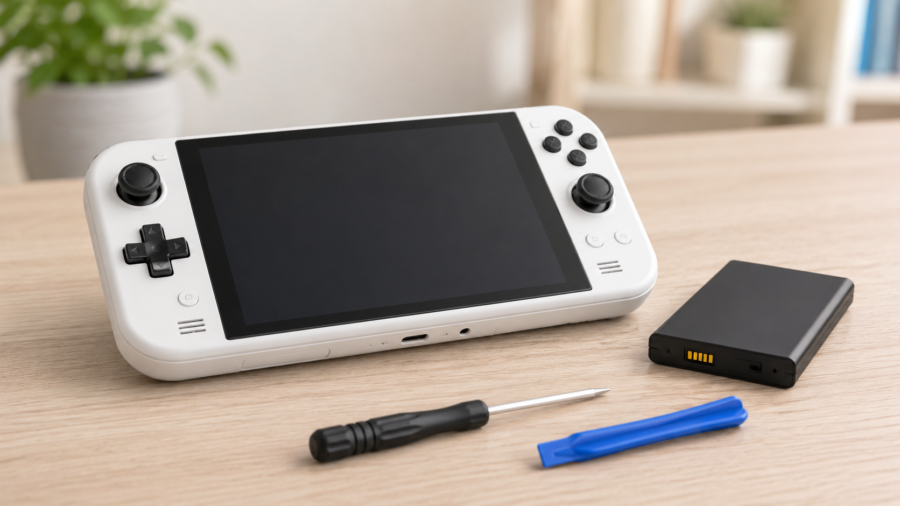
Nintendo is preparing a new version of the Switch 2 for Europe, and the reason is not a surprise game feature or a performance upgrade. It is the battery.
The company has confirmed that it will sell a modified Switch 2 model in the European Union with a battery that is easier for users to replace. The change is being made to comply with upcoming EU battery rules that are set to apply from February 18, 2027. Those rules require many portable electronic devices, including handheld game consoles, to be designed so that batteries can be removed and replaced more easily.
For players, this may sound like a small hardware detail. But it could become one of the more important design changes in the Switch 2’s life cycle. A replaceable battery can affect how long a console remains useful, how easy it is to repair, and whether owners feel forced to replace an entire device when one aging part starts to fail.
Why Europe is getting a different Switch 2 model
The European Union has been pushing electronics makers toward more repairable products. The wider goal is to reduce electronic waste and make devices last longer. Batteries are a major part of that effort because they wear down over time, even when the rest of a device still works well.
According to The Verge, Nintendo’s upcoming European Switch 2 revision will use new model numbers and an “OSM” code on packaging to identify versions designed for the battery requirement. The report also notes that Nintendo has not yet explained exactly how the revised hardware will be changed.
That leaves some practical questions unanswered. Will users be able to replace the battery at home with basic tools? Will Nintendo sell replacement batteries directly? Will repair shops get easier access to parts? Those details matter because a device can technically support battery replacement while still being inconvenient or expensive to repair.
Still, the broader direction is clear: Europe’s rules are forcing major hardware companies to think about repairability earlier in the design process.
Why battery replacement matters for handheld consoles
Handheld gaming devices are different from traditional home consoles. A TV console can often sit under a screen for years with little concern about battery health. A portable console depends on its battery every time it leaves the dock or charger.
Over time, rechargeable lithium-ion batteries lose capacity. A console that once lasted several hours may eventually need to be charged more often. For casual players, that can be annoying. For families, travelers or people who use a handheld daily, it can be a real reason to stop using the device.
That is why a replaceable battery could be more than a regulatory checkbox. It could extend the useful life of the Switch 2.
If a player can replace only the worn battery instead of replacing the full console, the device becomes more practical to keep. It may also become more attractive on the used market, where battery condition is often one of the biggest concerns.
This is also about the right-to-repair movement
The Switch 2 battery revision fits into a much larger conversation about right to repair.
For years, consumer electronics have become thinner, more sealed and harder to open. That approach can help manufacturers make sleek products, but it also makes repairs more difficult. When a battery is glued in or buried behind delicate parts, many users have no realistic option beyond paying for official service or replacing the device.
The EU’s battery rules are part of a wider effort to change that balance. The Verge’s broader analysis of the rules notes that the legislation is designed to make batteries replaceable with basic or included tools and to ensure battery availability for several years after purchase.
For a gaming console, that could shift expectations. Players may start asking not only how powerful a device is, but also how long it can be maintained.
That is especially relevant now because handheld gaming is becoming more competitive. Devices such as portable PCs, cloud gaming handhelds and hybrid consoles are all trying to become the main screen for casual gaming. Battery life and repairability are part of that competition, even if they are less exciting than frame rates or display quality.
Will the replaceable battery model come outside Europe?
At the moment, it is not clear whether Nintendo will sell the revised Switch 2 model outside the European Union. The confirmed change is tied to European regulations, and companies sometimes create region-specific hardware to meet local laws.
That creates an interesting question for players in the U.S., U.K., Canada, Australia and other markets. If Europe gets a more repairable Switch 2, will customers elsewhere ask for the same version?
There is a practical business argument for keeping hardware designs consistent across regions. Manufacturing one global version can be simpler than maintaining multiple versions. But there is also a cost argument for limiting changes to markets where they are legally required.
Nintendo has not announced a global rollout for the replaceable battery model, so it would be premature to assume one is coming. For now, the safest reading is this: Europe is getting a Switch 2 version designed to meet new battery rules, while other markets remain uncertain.
Should players wait for the revised model?
For most players, the answer depends on location and timing.
The EU battery requirement takes effect on February 18, 2027, so this is not necessarily a reason for every buyer to pause immediately. The current Switch 2 remains the device Nintendo is selling now, and the revised model appears to be a compliance-focused hardware update rather than a major performance upgrade.
There is no confirmed evidence that the replaceable battery model will be faster, visually different or better for games. The main benefit is likely long-term repairability.
That matters most to players who keep consoles for many years. If someone upgrades often, battery replacement may not be a major concern. But for families, collectors, second-hand buyers and players who want a device to last as long as possible, a more repairable version could be appealing.
The key point is not that the current Switch 2 suddenly becomes a bad purchase. It is that Europe’s upcoming model may offer a practical long-term advantage.
What this could mean for future gaming hardware
Nintendo is not the only company affected by the repairability debate. The same pressure is spreading across phones, tablets, laptops, earbuds, controllers and other battery-powered devices. Once consumers become used to the idea that batteries should be replaceable, companies may face more questions when they release sealed products.
Gaming hardware is a good example because players often form long relationships with their devices. A console is not just another gadget. It holds saved games, family routines, travel memories and years of software purchases. When the battery weakens, replacing the whole device can feel wasteful.
A more repairable Switch 2 could help normalize the idea that gaming devices should be built for a longer life. It may also encourage competitors to highlight battery access and repair options as selling points.
That does not mean every device will suddenly become easy to open. Manufacturers still have to balance durability, size, weight, safety and cost. But the direction is changing. Repairability is moving from a niche concern into a mainstream product feature.
The bigger takeaway
The European Switch 2 battery revision is not the kind of update that creates instant excitement like a new game trailer. But it may be more important than it looks.
A replaceable battery can make a handheld console easier to maintain, more useful over time and less likely to become electronic waste when one component ages. For players, that means the conversation around gaming hardware is expanding. Power and graphics still matter, but so do repairability, battery health and long-term value.
Nintendo’s decision shows how regulation can quietly reshape familiar devices. The Switch 2 may look like a gaming story, but in this case, it is also a consumer technology story about who gets to keep devices working after the battery starts to fade.




Comments
You can write your views about this story. Comments may be moderated according to site settings.