
AI gadgets have had a difficult start. Some looked exciting in demos, but felt awkward in real life. Others promised to replace the phone, then struggled with basic usefulness.
Microsoft’s Project Solara is interesting because it takes a different approach. Instead of launching one flashy consumer device, Microsoft is building a platform that could help other companies create AI-powered gadgets for specific jobs.
According to The Verge, Project Solara is an operating system for AI agent devices. It is based on Microsoft’s Android-based Device Ecosystem Platform rather than standard Windows, and it is designed for small, low-power devices that need management, security and AI features.
That sounds technical, but the bigger idea is simple: Microsoft wants AI to move beyond laptops and chat windows into smaller devices that can sit on a desk, hang from a badge or support workers in specific environments.
What Project Solara actually is
Project Solara is not a new phone, laptop or consumer gadget that people can buy today. It is a software platform for companies and hardware partners.
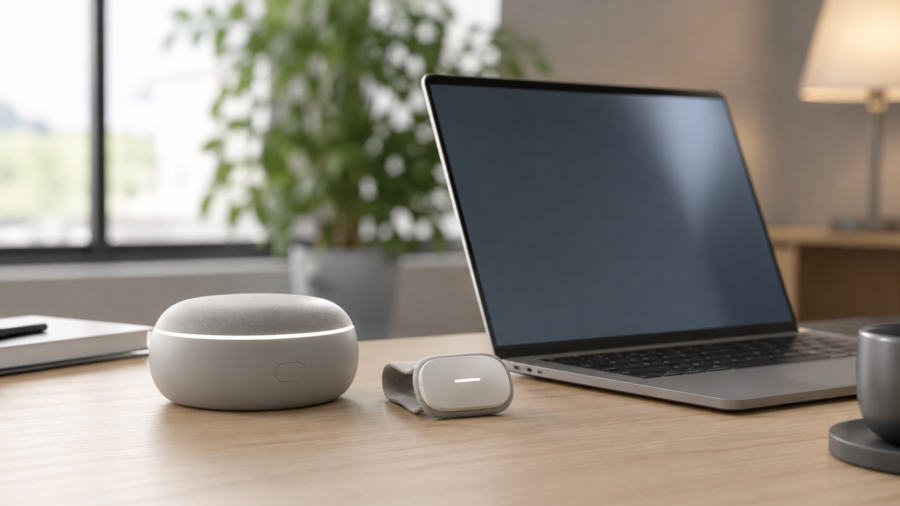
The Verge reported that Microsoft showed two concept devices: a desk-based device with a screen-like presence and a badge-style wearable. These are reference designs, not commercial products. They are meant to show what the platform could power.
The desk device is designed around AI agents, while the wearable badge concept includes sensors such as a camera and fingerprint scanner. The idea is that future workplace devices could understand context, record or summarize information when allowed, and help people complete tasks without needing a full computer in front of them.
This makes Project Solara different from many previous AI gadget announcements. It is less about one product and more about a device ecosystem.
Why Microsoft is using an Android-based platform
One surprising detail is that Project Solara is not built around Windows in the traditional way.
For small AI devices, Windows may not always be the right fit. A badge, compact desk assistant or dedicated workplace tool needs to be light, efficient and easy to manage. It may not need a full desktop operating system.
An Android-based platform can make more sense for smaller hardware. Android already works across phones, tablets, TVs, cars and embedded devices. Microsoft can use that flexibility while adding enterprise controls, security and integration with its own AI services.
For users, the operating system detail matters less than the experience. If a device can respond quickly, protect data and connect with work tools, most people will not care whether it is technically Windows or Android underneath.
But strategically, it shows Microsoft being practical. The company is not forcing every AI experience into the old PC model. It is trying to build for the kind of hardware AI may need next.
Why AI gadgets have struggled so far
The AI gadget market has been full of big promises and uneven results.
The problem is not that people dislike helpful AI. The problem is that a separate device must justify its place. If a phone can already answer questions, translate text, summarize messages and run apps, why carry another gadget?
Many AI devices face the same challenge: they need to be faster, simpler or more convenient than the phone in a specific situation. Otherwise, they become interesting demos that people stop using.
Project Solara appears to avoid that trap by focusing first on targeted use cases. A workplace badge, for example, does not need to replace a smartphone. It only needs to help in moments where a phone or laptop is not convenient.
That is a more realistic path for AI hardware.
The workplace may be the first real test
Project Solara looks especially focused on work environments.
The Verge noted that companies including AccuWeather, Best Buy, CVS Health and Target are expected to test or pilot experiences using the platform. That suggests Microsoft sees early demand in business settings, not necessarily in mass-market consumer gadgets.
This makes sense. Workplaces often have repetitive tasks, controlled environments and specific problems that AI devices can address. A retail employee may need quick access to product information. A healthcare worker may need hands-free assistance. A field worker may need a device that records notes or checks instructions without opening a laptop.
In those cases, an AI gadget does not need to be cool. It needs to be useful, secure and reliable.
That is where Microsoft has an advantage. The company already sells productivity software, cloud services, identity tools and device management systems to businesses. Project Solara can fit into that larger ecosystem.
The privacy question cannot be ignored
Any AI gadget with cameras, microphones or sensors raises privacy concerns.
A wearable badge that can capture or summarize conversations may be useful in some workplaces, but it also needs strict rules. People should know when recording is happening, who can access the data and how long information is stored.
This is especially important in public-facing jobs, healthcare settings, offices and retail spaces. AI tools that listen or observe can easily become uncomfortable if transparency is weak.
Microsoft will need to show that Project Solara devices can be managed safely. That means clear permissions, visible indicators, secure data handling and strong controls for employers and users.
The technology may be promising, but trust will decide whether people accept it.
Why this matters for everyday consumers
Even if Project Solara starts in the workplace, it could shape consumer devices later.
Many technologies begin in business settings before reaching ordinary homes. If AI desk devices or wearables become useful at work, companies may eventually create simpler versions for home use.
A future AI gadget might sit on a desk and help manage calls, reminders, smart home controls or personal tasks. A wearable device might support translation, memory aids or quick summaries. These ideas are not new, but Project Solara could give hardware makers a more structured platform to build on.
The key question is whether these devices can offer something the phone does not.
For consumers, that will be the deciding factor. An AI gadget must be genuinely easier than pulling out a phone. It must also feel trustworthy, not intrusive.
How this fits into the larger AI hardware race
Microsoft is not alone in chasing AI hardware.
Google, Meta, OpenAI and other companies are all exploring ways to bring AI into physical devices. Smart glasses, AI pins, voice assistants, laptops and wearable gadgets are part of the same larger race.
The reason is clear. If AI becomes a new way people interact with technology, companies do not want that interaction limited to one app or one device. They want AI to be available wherever people work, move and communicate.
Project Solara gives Microsoft a route into that future without needing to manufacture every device itself. Instead, it can provide the platform, tools and services that partners use to build hardware.
That is similar to the role Windows played in the PC era, but adapted for smaller and more specialized devices.
The realistic future of AI gadgets
The most realistic future is not one device replacing everything.
Phones will not disappear because of AI badges. Laptops will not vanish because of desk assistants. Instead, AI may spread across many smaller tools, each designed for a particular context.
A phone may remain the main device for personal life. A laptop may remain the main device for work. But AI gadgets could fill gaps: quick voice tasks, hands-free notes, workplace assistance, smart displays and context-aware reminders.
Project Solara points toward that kind of future. It is not promising that everyone will carry a new AI gadget next month. It is showing how companies might build more focused AI devices over time.
That makes the announcement more important than it may first appear.
The bigger takeaway
Microsoft’s Project Solara is not a finished consumer product, and that is exactly why it is worth watching.
Instead of betting everything on one AI device, Microsoft is building a platform for a broader category of AI-powered hardware. That gives partners room to experiment, while giving businesses a more controlled way to test AI gadgets in real environments.
The opportunity is clear: AI devices could make some tasks faster, more natural and more hands-free. The risk is also clear: they must avoid becoming intrusive, confusing or unnecessary.
For now, Project Solara is a signal. Microsoft believes the next stage of AI will not live only inside apps, search boxes or laptops. It may also live in smaller devices around us.
Whether those gadgets become useful everyday tools will depend on something simple: they need to solve real problems better than the devices people already have.

Comments
You can write your views about this story. Comments may be moderated according to site settings.