
We had previously been lost together in Maya Deren’s fragmented dream universes and in the mirrored corridors of “Meshes of the Afternoon”. Today we will take the route to one of the most psychedelic, most disturbing peaks of animation; We’re talking about the movie “Suzan Pitt”. Yes, I confess: Instead of starting Suzan Pitt’s oeuvre chronologically, I dived in the middle with “Asparagus (1979)”, which is considered the director’s masterpiece.
A little bit of cunning, a little bit of impatience… But this 20-minute hand-made nightmare/dream mixture deserves to be talked about at such length that we had to break the rules and jump into this psychedelic feast from the deepest point. Here is that uncanny examination that grows in the greenhouse of the subconscious: Harvest and Transformation That huge asparagus field lying at the heart of the film is actually the artist’s own mental garden.
Pitt uses asparagus as an obvious “phallic symbol,” but there is no masculine domination here. On the contrary, our main character carefully cultivates these plants, caresses them, harvests them and devours them. This is the animated version of the “bodily experience” feeling we see in Maya Deren’s cinema. The character takes the masculine energy (asparagus) in the outside world, digests it and gives birth to her own feminine creativity and art from it.
So, asparagus is the raw material and fuel of art here. Masks and Identity The fact that the character does not have a fixed face and chooses among boxes full of masks in his home is the peak of the famous symbolism that you also pointed out. Here, the artist appears before us as a “nobody” stripped of his social identities. Each mask is a different persona presented to the outside world. But what really hits home is the emptiness under those masks.
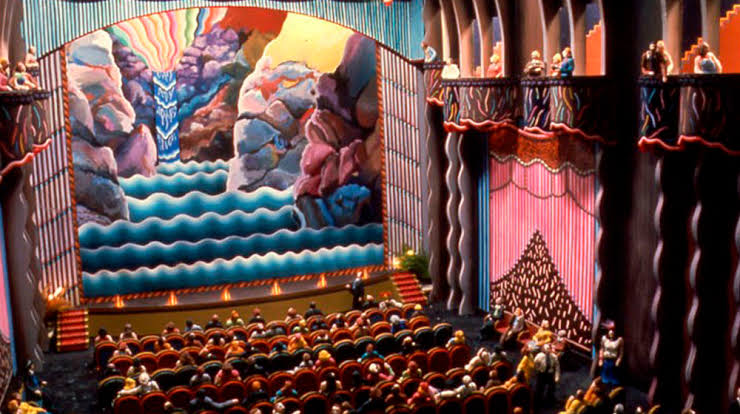
Pitt whispers to us: At the moment of true creation, the artist’s own self disappears; he is now just a conduit for his dreams. Audience and Alienation The surreal theater sequence at the end of the film is the greatest expression of an artist. The character brings to the stage the “box of wonders” that he has filtered from the images he has digested. As the psychedelic chaos overflowing from the box fills the hall, the audience is depicted as frozen and unresponsive figures made of clay.
While the artist reveals his soul in its wildest form, we see how mute and inadequate the society (audience) remains in the face of this genius. This is the theme of broken communication in Maya Deren’s films, transformed into the artist-society gap. Visual Poetry Asparagus is a visual poem in which hand-drawn details and techniques and the endless dream logic are intertwined. Once you stop looking for logic, you start to smell those asparagus fields.
There are very few works in which the colors are so raw yet so fascinating. We started the Suzan Pitt marathon with the heavy ball. But don’t worry, after this point I will come back and review the director’s other works, sticking to that chronological route. See you in the next review to return to the beginning of the journey.




Comments
You can write your views about this story. Comments may be moderated according to site settings.