
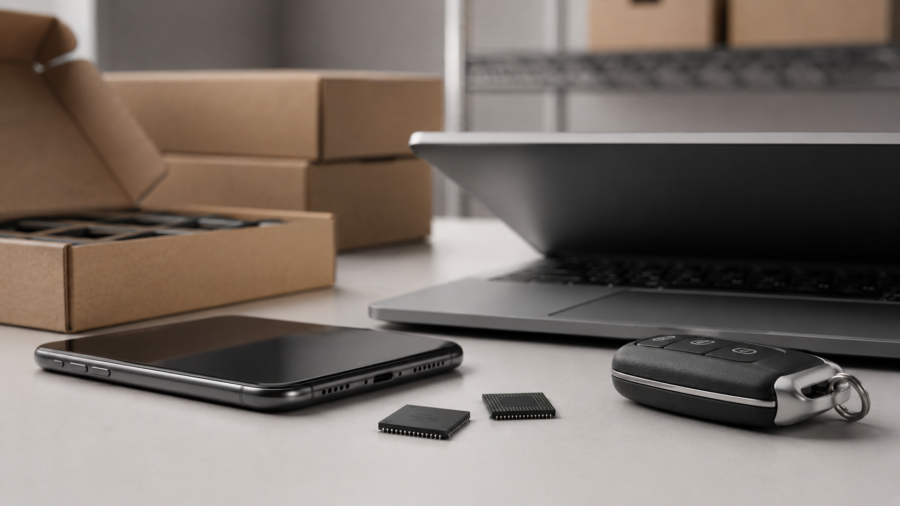
The AI boom is starting to create a problem that reaches far beyond data centers. Memory chips, the small components that help devices store and move data quickly, are becoming harder to secure. That could eventually affect the price of everyday products such as phones, laptops, cars and connected devices.
For most people, memory chips are invisible. They sit inside smartphones, computers, vehicles, routers, game consoles, smart TVs and medical devices. But when supply gets tight, the impact can become very visible at the checkout page.
Reuters reported that U.S. industry groups representing automakers, retailers, electronics companies, telecom firms and medical device manufacturers warned the Treasury and Commerce departments about a growing imbalance in the memory chip market. The groups said demand from AI data centers could lead to sustained price increases for American households and disrupt critical supply chains.
The concern is easy to understand. AI systems need huge amounts of memory. Data centers that train and run large AI models use advanced memory chips at scale. As cloud and AI companies buy more of those parts, other industries may face higher prices or weaker supply.
That does not mean every phone or car will suddenly become unaffordable. But it does mean memory has become one of the pressure points in the global technology supply chain.
Why Memory Chips Matter
A processor is often described as the brain of a device, but memory is what helps that brain work quickly. Without enough memory, a phone becomes slower, a computer struggles with multitasking and a car’s advanced electronics may not perform as smoothly.
Modern vehicles use memory chips for infotainment screens, driver-assistance systems, cameras, sensors and connected features. Smartphones and laptops use memory for apps, operating systems, AI features, photos, games and background tasks. Even cheaper devices need memory to function properly.
That is why a memory shortage can affect many different markets at the same time.
How AI Data Centers Changed the Market
The new pressure comes from the scale of AI infrastructure. Big technology companies are building data centers filled with AI servers. Those servers need high-performance memory to process large models, answer prompts and support AI tools used by businesses and consumers.
Reuters reported that Morgan Stanley warned about “chipflation,” saying memory chip prices have increased sharply as demand from major technology companies pushes supply toward data center products. The report said memory chipmakers are prioritizing higher-margin data center chips, which can leave consumer electronics makers with higher costs or tighter access.
This is the key point: AI demand does not stay inside AI companies. It competes for the same industrial capacity that supports ordinary devices.
When suppliers focus on high-margin AI memory, makers of phones, PCs, cars and other electronics may have to pay more, wait longer or redesign product plans.
Why This Could Affect Phones
Smartphones are one of the clearest examples. A phone needs memory to run apps smoothly, store temporary data and support features such as photography, gaming and AI tools.
Reuters reported separately that the global smartphone market is facing pressure from the worsening memory chip crunch. Counterpoint Research expects smartphone shipments to fall sharply in 2026, with budget smartphone makers hit especially hard because rising production costs make low-cost models harder to build profitably.
That matters for everyday buyers. Premium phones may still sell because higher-end customers can absorb price increases more easily. Budget phones are more vulnerable because small cost increases can make a big difference.
If memory remains expensive, users may see fewer very cheap phone models, higher base prices or weaker specifications in low-cost devices.
Why Cars Could Also Be Affected
Cars are no longer just mechanical products. They are packed with screens, sensors, cameras, connectivity modules and driver-assistance systems. All of those systems require chips, including memory.
The Reuters report on U.S. industry groups said automakers were among the sectors warning that memory supply pressure could affect prices and supply chains.
For buyers, this may not show up as a line item called “memory chip cost.” Instead, it could appear through higher vehicle prices, fewer low-cost trims, delayed features or tighter availability of certain models.
The effect may be especially important for vehicles with more advanced electronics. Electric cars, premium vehicles and cars with large infotainment displays or advanced safety systems may use more memory than basic models.
Why Retailers Are Worried
Retailers are concerned because electronics are not isolated products. A shortage can ripple through many categories at once: laptops, tablets, phones, gaming devices, routers, smart home products and accessories.
If manufacturers pay more for components, those costs may eventually reach stores. Some companies may raise prices. Others may reduce promotions, delay product launches or lower specifications to keep prices stable.
That is why this story is not only about chip companies. It is about the entire chain between AI infrastructure and the products people buy.
What “Chipflation” Means
“Chipflation” is a simple way to describe rising prices caused by chip shortages and heavy demand. In this case, the pressure is coming from memory chips.
Morgan Stanley’s warning, reported by Reuters, suggests that this is not only a temporary squeeze. The brokerage described a broader supply-demand reset as AI and cloud companies lock in capacity and memory suppliers adjust toward high-margin products.
In everyday terms, this means the AI boom may make some ordinary electronics more expensive even if the product itself does not look like an AI device.
A cheap smartphone still needs memory. A family laptop still needs memory. A car with a screen still needs memory. When the memory market tightens, all of those products can feel the pressure.
Will Consumers Notice Immediately?
Not always. Component price increases do not always reach consumers instantly. Companies may absorb some of the cost, use existing inventory or adjust product plans before raising retail prices.
But if the shortage continues, the effects become harder to hide.
Consumers may notice:
higher prices for budget phones
fewer discounts on laptops and electronics
delayed product launches
cars with fewer available features
reduced storage or memory in cheaper devices
more expensive repair or replacement parts
The biggest impact may be on value-focused products because they have less room to absorb higher component costs.
Why This Is Different From the Last Chip Shortage
The pandemic-era chip shortage affected many types of semiconductors and caused major disruptions in cars, game consoles and electronics. This new pressure is more focused on memory and AI data center demand.
That difference matters. It is not only about factories shutting down or shipping delays. It is about a powerful new buyer group — AI data centers — taking a larger share of available capacity.
Memory suppliers benefit from the boom because higher-end AI memory can command strong prices. But industries that depend on more common memory types may face a harder market.
What Governments May Do
The industry groups in Reuters’ report asked U.S. officials to pay attention to the issue because it could affect households and critical supply chains. The U.S. has already spent billions to support domestic chip production, including memory manufacturing.
However, chip capacity cannot be expanded overnight. New facilities and production lines take time. Even if governments act, the market may remain tight for a while.
That is why companies are trying to secure supply early, and why some analysts expect memory pricing pressure to last beyond a short cycle.
What This Means for Shoppers
For shoppers, the practical takeaway is not to panic. But it may be wise to understand why some devices are getting more expensive or why budget options seem less attractive.
If you are planning to buy a phone, laptop or gaming device, compare specifications carefully. A cheaper model may come with less memory or storage than before. A slightly more expensive model may last longer if it has enough memory for future apps and updates.
For cars, buyers should pay attention to trim levels and feature availability. If supply gets tight, some electronics-heavy features may become more expensive or limited.
The Bigger Picture
The AI boom is often discussed as a software revolution, but it is also a hardware competition. Data centers need power, cooling, servers, processors and memory. Those physical demands can affect the rest of the economy.
Memory chip shortages show how connected the technology world has become. A surge in AI server demand can influence the cost of a budget phone, a family laptop or a car dashboard system.
That is why this story matters. AI may feel like something that happens in the cloud, but the cloud is built from real components. When those components become scarce, the effects can reach ordinary households.
The next time a phone, laptop or car seems more expensive than expected, memory chips may be part of the reason.




Comments
You can write your views about this story. Comments may be moderated according to site settings.