
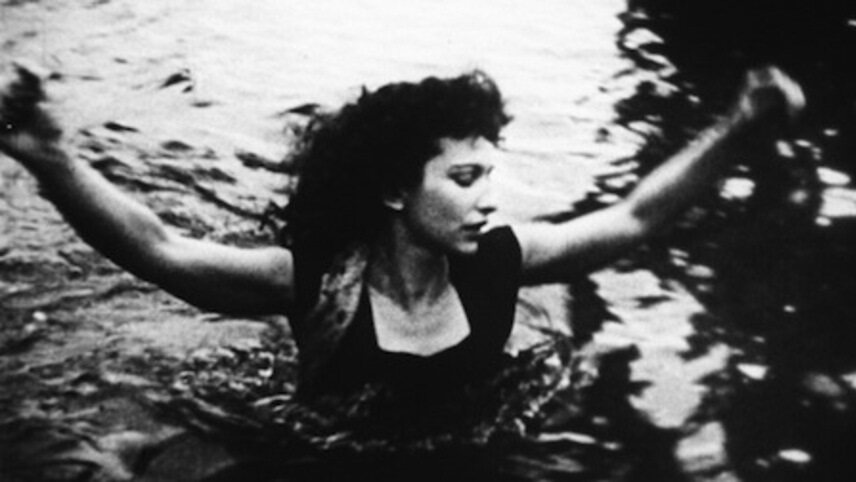
We continue the marathon in which we dive into the uncanny, surreal mind of Maya Deren without slowing down. If you remember, we talked at length about a mind lost in its own inner labyrinth in “Meshes of the Afternoon” and how our perception of physical space could be shattered in At Land. Those who have read the review of The Private Life of a Cat, which I have included, in which we dive into that strange and independent world of cats, have also seen how different extremes Deren can navigate.
Actually, my intention was to continue this adventure with Witch’s Cradle, but since I could not find the psychological depth I was looking for in that unfinished visual experiment, where I could literally move my pen over it and analyze it, I silently skipped it. We direct our route directly to the movie Ritual in Transfigured Time (1946). As the name suggests, this movie puts “time” and “rituals” in the leading roles.
But don’t get me wrong; I’m not talking about the occult rituals straight out of ancient spell books that we describe while rolling our dice at FRP tables. Deren’s problem here is the social rituals that we all involuntarily participate in every day and those memorized, fake crowd behaviors. Ballets of Everyday Life The famous party scene of the movie is a gold mine for people like me who love reading about character psychology and mental alienation.
Imagine a crowd of people crowded into the room, clinking glasses, greeting each other… Maya Deren, slow-motion and freeze-frame transforms an ordinary moment into a ballet so artificial, so strange and mechanical that you feel the suffocation of a mind that becomes lonely in the middle of the crowd, in your bones. While watching this, this kept coming to my mind: It is as if we are watching the great alienation that a single player character will experience as he becomes aware of the fakeness around him in an inn full of poorly written NPCs.
Everyone repeats a routine and our protagonist is a stranger in this ritual. Disintegrated Identities and the Other Self That “mental tension” that I frequently mentioned in my previous Maya Deren reviews changes its dimension a little here and is handled with the doppelgänger (other self) theme that we love to see in literature or fantasy fiction. While our main character (Rita Christiani) is drifting on her inner journey, Maya Deren herself suddenly appears before the camera as a dark reflection of the character.
The perfect fluidity of dream logic is at play here. The character enters through a door and finds himself in a completely different place, among the statues, without interrupting the action. The boundaries of the body continue to exist far beyond space and time. Return to Water The “water” motif, which I particularly emphasized in the At Land review, meets us here in the finale as well. After that tense chase between the sculptures, between liveliness and dullness; Our character jumps into the purifying and chaotic embrace of the sea again, taking on the aesthetics of a negative film.
It’s as if that compulsory social ritual has been completed and identity has undergone its final metamorphosis. Long story short; If you are tired of mainstream narratives dictated by cause-effect relationships and are looking for a quiet but screaming mind journey that pushes the boundaries of cinema and speaks entirely with the power of visuality, do not miss this stop. Let’s see what strange lands this surreal marathon will take us to.



Comments
You can write your views about this story. Comments may be moderated according to site settings.