

AI is moving beyond laptops, phones and chatbots. In 2026, one of the most exciting consumer technology trends is the rise of AI-powered wearables, especially smart glasses, smart rings and lightweight connected devices designed to blend into everyday life. Instead of asking people to open another app or sit in front of another screen, wearable AI promises to bring digital assistance directly into the moments where people actually need it.
The appeal is easy to understand. A wearable device can support navigation, translation, health tracking, notifications, content capture, productivity and personal assistance without forcing users to constantly pull out a phone. This makes the category especially powerful because it connects two major technology shifts at the same time: artificial intelligence and ambient computing.
Why Wearable AI Is Gaining Momentum
Consumers are becoming more selective about technology. They do not want devices that only look futuristic. They want tools that solve practical problems. AI smart glasses and wearables are gaining attention because they can make digital features feel more natural. A pair of smart glasses can support hands-free information, a smart ring can track health signals with minimal friction, and future AI wearables may help users move between work, travel, fitness and entertainment more smoothly.
This shift matters because the best technology often becomes less visible over time. Smartphones made computing portable. Wearable AI could make computing more immediate. Instead of searching for a feature inside a menu, users may simply speak, gesture or receive context-aware help at the right moment.
Smart Glasses Are Moving Toward the Mainstream
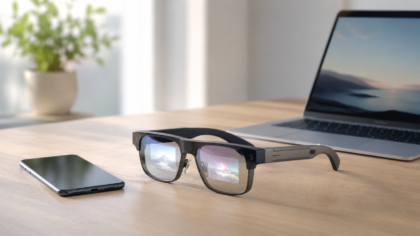
Smart glasses are one of the most watched areas in consumer tech because they sit at the intersection of design, utility and artificial intelligence. Earlier wearable displays often felt too bulky or too niche for mainstream users. The new wave is different. Companies are focusing on lighter frames, better displays, improved stabilization, more stylish designs and practical use cases such as travel, media viewing, live captions, translation and content creation.
The key challenge is balance. Smart glasses need to be useful without feeling intrusive. They need enough intelligence to justify daily use, but they also need comfort, privacy and battery efficiency. If brands can solve those problems, smart glasses could become one of the most important device categories of the next few years.
Smart Rings Show the Power of Invisible Technology
Smart rings are growing for a different reason. They do not try to replace a phone or a smartwatch. Instead, they focus on quiet, continuous health and wellness tracking. Sleep, recovery, stress, heart signals and readiness data are becoming valuable to users who want more insight without wearing a large screen on their wrist.
This makes smart rings a strong example of where wearable AI is heading. The most successful devices may not be the loudest or most visually dramatic. They may be the ones that collect useful signals, explain them clearly and help users make better daily decisions without adding digital noise.
What Makes AI Wearables Different
The real breakthrough is not only the hardware. It is the intelligence layer behind it. AI can help wearables understand context, summarize information, personalize recommendations and make raw sensor data easier to interpret. A wearable device becomes more valuable when it does not simply collect data, but turns that data into useful guidance.
For example, an AI wearable could help a traveler understand a foreign-language sign, guide a runner through a safer route, remind a worker about an important task, or explain sleep and stress patterns in plain language. These are small moments, but they add up to a larger change in how people interact with technology.
Privacy and Trust Will Decide Adoption
Wearable AI also raises important questions. Devices with cameras, microphones and health sensors must be designed with strong privacy protections and clear user control. People need to know when a device is recording, how data is processed, what stays on the device and what is sent to the cloud.
Trust will be just as important as innovation. Consumers may be excited by AI wearables, but they will not adopt them widely unless the products feel safe, transparent and respectful. The companies that explain privacy clearly and build responsible features will have a major advantage.
The Bigger Picture
AI smart glasses, smart rings and next-generation wearables are not just accessories. They represent a shift toward technology that fits more naturally into human behavior. The screen is no longer the only interface. Voice, sensors, context and lightweight displays are becoming part of the new computing experience.
In 2026, wearable AI is becoming one of the most important consumer technology trends because it promises a more personal, more immediate and less distracting relationship with digital life. The winners in this category will be the devices that feel useful, comfortable and trustworthy enough to become part of everyday routines.



Comments
You can write your views about this story. Comments may be moderated according to site settings.