
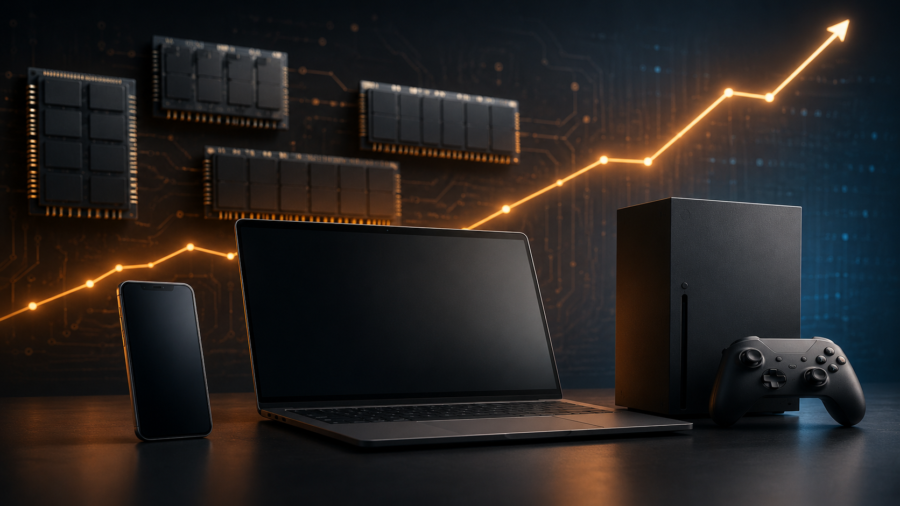
Artificial intelligence is changing the technology market in a way many consumers can now feel directly: device prices are rising. In 2026, the global demand for AI data centers, high-performance servers and advanced memory chips is putting pressure on the same supply chain that powers smartphones, laptops, gaming PCs and consoles. The result is a new kind of tech inflation, where the AI boom is no longer only about smarter software. It is also affecting the price of everyday hardware.
The key issue is memory. Modern AI systems need huge amounts of high-speed memory to train and run advanced models. As cloud companies, data center operators and AI infrastructure providers buy more high-bandwidth memory and advanced server components, manufacturers are shifting more capacity toward enterprise customers. That leaves less supply and higher costs for consumer devices.
Why AI Is Pushing Hardware Prices Higher
Most people think about AI as an app, chatbot or productivity tool. Behind the scenes, however, AI depends on massive physical infrastructure. Data centers require specialized chips, servers, storage, cooling systems and memory. When demand for those components rises quickly, the impact spreads across the entire electronics industry.
This is why phones, PCs and consoles are affected. They may not use the same exact parts as AI servers, but they depend on related memory supply, manufacturing capacity and component pricing. If memory becomes more expensive, device makers have only a few choices: raise prices, reduce specifications, delay products or absorb lower margins.
Why Consumers Should Pay Attention
For consumers, the most visible impact may be higher prices on new devices. A laptop with more RAM and storage may cost more than expected. A mid-range smartphone may offer less storage at the same price. A gaming console or handheld device may become more expensive, especially if companies face higher costs for memory and storage.
This does not mean every product will suddenly become unaffordable. Premium brands and large manufacturers may handle supply pressure better than smaller companies. But the direction is clear: the cost of building modern devices is rising, and AI infrastructure demand is one of the biggest reasons.
Gaming Hardware Could Feel the Pressure
The gaming market is especially sensitive to component prices. Consoles, handheld gaming PCs, graphics cards, gaming laptops and high-performance desktops all depend on memory, storage and advanced chips. When component costs rise, gaming hardware becomes harder to price aggressively.
This could affect how players upgrade in 2026. Some may wait longer before buying a new console, laptop or handheld. Others may choose higher-end devices because premium models can feel like better long-term investments when prices are rising across the market. The result may be a more cautious buying cycle, where players compare performance, storage and future support more carefully.
The Mid-Range Device Problem
The biggest pressure may fall on mid-range devices. Premium products often have stronger margins, loyal buyers and better supply chain access. Budget and mid-range devices have less room to absorb rising costs. If memory prices continue climbing, affordable phones and laptops may face weaker specifications, smaller storage options or higher retail prices.
This matters because mid-range devices are important for global access. Many users depend on affordable laptops for school, work and basic productivity. Many buyers choose mid-range phones instead of flagships. If AI infrastructure demand keeps pulling supply toward data centers, the consumer electronics market may become more divided between premium products and compromised budget options.
AI Is Creating Winners and Losers
The AI hardware boom is creating major winners among memory chip companies and server manufacturers. Companies connected to AI infrastructure are benefiting from strong demand, higher prices and long-term supply contracts. At the same time, consumer electronics brands face a more difficult environment because they must explain higher prices to buyers who may not directly connect those prices to AI data centers.
This creates an unusual situation. AI is making some technology companies more valuable while making everyday devices more expensive for consumers. The same trend that powers smarter AI tools can also make the next phone, laptop or gaming device cost more.
What Buyers Should Do in 2026
Consumers should be more strategic about upgrades. Instead of buying only because a new device is available, buyers should look at long-term value: memory, storage, battery life, software support, repairability and performance needs. A cheaper device with too little storage may become frustrating quickly, while a slightly more expensive model with better specifications may last longer.
For gaming users, storage and memory should be watched closely. Modern games are large, updates are frequent and handheld devices often have limited space. For students and professionals, RAM and SSD capacity may matter more than small design changes. In a rising-price market, practical specifications are more important than marketing language.
The Bigger Picture
The AI boom is reshaping the technology industry from the inside out. It is not only changing how people search, write, code or create. It is changing the economics of the devices people use every day. As AI infrastructure expands, memory and storage are becoming strategic resources, and that shift is now reaching consumers.
In 2026, the smartest tech buyers will pay attention not only to new features, but also to the supply chain behind them. Phones, PCs and game consoles are becoming part of a larger AI-driven hardware race. The future may bring more powerful devices, but it may also bring higher prices, tougher upgrade decisions and a new understanding of how deeply AI affects the modern digital economy.





Comments
You can write your views about this story. Comments may be moderated according to site settings.