
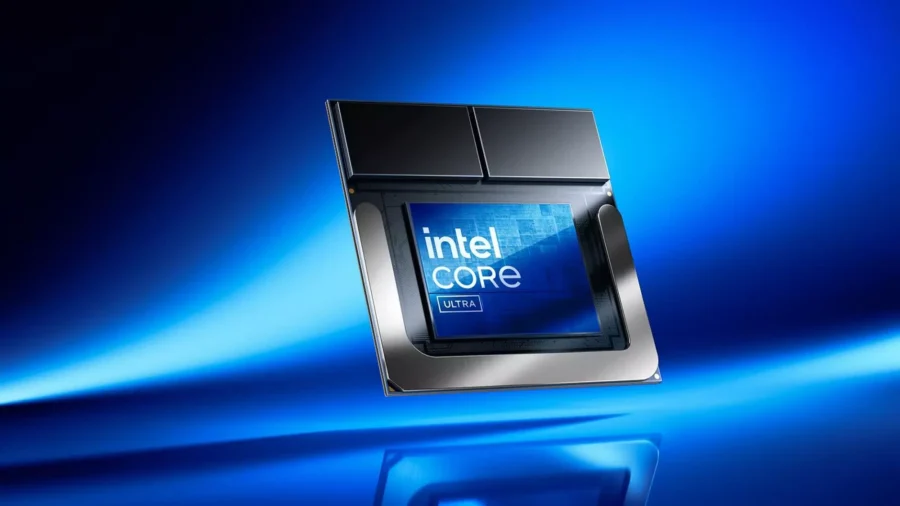
The production bottleneck experienced by Intel in old generation processors has turned into a process that directs PC manufacturers to new 18A-based models. According to supply chain sources, the company is limiting the supply of some older Intel 7-based processors to the consumer market and offering manufacturers new 18A-based options such as Panther Lake and Wildcat Lake. When the Intel 7 supply was reduced, all eyes turned to 18A processors.
Intel cannot guarantee the same level of shipment for old Intel 7-based processors in its supply negotiations with PC manufacturers. According to information provided by Nikkei Asia based on supply chain sources, this situation directly affects computer manufacturers in the USA, China and Taiwan. It is stated that the supply side is stronger in processors coming out of the company’s newer 18A production process. This situation effectively forces manufacturers to switch to more expensive 18A platforms instead of cheaper and more established Intel 7-based processors.
Intel 7-based processors are still widely used in consumer computers and data center products. Alder Lake, Raptor Lake and some Arrow Lake products rely on this legacy production capacity. The same manufacturing side is important for Xeon products that offer high profit margins for the data center. Intel is shifting limited Intel 7 capacity to higher-yielding enterprise and data center products, according to supply chain sources.
For this reason, the order fulfillment rate of manufacturers for some old processors in the consumer market is decreasing. One of the examples cited in the news clearly shows the situation experienced by PC manufacturers. A manufacturer says that it ordered 100 Intel 7-based processors, but only received a limited number of older processors, and was also sent unsolicited 18A-based processors. According to the same sources, Intel states that if these new processors are not accepted, they will be directed to other manufacturers.
This information is not the official Intel statement; It was recorded as a claim reported by supply chain sources. On Intel’s side, the main representatives of the 18A process in consumer products are the Panther Lake and Wildcat Lake family. Positioned as Core Ultra Series 3, Panther Lake is one of the new generation mobile platforms prepared by Intel’s 18A production process. Wildcat Lake, on the other hand, is positioned under the Core Series 3 brand for more affordable laptops and entry-level systems.
At CES 2026, Intel announced that the Core Ultra Series 3 processors were the first platform built on Intel 18A and that this platform would be included in more than 200 PC designs. This transition does not only mean changing processors for PC manufacturers. Transitioning to new 18A-based platforms also requires revalidation of motherboard design, power management, memory compatibility, display, sensors and other components.
For manufacturers, this transformation creates at least a few months of additional development and validation, according to supply chain sources. This has an effect that increases costs, especially in the cheaper laptop segment. Intel’s increase in production on the 18A side is critical for the company’s semiconductor strategy. The company sees the 18A process as an important threshold not only for its processors but also for its foundry business model.
Intel’s 2026 first quarter financial statements included information that 18A efficiency exceeded internal expectations and Core Series 3 products entered volume production increase. However, costs remain high in the early stages of a new production process. Switching to 18A for more OEM models helps Intel increase production volume and mature the process faster. In the company’s financial statements, it is clear that demand is ahead of supply.
Intel CEO Lip-Bu Tan stated in his statement after the first quarter of 2026 that demand exceeds supply in all business lines, and that strong demand continues, especially in Xeon server processors. CFO Dave Zinsner announced that the company’s first quarter revenue was 13.6 billion dollars, that demand continues to outpace increasing supply, and that product mix and pricing steps contribute to financial results. This table also explains why Intel prioritizes higher-yielding data center products.
The real impact on the consumer side can be seen in price and model diversity. Older Intel 7-based processors provided manufacturers with the flexibility to prepare lower-cost systems. If the supply of these processors decreases, cost pressure may increase, especially on affordable desktop and laptop computers. When manufacturers switch to 18A-based Panther Lake or Wildcat Lake processors, they have to update their device designs accordingly.
This may be reflected in the short term as fewer model options, more expensive configurations or stock shortages. Intel did not directly respond to the allegations by saying that we are forcing OEMs to 18A. The company’s statement emphasizes that Wildcat Lake is an important part of its consumer product strategy. Therefore, the oppression claim at the center of the news is not an officially verified company policy; It should be considered as the production and supply dynamics transferred by supply chain resources.
This development has become one of the new examples showing how artificial intelligence-driven data center demand in the computer market affects consumer products. As demand for server processors increases, Intel is allocating its limited production capacity to products with higher profit margins. As a result, consumer PC manufacturers are forced to switch to more expensive and new platforms more quickly.






Comments
You can write your views about this story. Comments may be moderated according to site settings.