
Scam calls are becoming harder to recognize. It is no longer always enough to ignore unknown numbers, because scammers can now make a call appear as if it is coming from someone you trust.
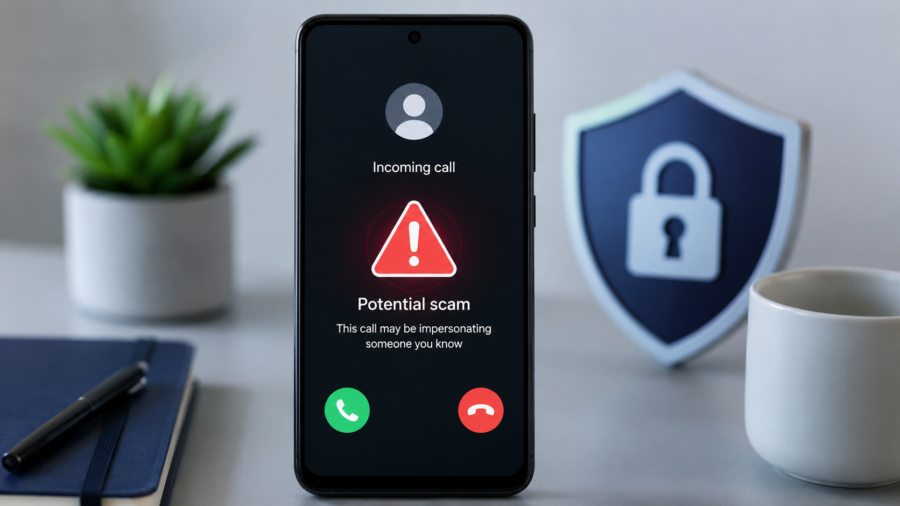
Google is trying to address that problem with a new fake call detection feature in Phone by Google. The company announced the feature as part of its June Android Drop, saying the app can now warn users when a suspected scammer may be impersonating one of their contacts.
The idea is simple: if a call looks like it is coming from a trusted contact, Phone by Google can check whether the call is actually coming from that contact’s device. If that verification signal is missing, the app can show a warning so the user can end the call quickly.
This matters because AI voice scams are becoming more convincing. A scammer may try to spoof a phone number and use voice-cloning tools to sound like a family member, friend or authority figure. For ordinary users, that creates a stressful situation. The number may look familiar, the voice may sound believable, and the call may create urgency.
Google’s new warning system will not stop every scam. But it could add an important moment of hesitation before a user shares money, passwords or personal information.
What Android’s fake call detection does
Google says fake call detection is designed to spot suspected scammers who pretend to call from a number you trust. With Phone by Google, the app can verify whether the call is actually coming from your contact’s device.
If a scammer spoofs that contact’s number, the expected confirmation signal may be missing. In that case, Phone by Google can warn the user that someone may be pretending to call from the contact’s number.
The Verge reported that the feature is turning on by default for Android 12 and later, starting with Pixel phones. It also noted that the system works when both the caller and the receiver use Phone by Google, because the trusted contact’s device sends a silent confirmation signal.
That limitation is important. This is not a universal scam shield for every Android phone and every phone call. It depends on device support, app support and rollout timing. But it is still a meaningful step because it targets a specific and dangerous scam pattern: trusted-number impersonation.
Why AI voice scams are more dangerous than normal spam calls
Traditional spam calls are annoying, but many are easy to recognize. They often come from unknown numbers, use generic scripts or sound robotic.
AI voice scams can be more personal.
A scammer may pretend to be a family member in trouble. They may claim to be a child, parent, friend, bank worker or government official. They may create pressure by saying the situation is urgent and must be handled immediately.
The most dangerous part is emotional timing. When someone believes a loved one is in trouble, they may not stop to verify the call. That is exactly what scammers depend on.
Phone number spoofing makes the situation worse. If the number on the screen appears to match a real contact, the call feels more trustworthy. Add a cloned or manipulated voice, and the scam becomes harder to detect in the moment.
This is why device-level warnings can help. A clear alert can interrupt the panic and remind the user to slow down.
What users should do when they see a warning
If an Android phone shows a warning that someone may be impersonating a contact, the safest response is to end the call and verify through another channel.
That does not mean the real contact is unsafe. It means the call itself may not be trustworthy.
A user can call the person back using the saved contact number, message them through a trusted app, or contact another family member to confirm the situation. If the caller asks for money, gift cards, account codes, banking information or passwords, that is a major warning sign.
The most important rule is simple: do not act under pressure.
Scammers often try to create urgency because they do not want the victim to think. A warning from the phone can provide the few seconds needed to pause and check.
Why this feature is useful but limited
Google’s fake call detection is useful because it focuses on a real behavior pattern. Many people trust calls from familiar numbers. If scammers abuse that trust, the phone itself needs a better way to signal risk.
But the feature has limits.
It does not guarantee that every scam call will be detected. It may not work with every phone model at launch. It depends on Phone by Google and the supported Android version. It also appears to rely on both sides using compatible technology for verification.
That means users should not treat it as a replacement for common sense. It is an extra layer of protection, not a complete solution.
Still, security often works best in layers. Spam filters, call screening, warning labels, user awareness and verification habits all help reduce risk. Fake call detection adds another layer at the moment when users need it most: when the phone rings.
How this fits into the June Android Drop
Fake call detection is part of a wider June Android update. Google’s June Android Drop also includes updates for Circle to Search, Google Photos wardrobe features, Personal Safety tools for kids, Play Books reading features, Quick Share support with more iPhone devices and new Emoji Kitchen combinations.
That mix shows where Android is heading. Some updates are fun, like emoji combinations. Some are practical, like easier file sharing. Others focus on safety, like fake call detection and expanded Personal Safety features.
For many users, the security feature may be the most important one. A new sharing tool or search feature is convenient, but a scam warning can protect money, accounts and personal information.
It also shows how AI is shaping phone security in two ways. Scammers may use AI to make fraud more convincing, while phone makers use smarter detection tools to reduce harm.
Why phone security is becoming more personal
Phone security used to be mostly about malware, passwords and suspicious links. Those still matter, but scams are becoming more social and emotional.
A scam call is not just a technical problem. It is a trust problem. The attacker may use a familiar name, a familiar number or a familiar voice. That means security tools need to protect the user in more human situations.
This is where fake call detection becomes interesting. It does not only ask whether a number is known. It asks whether the call is really coming from the expected device.
That is a more modern approach. In a world where numbers can be spoofed and voices can be copied, identity needs stronger signals than caller ID alone.
What Android users should check
Users who want this feature should first make sure they are using Phone by Google and that their device is eligible. Google says the feature is available for Android 12+ devices with Phone by Google, while The Verge reports that the rollout starts with Pixel phones.
Because Google features often roll out gradually, some users may not see the warning system immediately. App updates, system updates and regional availability can affect timing.
Users should also keep scam protection settings enabled where available. If a phone offers spam protection, caller ID warnings or call screening, those tools can work together with fake call detection.
The best setup is a combination of updated software and careful habits.
The bigger takeaway
Android’s new fake call detection is a practical response to a real problem. As AI voice scams become more convincing, phones need better ways to warn users before they trust a call that only looks familiar.
The feature is not perfect. It will not detect every scam, and it depends on supported devices and apps. But it targets one of the most dangerous forms of phone fraud: impersonation from a trusted contact’s number.
For users, the lesson is clear. Caller ID is no longer enough on its own. If a call feels urgent, emotional or financially suspicious, it is worth stopping and verifying through another channel.
Google’s new system may help more people take that pause. In a scam call, a few seconds of hesitation can make the difference between staying safe and making a costly mistake.





Comments
You can write your views about this story. Comments may be moderated according to site settings.