
For the past few years, artificial intelligence has mostly felt like something that lives on a screen. People ask chatbots questions, generate images, summarize documents and use AI tools inside apps.
Physical AI is different.
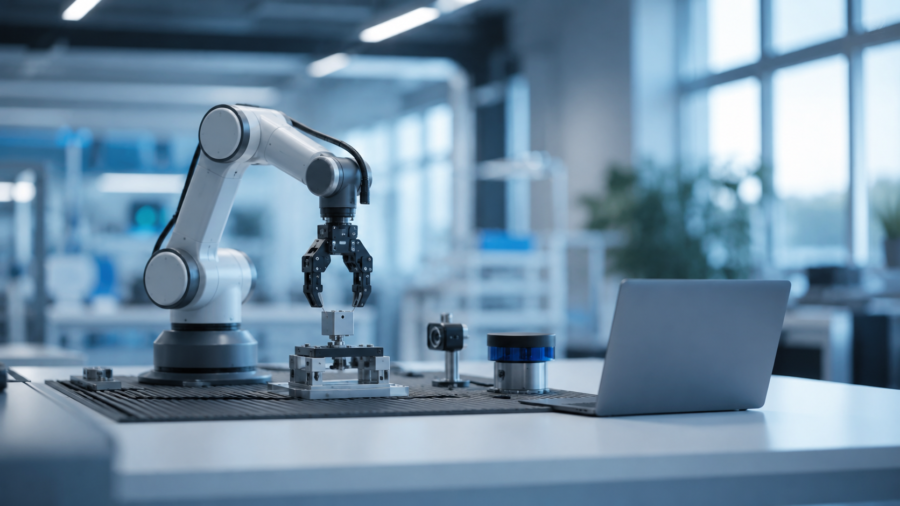
It is the idea that AI can understand and act in the real world through robots, machines, sensors and smart devices. Instead of only writing an answer, a physical AI system might help a robot arm pick up an object, guide a warehouse machine, assist in a factory or support a humanoid robot as it moves through a room.
That shift is why the term is becoming more common in 2026. Tech companies are no longer only asking how AI can answer questions. They are asking how AI can safely perform tasks in physical spaces.
BCG describes Physical AI as part of a new stage in robotics, where machines become more adaptable and can handle tasks that are too variable for older automation systems. Business Insider also reported that Silicon Valley’s focus is increasingly moving from conversational AI toward AI that can operate through robots and other real-world devices.
For ordinary readers, the easiest way to understand it is this: generative AI talks, Physical AI does.
How Physical AI is different from normal AI
Traditional AI software can analyze data, write text, recognize images or recommend products. It can be very powerful, but it usually stays inside a computer or cloud system.
Physical AI connects that intelligence to the physical world.
A robot using Physical AI may need to see objects, understand space, avoid people, choose a movement and complete a task. That is much harder than answering a text question because the real world is messy.
Objects can move. Lighting can change. People can walk into the way. A box might be tilted, heavy or partly hidden. A robot has to deal with all of that in real time.
This is why Physical AI combines several technologies at once: computer vision, robotics, sensors, simulation, AI models and control systems. The AI needs to understand what is happening, then choose an action that a machine can physically carry out.
That makes Physical AI more complex than a chatbot, but also potentially more useful in industries where physical work matters.
Why companies are interested now
Physical AI is not a completely new dream. Robotics researchers have been working on intelligent machines for decades. What changed is that AI models, sensors and computing power have improved quickly.
Modern AI systems are better at recognizing patterns and understanding context. Robots are also getting better hardware, improved cameras, more precise motors and stronger onboard computers. Simulation tools can train robots in virtual environments before they try tasks in the real world.
That combination makes Physical AI more realistic than it was a few years ago.
BCG argues that Physical AI can make automation more flexible, especially in environments where older robots struggled. Traditional industrial robots are excellent at repeating the same motion thousands of times. But they often struggle when tasks change frequently.
Physical AI could help robots adapt to more varied situations. That is why manufacturers, logistics companies, healthcare organizations and tech firms are paying attention.
Where Physical AI may appear first
The first major uses are likely to be in controlled environments, not random homes.
Factories are a natural fit. They already use automation, and many tasks happen in structured spaces. Physical AI could help machines handle more flexible assembly, inspection, sorting or maintenance work.
Warehouses are another strong candidate. Robots already move goods through fulfillment centers, but smarter systems could help with picking, sorting and routing items more efficiently.
Healthcare may also see carefully controlled uses, such as surgical robots, rehabilitation tools, hospital logistics or assistive devices. These areas require strict safety rules, so progress may be slower but important.
Retail and hospitality could use Physical AI for inventory checks, cleaning, restocking or customer support tasks. But public spaces are harder because people move unpredictably.
Homes are probably the most difficult environment. A home robot has to deal with pets, children, clutter, stairs, delicate objects and unpredictable routines. That is why general-purpose home robots remain a longer-term challenge.
Why humanoid robots get so much attention
Humanoid robots are the most visible symbol of Physical AI. They look dramatic, make good videos and are easy for people to imagine in daily life.
Companies including Tesla, Figure AI, Nvidia partners and several robotics startups have shown humanoid robot demos. Business Insider reported that major tech companies and startups are racing to develop humanoid and task-specific robots as part of the Physical AI shift.
But humanoids are not the only form of Physical AI, and they may not be the first to become widely useful.
In many cases, a specialized robot may make more sense than a human-shaped machine. A warehouse robot does not need legs if wheels are more efficient. A factory arm does not need a face. A cleaning robot does not need to look like a person.
The important question is not whether a robot looks human. The question is whether it can complete a useful task safely, reliably and affordably.
The role of AI agents
AI agents are another reason Physical AI is getting attention.
An AI agent is software that can plan steps, use tools and complete tasks with less direct instruction. When agents are connected to robots or machines, they may help physical systems become more autonomous.
For example, an AI agent might plan how a robot should inspect a shelf, move items or respond to a changed work order. The robot still needs hardware and safety systems, but the AI agent can help with decision-making.
This is where the line between digital AI and physical AI begins to blur. A digital agent may schedule, analyze and plan. A physical AI system may then act on part of that plan in the real world.
That future is exciting, but it also requires caution. When AI systems act physically, mistakes can have real-world consequences. Safety, testing and human oversight become much more important.
Why safety is the biggest challenge
Physical AI cannot be treated like a normal app update.
If a chatbot gives a bad answer, the result may be frustrating or misleading. If a robot makes a bad movement, it could damage equipment or hurt someone.
That is why Physical AI systems need strong safety design. They must detect people and obstacles, stop when something is wrong and operate within clear limits.
They also need transparency. Workers should know when robots are operating, what they are allowed to do and how to stop them. Companies need training, maintenance plans and clear responsibility when something fails.
This is one reason Physical AI may grow first in workplaces with controlled procedures. It is easier to test and manage a robot in a warehouse aisle than in a crowded home kitchen.
What this means for jobs
Physical AI will likely change some jobs, but it is too simple to say robots will just replace workers.
In many industries, companies are interested in automation because of labor shortages, safety concerns and rising costs. Robots may take over repetitive, heavy or dangerous tasks. At the same time, businesses may need more technicians, robot supervisors, AI system managers and maintenance workers.
The impact will vary by industry.
A factory may use Physical AI to make production more flexible. A warehouse may use it to reduce bottlenecks. A hospital may use robots to move supplies so staff can focus on patients.
That does not remove the need for serious discussion about workers. Companies will need to explain how automation affects roles, training and job quality. But the most realistic view is that Physical AI will reshape work gradually, task by task.
Why ordinary consumers should care
Physical AI may sound industrial, but it could eventually affect everyday life.
It could make deliveries faster, manufacturing more local, products cheaper to customize and assistive devices more capable. It could improve elder care tools, home maintenance devices and mobility support technology.
It may also influence the devices people buy. Smart home products, cars, drones and wearables could become better at understanding the physical world around them.
The change will not happen overnight. Most people will not suddenly have a humanoid robot at home. But they may start seeing more AI-powered machines in stores, hospitals, airports, warehouses and factories.
In that sense, Physical AI may become part of daily life without looking like science fiction.
The bigger takeaway
Physical AI is one of the clearest signs that artificial intelligence is moving beyond screens.
Chatbots showed that AI can understand and generate language. AI agents are showing that software can plan and complete digital tasks. Physical AI takes the next step by connecting intelligence to machines that move and act in the real world.
The opportunity is large, but the challenge is also larger. Robots must be safe, reliable, affordable and useful. Demos are not enough. The real test is whether these systems can work every day in messy environments.
That is why the most important Physical AI progress may not come from the flashiest humanoid robot video. It may come from a warehouse robot that sorts packages better, a factory system that adapts to new products, or a medical robot that helps staff with routine tasks.
Physical AI is not about making robots look more human. It is about making machines more capable in the real world. That is why tech companies are suddenly talking about it, and why the topic is likely to keep growing.




Comments
You can write your views about this story. Comments may be moderated according to site settings.