
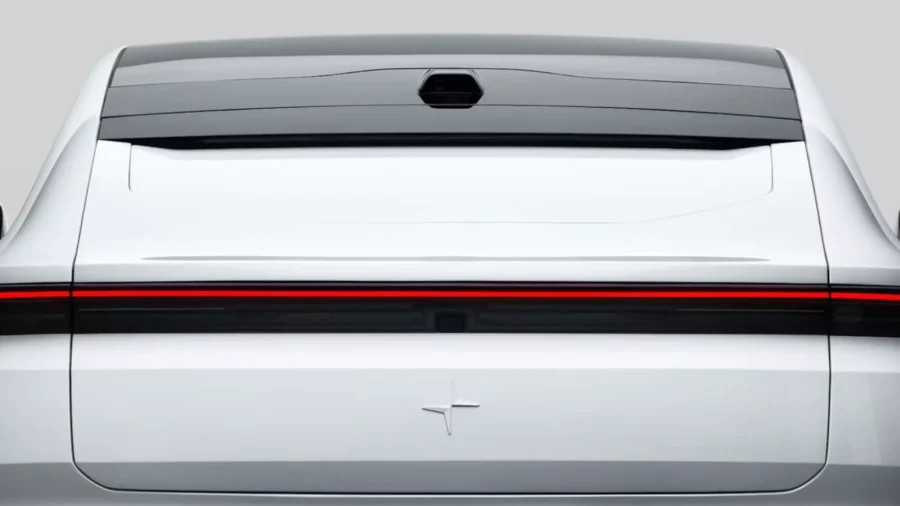
2026 Polestar 4 draws attention with its structure that completely removes the rear window, which has been considered standard in automobile design for more than a century. The traditional rear view glass is replaced by cameras, sensors and a screen placed in the rearview mirror position in the interior. Polestar’s new electric SUV coupe model does not use this design change only as a visual choice. With the removal of the rear glass, the body surface becomes more seamless, the air flow moves cleaner and aerodynamic efficiency, which is one of the critical topics for electric cars, improves.
In the 2026 Polestar 4, the rear view is provided with a camera and sensors. The 2026 Polestar 4 does not have a traditional rear window. Instead, the glass roof is extended to meet the rear deck. There is no outward-facing glass surface behind the rear seats. The luggage compartment is also integrated into the body lines and the rear of the car is completed with a seamless, smooth surface. In the interior, the glass roof ends just behind the rear headrests.
There is a closed structure behind this section. Thus, the rear window area seen in classic SUV and fastback designs is completely eliminated. The system used for rear vision; It consists of side mirrors, ultrasonic sensors, four short-range cameras that provide 360-degree views and a special rear-facing camera. The image from this camera is displayed on the screen placed above the windshield. The location and appearance of the screen is designed to be similar to a traditional rearview mirror.
In modern SUV models, rear visibility may already be limited. The distance to the rear window, headrests and high driving position make it difficult to see objects, especially those directly behind the vehicle. A similar situation has existed for a long time in sports cars. In these models, design and layout preferences often limit the rear view. Removing the rear glass in Polestar 4 solves this problem with a camera-based system.
Instead of looking through the physical glass, the image behind is digitally transferred to the driver. This approach makes the view independent from elements such as headrests, passengers or luggage inside the vehicle. Another result of the design emerges on the aerodynamic side. A traditional rear window can interrupt the airflow behind the vehicle. This has a negative impact on turbulence and friction coefficient.
By removing the rear glass in Polestar 4, the rear section gains a smoother surface and the air flow is more controlled. Reducing friction in a fully electric car directly contributes to the range side. Polestar 4 is positioned as the fourth model of the brand. The Sweden-China-based Polestar brand, born from the performance unit of Volvo Cars, combines the SUV coupe form with a lower and car-like profile in this model.
The proportions of the model seem closer to a sportier line than classic SUVs. The exterior design features metallic body colors and different accent details. Details such as colored seat belts, brake calipers and valve covers are among the options. Presenting the lower body coverings in body color also makes the car look more complete. The 2026 Polestar 4 product range starts with a single-engine, rear-wheel drive version.
This model produces 272 horsepower and offers an estimated range of 310 miles. The starting price is given as $ 56,400. The dual-motor version comes with a second electric motor added to the front axle. In this model, total power increases to 544 horsepower and torque to 506 lb-ft. The price of the dual-engine version is announced as $ 81,800. The vehicle uses 22-inch forged aluminum wheels. The rear windowless design of Polestar 4 stands out as a new example in the automobile world where a familiar part is replaced with digital systems.
This structure both makes the vision system camera-based and directly contributes to the body aerodynamics of the electric car.




Comments
You can write your views about this story. Comments may be moderated according to site settings.