

Google’s response to complaints about its new Health app shows a simple truth about wearable technology: good hardware is not enough if the app experience gets in the way.
The company is preparing a series of updates after users criticized the Google Health app that replaced Fitbit. According to The Verge, Google plans to improve dashboard customization, add missing food logging features, bring in clearer sleep and running summaries, and adjust how its AI Coach communicates with users.
That matters because fitness and wearable apps are not ordinary apps. People use them to check daily habits, sleep patterns, activity progress, workouts and personal routines. If important information becomes harder to find, users can feel like a product they trusted has suddenly become less useful.
This is especially sensitive for Fitbit users. Fitbit built much of its loyalty around simple health and fitness tracking. Many users did not choose the platform because they wanted a complicated AI assistant. They wanted quick access to steps, sleep, workouts, heart-rate trends and food logs.
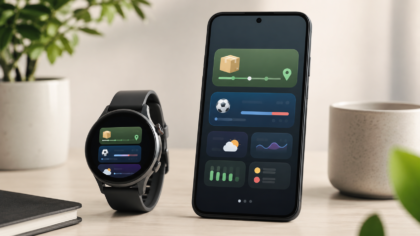
Google appears to recognize that problem. The Verge reported that one of the upcoming changes will make it easier to customize the Today and Health dashboards, so users can rearrange metrics or add and remove data more easily.
That is a smart direction because dashboards are the heart of wearable apps. A good dashboard gives users the information they need at a glance. A poor dashboard forces them to scroll, search or interpret too much before finding basic data.
The issue also shows the challenge of adding AI to health and fitness apps. Google’s AI Coach is one of the more divisive parts of the new experience. Some users dislike seeing long AI-generated messages when they only want their data, while others find the coaching useful. The Verge reported that Google plans to make those messages more concise, add more visual elements such as charts and stats, and reduce commentary on less meaningful activities.
That may be the right balance. AI can help explain patterns, but it should not bury the numbers users came to see. In a fitness app, the assistant should support the dashboard, not replace it.
Food logging is another important area. Google is adding custom food viewing, creation and logging, allowing users to add custom food items to their logs. That may sound small, but it matters for people who track meals regularly. Missing or limited food tools can make an app feel incomplete.
Sleep tracking is also getting more attention. The Verge reported that a new 24-hour total sleep overview will show both main sleep and naps. This is useful because not everyone sleeps in one simple overnight block. Shift workers, parents, students and people with irregular schedules may rely on naps, and an app that ignores them can give an incomplete picture of rest.
Running features are being adjusted too. Google says it will correctly label runs that were incorrectly marked as general workouts and add splits to run summaries. For casual users, that may be a minor fix. For runners, it is a basic expectation. If an app mislabels workouts, trust in the tracking system drops.
The bigger lesson is that wearable users care about continuity. When a company changes a familiar app, it is not just redesigning software. It is changing how people understand their daily routines.
A redesign can look cleaner, but still frustrate users if it removes familiar shortcuts or hides common information. That is why app migrations are risky. Companies may want to modernize interfaces, add AI and unify platforms, but loyal users often judge the update by whether their daily flow still works.
For Google, this is especially important because Fitbit users already went through years of uncertainty after Google acquired the brand. Any major app change is likely to be judged not only as a redesign, but as a signal of how Google treats the Fitbit community.
The updates suggest Google is trying to respond before frustration becomes permanent. That is important because wearable platforms depend on habit. If users stop checking the app, stop logging meals or stop trusting workout data, the device becomes easier to abandon.
For consumers, the story is also a reminder to judge wearables by the full experience. A smartwatch or fitness tracker may have strong sensors, long battery life and an attractive design, but the app determines how useful the data feels.
The best wearable apps are simple enough for daily checks and detailed enough for people who want deeper tracking. They allow users to choose what matters most instead of forcing one layout or one coaching style on everyone.
Google’s Health app changes do not solve every concern overnight. But they show that user feedback still matters in wearable tech. In a category built around daily habits, the interface is not a small detail.
It is the product.


Comments
You can write your views about this story. Comments may be moderated according to site settings.