
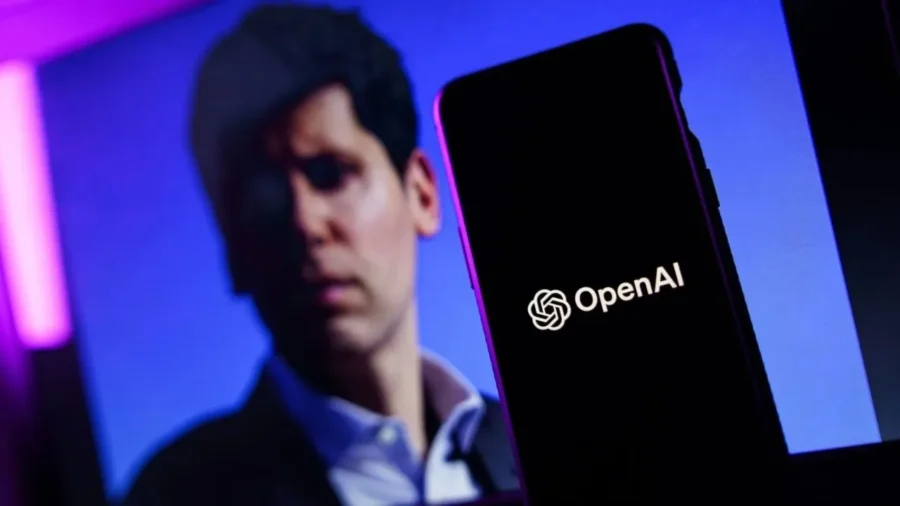
Summary in 10 SecondsOpenAI sat down with MediaTek and Qualcomm to develop its own processors that will fundamentally change the smartphone world. The company, which targets 2028 for mass production, is establishing a strategic partnership with Luxshare on hardware design and production. The new generation devices will completely get rid of the application-oriented structure and offer a user experience based on the task-oriented AI Agent system.
OpenAI, the leading name in the world of artificial intelligence, is not content with just software, but is heading directly to our pockets, that is, to the hardware world. According to the latest information leaked from the kitchen of the industry, the company has already started to design its own chips by working with MediaTek and Qualcomm, the giants of the mobile processor market. This move may not only mean the birth of a new phone brand, but also the end of the application-oriented smartphone era shaped by the iPhone, which has been in our lives for seventeen years.
Luxshare, one of Apple’s most important suppliers, is involved in the production leg of the project. Luxshare, which was chosen as the sole authorized partner in special system design and production, aims to get rid of the shadow of giants such as Foxconn thanks to this cooperation. These devices, which are expected to start mass production in 2028, will ensure that the phone in our pocket is no longer a tool, but rather an AI Agent that understands us and performs tasks on our behalf.
Artificial intelligence agents are changing the nature of the smartphone. In traditional smartphones, users have to switch between dozens of different applications to get a job done. However, in OpenAI’s vision, this complexity is replaced by a completely task-oriented structure. Users will use their phones not as a stack of applications, but as an assistant that meets their needs and performs tasks. This change means that the smartphone is no longer just a communication device, but is turning into an artificial intelligence center that processes real-time data.
The company wants to have absolute control over both the hardware and the operating system in order to offer this comprehensive AI Agent service with full efficiency. Why does OpenAI want to produce its own hardware? The answer to this is actually hidden in the data and control. Smartphones are the only device category that can instantly capture a user’s real-time status, location, and needs. OpenAI has to determine the limits of the hardware itself in order to make real-time artificial intelligence inferences using this data.
Existing processors may be inadequate, especially in critical issues such as power consumption, memory hierarchy management and running small models on the device. Therefore, the collaboration with MediaTek and Qualcomm will enable the production of special silicones that are not only powerful but also optimized according to the working principles of artificial intelligence. New balances in the supply chain and the Luxshare factor.
This is a historic opportunity for Luxshare, the partner on the production side of the project. No matter how hard the company tried, it was having difficulty overcoming the assembly leadership of Hon Hai, or Foxconn, in the Apple supply chain. Taking part in this giant project of OpenAI as a system partner and manufacturer can make Luxshare a leading actor of the next generation of smartphones. On the processor side, suppliers and technical specifications are expected to be finalized by the end of 2026 or the first quarter of 2027.
If these new devices can take a share of the upper segment smartphone market, which sells 300-400 million units annually, it will be a huge growth engine for MediaTek and Qualcomm. The hybrid power of cloud and on-device artificial intelligence. The workload on OpenAI’s phone will be divided in two. Basic operations and small models required for the device to constantly understand the user’s context will run on the phone’s own processor.
In this way, data confidentiality will be protected and energy savings will be achieved. More complex and computationally intensive operations will be transferred to cloud-based artificial intelligence systems. The company plans to combine this ecosystem with subscription models with the user data and consumer brand power it has accumulated over the years. A new application, or rather a task ecosystem, will be built for developers, focused entirely on the AI Agent.
Editor’s note This move by OpenAI may create a rupture in the smartphone world similar to the iPhone revolution in 2007. Combining software power with hardware will transform the company from just a service provider into a direct competitor to Apple and Google. Although the year 2028 seems distant, the technological accumulation in this process may change all balances in the mobile processor market.



Comments
You can write your views about this story. Comments may be moderated according to site settings.