

New claims have come to the fore for OpenAI’s first AI agent phone. According to the latest post by Ming-Chi Kuo, known for his supply chain analyses, the company has accelerated the development process of the phone project. In the new calendar, the first half of 2027 stands out for mass production. The main difference of the device is that it establishes a new mobile structure focused on AI agents instead of the classic application-centered phone experience.
There is no official phone announcement on the OpenAI side yet. However, it is now clear that the company has entered the hardware field. OpenAI had previously announced that the io Products team founded by Jony Ive had joined OpenAI. Jony Ive and LoveFrom also took on design and creative responsibility across OpenAI. The phone claim comes not directly from the official announcement, but from Kuo’s supply chain research.
How will OpenAI’s phone work? The new report states that MediaTek has become a stronger candidate on the processor side of the phone. In the initial claims, Qualcomm, MediaTek and Luxshare were mentioned together. In the latest update, MediaTek seems more likely to receive the processor order. It is reported that a special processor based on Dimensity 9600 will be used in the device, and production will proceed through TSMC’s N2P process.
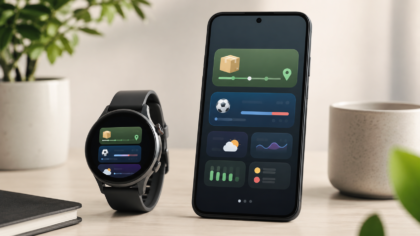
This detail shows that the phone will not be positioned like an ordinary Android device. The idea here is much different than a phone with the ChatGPT app installed. The structure that OpenAI allegedly works on is based on the AI agent phone, which combines the hardware, operating system, AI model, camera, microphone, sensors and security layer in a single center. In Kuo’s previous post, the App → Agent, Icon → Task, Grid → Stream explanation for this device stood out.
This statement shows that the phone interface may move away from application icons and classic home screen logic. Instead of opening an application and performing a transaction, the user will directly transmit the task he wants to do to the phone. The AI agent will also use the necessary services, applications, files, camera data or cloud models in the background to complete this task. Therefore, the camera and image processing side of the device is described as one of the critical topics.
According to the report, the ISP in the processor, that is, the image signal processor, will strengthen the high dynamic range output. This doesn’t just mean better photography. The phone’s ability to better perceive the real world through the camera and interpret objects and scenes more accurately is at the center of the AI agent experience. Other claims on the hardware side also support this line. It is stated that the device will feature dual NPU architecture.
This structure can allow different AI tasks to run simultaneously or in separate layers. Processes such as language processing, visual perception, audio analysis and local task execution can be parsed more efficiently on the device. On the memory and storage side, LPDDR6 and UFS 5.0 are claimed. These two components are important to reduce the data transfer and memory bottleneck that may occur when AI models run on the device.
Fast memory and storage infrastructure directly affects the user experience, especially on a phone that processes real-time images, audio and text. On the security side, topics such as pKVM and inline hashing stand out. These details are used for AI tasks running on the device and for processing personal data in safer areas. User context is of great importance in the idea of AI agent phones. Since it will work more closely with the phone, calendar, messages, location, camera, microphone, files and application data, the security layer is no longer an ordinary technical detail.
OpenAI’s interest in this area has become more meaningful with the hardware move that the company established with Jony Ive’s team. To date, OpenAI has grown mainly on the software and model side. ChatGPT is used via application or system integration on iPhone and Android devices. On its own hardware, OpenAI gets the chance to redesign the user experience down to the operating system level. Herein lies the reason why this move has become important for Apple and Google.
The current order of the mobile world is based on App Store, Google Play, application icons, notifications and service integrations. OpenAI’s AI agent phone wants to move this order from the “app opening” habit to the “task completion” experience. The real change on the user side is that the phone works not as an application box, but as a digital assistant that constantly understands context. Despite this, there are many challenges that need to be overcome before the phone can hit the market.
It is not easy for OpenAI to make room in the phone market with just a strong AI model. Battery life, camera quality, application compatibility, operator support, price, service network, developer ecosystem and privacy policies are among the areas that will determine the real success of this product. Kuo’s latest report also includes a total shipment expectation of approximately 30 million units for 2027 and 2028. This figure is quite ambitious for a device that has not yet been officially announced.
Therefore, the number may be the production scenario discussed on the supply chain side, rather than the exact sales estimate.



Comments
You can write your views about this story. Comments may be moderated according to site settings.