
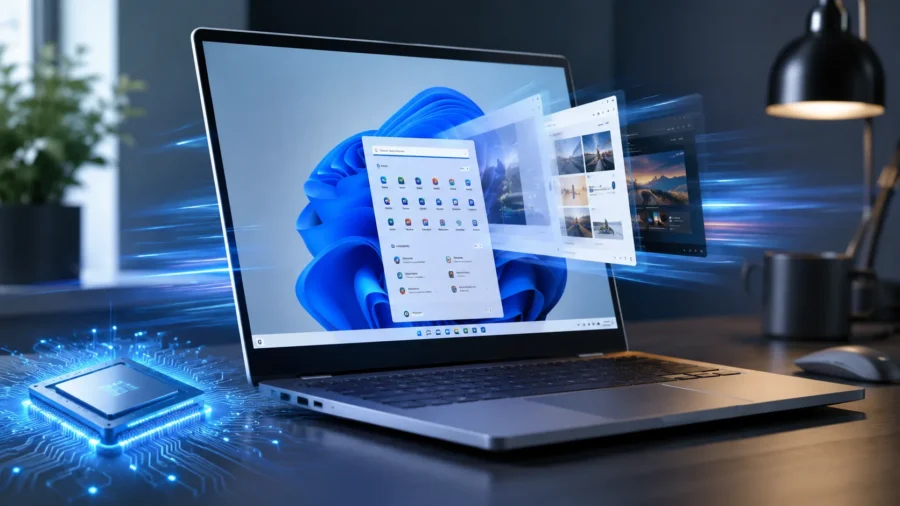
Low Latency Profile, the new performance feature that Microsoft tested for Windows 11, has already created controversy. The feature, which speeds up the processor for a short time in daily operations such as application openings, Start menu and system interface, was criticized by some users as a “cheat” and a “temporary solution”. The answer from Microsoft is quite clear: This method is already used in modern operating systems.
Windows 11 will speed up the processor for a short time. Low Latency Profile stands out as a new performance profile developed to make Windows 11 respond faster. The system increases the processor frequency for approximately 1 to 3 seconds when the user opens an application, calls the Start menu, or initiates a process that is prone to delays in the interface. The aim is to ensure that the interface reacts faster without waiting for the processor to gradually accelerate under load.
Initial tests reported noticeable speedups in the Start menu, Edge, Outlook and some Windows components, especially on low-end systems. In some tests, it is stated that application openings respond up to 40 percent faster and system menus respond up to 70 percent faster. Microsoft: macOS and Linux do this too. When the feature was criticized on social media, Microsoft manager Scott Hanselman joined the discussion. Hanselman states that Low Latency Profile is not a “cheat”; He said modern systems, including macOS, Linux, and mobile operating systems, use similar methods.
According to Hanselman, modern operating systems temporarily increase the processor frequency and prioritize interactive tasks to reduce latency in user interactions. It works with a similar logic in smartphones, when the screen is touched, the cores wake up, the frequencies increase, the frames are processed and then the system goes back to a low power state. The focus of criticism is on the overall performance of Windows 11.
Although Low Latency Profile is not technically a new “trick”, there is a broader dissatisfaction with Windows 11 behind the criticism. Some users argue that Microsoft should better optimize the core components of Windows 11, rather than hiding interface lags with short-term CPU boosts. These criticisms especially center around web-based Windows applications, File Explorer delays, the right-click menu and general resource usage.
So the debate is not limited to the way Low Latency Profile works; It is also based on the performance perception of Windows 11, which has been criticized for years. Battery life and heating question mark. One of the biggest question marks of Low Latency Profile will be the battery life and temperature effect on laptops. The effect is expected to be limited, as the feature only boosts the processor to high frequency for a very short time.
However, the final result may vary depending on the device’s processor, cooling design and usage scenario. According to statements from Microsoft, this feature can work more efficiently especially on Windows 11 devices with ARM-based Snapdragon processors. The reason for this is that these platforms can switch between power states faster. Is it the right step for Windows 11? Low Latency Profile alone will not solve all the performance problems of Windows 11.
However, it may be an important touch to make the system feel faster in daily use. Faster response of application openings, menus and system panels, especially on low and mid-level hardware, can directly affect the user experience. However, Microsoft’s real test begins here. Short-term speed increases alone will not be enough for users to accept this feature. More permanent improvements are also needed in Windows 11’s general resource management, interface consistency and built-in application performance.





Comments
You can write your views about this story. Comments may be moderated according to site settings.