
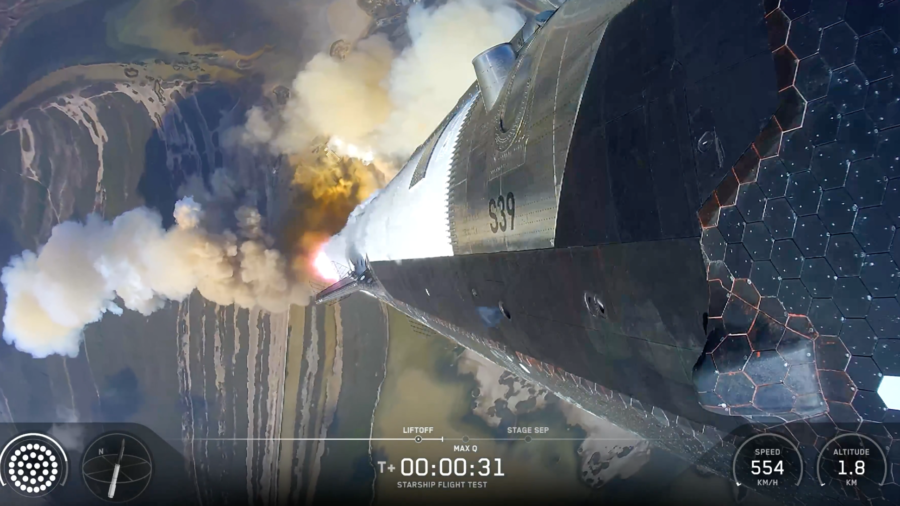
SpaceX took Starship V3, the third generation version of the Starship rocket, on its first test flight. The upper stage of the rocket, which took off from Starbase, Texas, reached space and left the Starlink satellite simulators, while the Super Heavy booster had problems in the return maneuver and fell into the sea and was lost. Starship V3 reached space on its first flight. SpaceX’s Starship V3 rocket, which is 407 feet, that is, approximately 124 meters long, took off from the company’s Starbase facility in Texas at 17.30 local time.
The flight was the 12th test mission of the Starship program since 2023. In this test, the renewed V3 hardware of both the Starship upper stage and the Super Heavy booster was used in real flight conditions for the first time. A few minutes after takeoff, the upper stage Starship separated from the Super Heavy booster and continued on its way into space. After separation, Super Heavy moved away from Starship and began its return maneuver to Earth.
The Booster was supposed to make a simulated landing in the Gulf of Mexico, but the engine ignition required for the return did not occur properly. The booster then fell uncontrollably into the water and probably exploded and was lost. The flight was not entirely smooth on the upper stage side either. Starship lost one of its six Raptor engines during its ascent into space. Despite this, the vehicle continued the main steps in its mission profile and successfully dropped off 20 Starlink satellite simulators.
The flight also used two modified Starlink satellites to image Starship’s outer surface. After approximately an hour of flight, Starship completed its simulated landing profile for the Indian Ocean. The vehicle survived the reentry process and reached the ocean during the final portion of the descent. It then collapsed and exploded. This final stage is an expected result within the scope of SpaceX’s flight profile. This test flight was the first real test for the Starship V3 hardware that SpaceX has been developing for months.
The company also used the new launch pad, which has been prepared for a long time at Starbase, for the same mission. The new Starship V3 structure includes third generation Raptor engines, higher thrust, simpler engine architecture, increased tank volume and renewed systems for long missions. Starship V3 came with a larger and stronger structure than the previous generation Starship vehicles. According to the technical details provided by AP, the renewed booster has larger and stronger grid fins, a larger transmission line that provides fuel to 33 main engines, and improved guidance systems.
In the upper stage, there are more cameras, more navigation and computer capacity, and equipment to be used for future docking and Moon missions. This flight in the Starship program was the first Starship test since October. SpaceX had planned to fly Starship V3 before, but one of the upgraded boosters exploded during testing in November. The company wanted to make the first attempt for this flight on Thursday, but the trial was postponed due to the hydraulic pin on the launch tower arm not being retracted.
Starship is the main system developed by SpaceX to carry NASA Moon missions, future Mars missions and more advanced Starlink satellites into orbit. It is expected that NASA’s Artemis program will use a Starship-based lander to land astronauts on the Moon surface.






Comments
You can write your views about this story. Comments may be moderated according to site settings.