
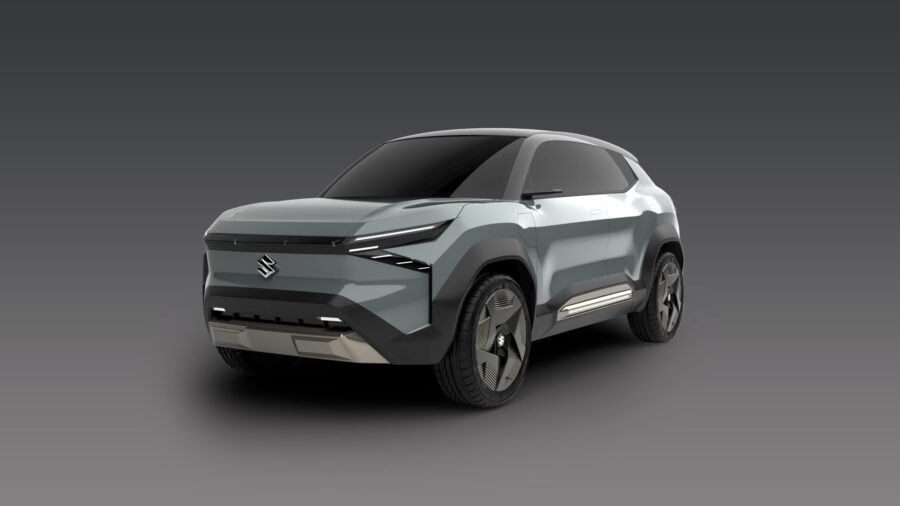
Suzuki Motor Corporation, one of the world’s most established automobile brands, announced its growth strategy for the 2030 fiscal year.
Japanese automobile manufacturer Suzuki announced its “Growth Strategy” for the 2030 fiscal year. Suzuki is preparing to implement very important plans to realize a carbon neutral society for the 2030 fiscal year. However, Suzuki will continue its operations in Japan, India and Europe, which are its main operating regions, while contributing to the economic growth of developing countries such as India, ASEAN and Africa. The company will focus on creating Suzuki-specific solutions to develop customer-focused products and services and grow with the countries and regions in which it operates.
carbon neutral target
Suzuki aims to be carbon neutral by 2050 in Japan and Europe and by 2070 in India, in line with the deadline set by each government. The company will continue to strive to achieve carbon neutrality targets for each region, with an approach to expand customers’ options and provide products and services that meet the needs of each region.
6 different compact SUVs will hit the roads
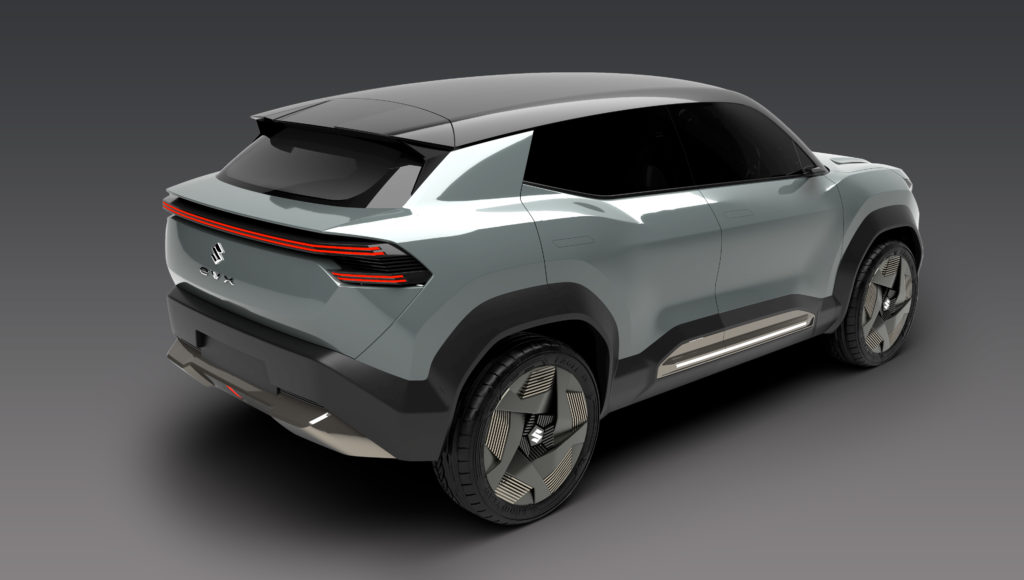
Suzuki will introduce commercial mini-0 electric vehicle models to the market starting from Japan in fiscal 2023, and plans to introduce 6 different compact SUVs and mini vehicles by fiscal 2030. It will also develop new hybrid vehicles for mini and compact vehicles and combine them with zero-electric vehicles, offering a rich variety to its customers.
Suzuki will offer 0 electric vehicles in Europe in the 2024 fiscal year, and will expand its SUV and B segment product range by introducing 5 more models to the market by the 2030 fiscal year. Suzuki will also respond flexibly to each European country’s environmental regulations and customer requirements. In India, it will introduce 0 electric SUV models, which it announced at Auto Expo 2023, in fiscal 2024 and will launch 6 models by fiscal 2030. To provide a comprehensive range of products and services, Suzuki will not only offer zero-electric vehicles, but also carbon-neutral internal combustion engine vehicles using a mixture of CNG, biogas and ethanol fuel.

The popularity of motorcycles will continue to increase
Suzuki will introduce a 0 electric vehicle in fiscal 2024 for small and medium-sized motorcycles for daily transportation such as commuting to work, school or shopping. It plans to introduce 8 new models, 0 electric, to the market by the 2030 fiscal year, and electric motorcycles will take a % share of its product range. “The company is also considering using carbon-neutral fuels for large recreational motorcycles.”
Carbon neutral target for outboard motors
Suzuki will launch its first 0 electric model for small power outboard motors in fiscal 2024. By fiscal year 2030, it aims to introduce 5 new models to the market, 5% of which consists of electric models. The brand also plans to use carbon neutral fuels for outboard engines with larger powers.
New generation electric transportation
Suzuki continues to work on various electric transportation options, including a high-end electric vehicle. This study also reveals a new form of transportation for people who voluntarily return their driver’s licenses. KUPO is an evolution of veteran tools. Mobile Mover is a multi-purpose robot carrier developed in collaboration with M2 Labo. Suzuki will offer small mobility solutions that support its presence in new market segments created by diversification of customer needs and changes in the environment.
Factories to be carbon neutral by fiscal 2035
Suzuki supports Suzuki Smart Factory installations that show how production should be in 2030. Thus, it will continue to be a company that secures people’s transportation vehicles around the world. By combining Suzuki’s “Sho-Sho-Kei-Tan-Bi” (Smaller, Less, Lighter, Shorter, Beautiful) production principle with digitalization; It will optimize, minimize and simplify the flow of data, objects and energy. Thanks to these initiatives, it will become lean and strive for carbon neutrality.
At the Kosai Factory, Suzuki’s largest production center in Japan, it is aimed to reduce the CO2 emissions of the dyeing facilities by 0 in order to renew the dyeing facilities and improve the dyeing technologies for efficient and optimum use of energy. The facility also produces environmentally friendly hydrogen from renewable energies, including solar power generation. Hydrogen is being used for confirmation tests of the fuel cell carrier starting in late 2022.
The motorcycle production center aims to become carbon neutral in fiscal 2027, ahead of the previously planned fiscal year 2030, by reducing energy use and converting it to renewable energy, including the expansion of solar power generation facilities at its Hamamatsu Plant. By using the knowledge gained at the Hamamatsu Factory in other factories, the company will take the initiative to become carbon neutral in all factories in fiscal year 2035.





Comments
You can write your views about this story. Comments may be moderated according to site settings.