

For over a decade, we have lived with our heads bowed, staring at glowing rectangles. But as we move through 2026, a massive cultural and technological shift is occurring. The era of staring at smartphones is fading, making way for the rise of “Zero-UI” (Zero User Interface) and advanced AI-powered smart glasses.
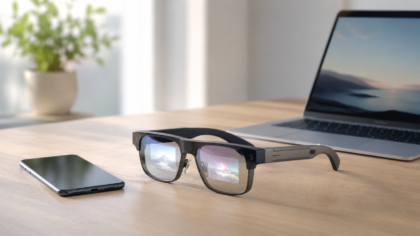
These sleek, everyday wearables are no longer bulky VR headsets; they are indistinguishable from your favorite designer frames. Here is why AI smart glasses are currently the most talked-about technology on the internet and how they are changing the way we connect.
Looking Up, Not Down The biggest appeal of modern smart glasses is that they bring us back to the real world. Instead of pulling your phone out to check directions, read a message, or search for information, the AI seamlessly projects a subtle, minimalist interface directly into your field of vision. This allows people to stay engaged with their physical surroundings and, more importantly, with each other. Eye contact is returning to our daily interactions.
The Ultimate Unifier: Real-Time Translation Perhaps the most groundbreaking feature driving the massive adoption of these glasses is real-time visual and audio translation. Imagine walking into a café in Tokyo or a market in Marrakech. As someone speaks to you in their native language, your glasses instantly provide translated subtitles or whisper the translation into your ear.
This technology is actively tearing down global communication barriers. It proves that different cultures and societies do not need to be separated by language. By enabling effortless communication, wearable AI is fostering a profound sense of global unity and shared human experience.
Sleek, Modern, and Invisible The success of these devices in 2026 comes down to aesthetics. Tech companies finally understood that for a wearable to succeed, it must be fashionable. Today’s smart glasses feature energetic, modern designs that fit seamlessly into personal styles. The digital overlays are incredibly refined—no clunky white borders or oversized text, just elegant, small typography that respects your natural vision.
What This Means for the Future We are entering a phase where technology acts as an invisible assistant rather than a primary focus. As AI glasses become more affordable and widespread, content creators and developers are pivoting to design “spatial content” that blends seamlessly with reality.
The devices we use are changing, but the goal remains the same: to connect, to understand, and to share our world without barriers.




Comments
You can write your views about this story. Comments may be moderated according to site settings.