
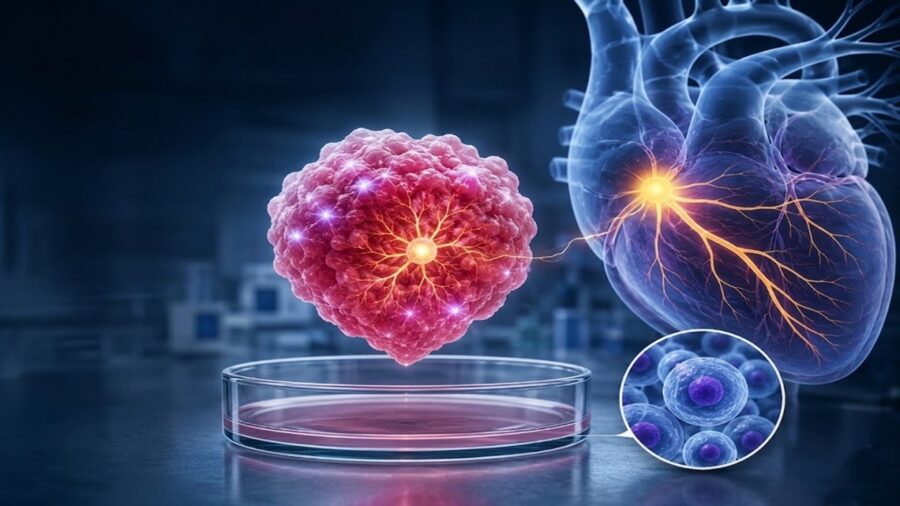
In a new study conducted in China, it was announced that the sinoatrial node, which controls the rhythm of the heart, was produced in a laboratory environment. The three-dimensional biological structure developed from human pluripotent stem cells was able to generate regular electrical pulses. The sinoatrial node, located in the right atrium of the heart, is known as the main center that starts the heartbeat. This structure, which produces electrical signals, plays a critical role in maintaining blood circulation by ensuring the regular functioning of the heart muscle.
Dysfunctions in this region can cause serious rhythm problems. The research team in Shanghai transformed stem cells into sinoatrial node cells by mimicking biological signals during embryonic development. It was reported that the obtained organoid created rhythmic beats on its own in the laboratory environment. The biological structure developed within the scope of the research was combined with another organoid that mimics atrium tissue.
In the experiments, it was observed that electrical signals were regularly transferred from the rhythm center to the heart tissue. An artificial cardiac neural network was also used in the study. Scientists examined the responses of the biological structure to neural stimuli by recreating the nervous system connections that affect heart rhythm in a laboratory environment. Researchers stated that the gene expression properties of the developed organoid are similar to natural sinoatrial node cells in the human embryo.
Among the remarkable findings was the structure’s biological response to drugs that regulate heart rhythm. Although electronic pacemakers, which have been used for many years, play an important role in the treatment of rhythm disorders, they have some limitations such as infection risk, battery life and tissue compatibility. It is evaluated that the newly developed biological system may pave the way for cell-based pacemaker applications in the future.
It was stated that the research could also provide an important infrastructure for modeling heart diseases and testing new drugs.





Comments
You can write your views about this story. Comments may be moderated according to site settings.