
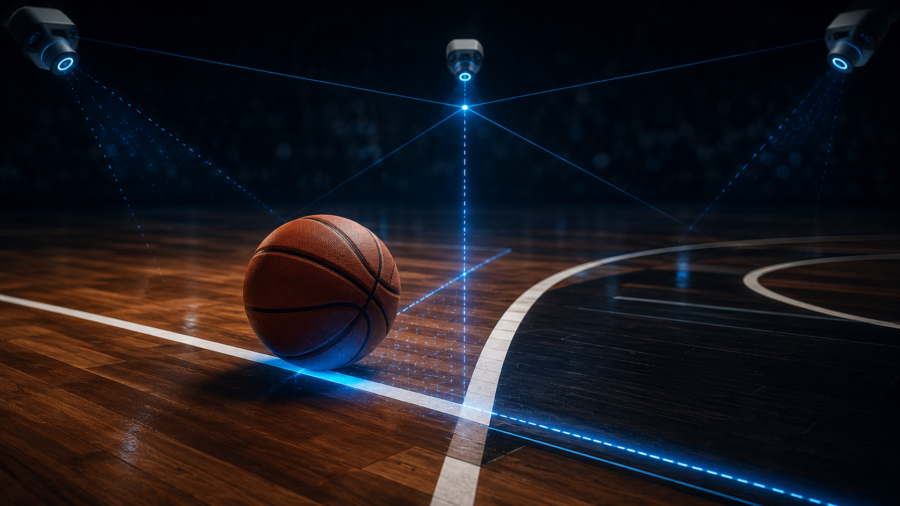
Artificial intelligence is starting to change how professional sports are officiated, and 2026 may become a turning point for the technology. The NBA is preparing to use AI-powered systems for objective calls such as out-of-bounds decisions, showing that automated officiating is moving from experimental technology into mainstream competition. For fans, players and leagues, the promise is simple: faster decisions, fewer disputes and a smoother game experience.
The most important point is that AI is not replacing referees entirely. Instead, it is being used for situations where the answer can be measured clearly. Did the ball go out? Who touched it last? Was a player on or off the line? These are the kinds of calls where cameras, tracking systems and automated analysis can help reduce delays and remove some of the controversy that slows games down.
Why AI Officiating Is Gaining Attention
Sports are faster, more competitive and more visible than ever. Every close call is replayed instantly on broadcasts, shared across social media and debated by millions of fans. That pressure makes accuracy more important, but it also makes long reviews frustrating. AI-assisted officiating offers a way to improve both accuracy and speed.
The NBA’s direction is especially important because basketball has many fast possessions, tight boundary calls and momentum-changing moments. If AI can handle objective decisions instantly, referees can spend more attention on judgment-based calls such as contact, fouls and player safety. This could help the game feel cleaner without removing the human element from officiating.
The Technology Behind the Shift
AI officiating depends on cameras, sensors, tracking data and computer vision. These systems can analyze player movement, ball position and court boundaries with a level of consistency that is difficult for human eyes to match in real time. Similar ideas already exist in sports such as tennis, soccer and baseball, where technology helps determine line calls, offside decisions or strike zones.
The next step is making these systems faster, more transparent and easier for fans to understand. A decision may be technically correct, but it also needs to be communicated clearly. Viewers want to know why a call was made, not just that a machine made it. This is why broadcast graphics, replay explanations and league communication will be important parts of AI officiating.
What Fans Could Gain
For fans, the biggest benefit is a smoother viewing experience. Long replay reviews can drain energy from a game, especially in close moments. If objective calls can be resolved quickly, the rhythm of competition improves. Players also benefit because they can continue playing without waiting through extended delays.
AI officiating may also reduce some of the most repetitive arguments in sports. Fans will always debate fouls, contact and strategy, but clear boundary calls should not need long disputes. When technology handles measurable moments accurately, the conversation can return to the game itself.
Why Human Referees Still Matter
Even with advanced AI, human referees remain essential. Sports are not only a collection of measurable events. They involve context, contact, intent, advantage, safety and game management. A system may help determine whether a ball crossed a line, but it cannot fully manage the emotional and physical flow of a live game.
The best future for AI officiating is a partnership. Technology should support referees by handling objective data quickly, while human officials continue to make decisions that require experience, judgment and communication. This balance is what can make the system more trustworthy.
The Trust Challenge
AI officiating will only work if leagues build trust around it. Fans and teams need confidence that the system is accurate, consistent and not hidden behind vague explanations. Leagues should explain what the technology can decide, what it cannot decide and how errors will be reviewed.
Transparency matters because sports are built on belief in fair competition. If AI systems are presented as tools that improve clarity, fans may accept them quickly. If they feel confusing or unexplained, they could create new debates instead of solving old ones.
The Bigger Picture
AI referees are part of a larger trend: sports are becoming more data-driven, more connected and more technologically precise. From player tracking and injury prevention to fan engagement and broadcast analysis, artificial intelligence is entering nearly every part of the sports experience. Officiating is one of the most visible areas because every decision can affect the result.
In 2026, AI-assisted officiating is no longer a distant idea. It is becoming a practical tool for major leagues that want faster games and more reliable decisions. The future of sports will still need human referees, but the most objective calls may soon be handled by systems that can see the game from every angle in real time.






Comments
You can write your views about this story. Comments may be moderated according to site settings.