
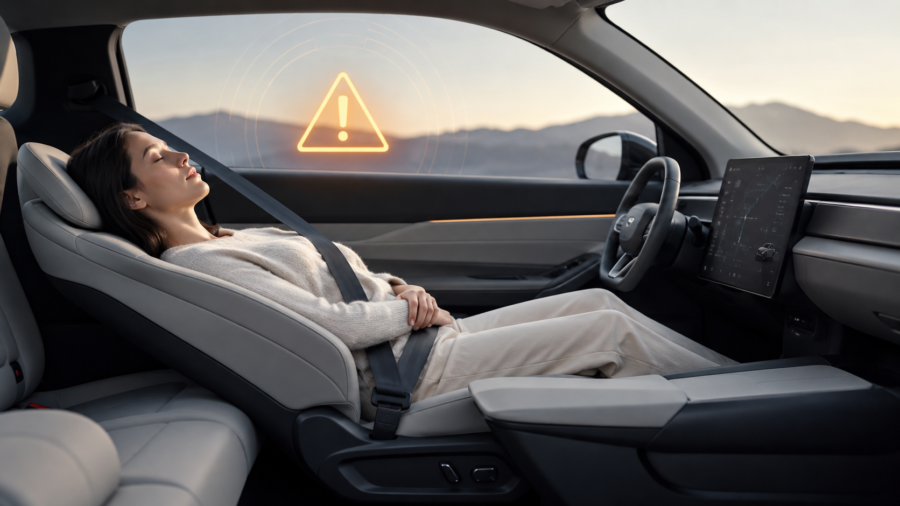
China is moving to tighten safety rules for electric vehicles, and one of the most eye-catching targets is a feature designed for comfort: the so-called “zero-gravity” seat.
The country’s industry ministry has issued draft safety regulations that flag potential risks from seats that recline deeply, especially when they are used in semi-reclined positions during travel. According to Reuters, the ministry warned that occupant safety in a collision may not be guaranteed when these seats are positioned that way.
The proposal reflects a broader shift in the electric vehicle market. Automakers have spent years competing on range, acceleration, screens, driver-assistance features and luxury cabin design. In China’s fast-moving EV sector, the “intelligent cockpit” has become a major selling point, with large displays, voice controls, entertainment systems and premium seating features becoming common.
Zero-gravity seats are part of that trend. They are designed to create a relaxed seating position by reclining the backrest and adjusting leg support. In marketing, they are often presented as a luxury feature for long trips, charging stops or chauffeur-style rear-seat comfort.
But the safety question is different from the comfort question.
A vehicle seat is not just a place to sit. It is part of a safety system that works with the seat belt, airbags, head restraints and vehicle structure. During a crash, the position of the passenger can determine how well those systems protect the body. If a seat is reclined too far, the belt may not sit correctly across the chest and hips. That can increase the risk of a person sliding under the belt or being positioned incorrectly when airbags deploy.
That is why regulators are paying attention. The issue is not whether a seat can be comfortable while parked. The issue is whether the same seating position remains safe while the vehicle is moving.
China’s draft rules suggest that regulators are becoming more willing to question futuristic cabin features before they become standard across the industry. The proposal does not only target seat design. Reuters also reported that the broader draft includes safety requirements for vehicle seats, head restraints and battery recycling processes.
The move follows rising scrutiny of EV safety in China. The country has one of the world’s largest and most competitive electric vehicle markets, with automakers racing to add features that make their cars stand out. That speed has helped push innovation forward, but it has also created pressure for regulators to ensure that design trends do not outpace safety standards.
The zero-gravity seat debate also fits into a larger pattern. China has already moved to restrict hidden electronic door handles over emergency access concerns, with new rules set to require mechanical door-release functions from 2027.
For consumers, the lesson is practical. A feature that looks advanced or luxurious is not automatically unsafe, but it should be judged by how it performs in real driving conditions. Reclining seats may be useful when a vehicle is parked, charging or being used for rest. They become more complicated when used on the road, especially if passengers treat a moving car like a lounge.
For automakers, the draft rules are a signal that cabin design will face more scrutiny. EV makers may need to limit how far seats can recline while the vehicle is moving, add clearer warnings, strengthen seat-belt detection systems or redesign seats to keep passengers in safer positions.
The rules could also influence markets beyond China. Because China is a major EV manufacturing hub, safety standards adopted there can affect global design decisions. If automakers must change seat systems for Chinese models, similar changes may appear in vehicles sold elsewhere.
The draft rules are not final yet, and the public feedback period gives companies and experts time to respond. But the direction is clear: regulators are looking more closely at the gap between comfort features and crash protection.
Electric vehicles are becoming smarter, faster and more luxurious. China’s proposed seat rules are a reminder that the next phase of EV innovation will not only be about what feels futuristic, but also about what remains safe when something goes wrong.




Comments
You can write your views about this story. Comments may be moderated according to site settings.