
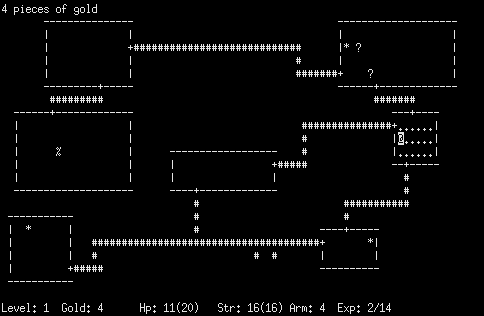
“Dungeon Crawl”, one of the most established subgenres of fantasy literature and gaming world, can be seen superficially as the act of “killing monsters and collecting treasure in mazes”. However, the historical evolution underlying this genre and the archetypes that trigger human psychology deserve a much deeper examination. In this article, we will define what the genre is and examine why we have longed to enter the dark corridors for thousands of years.
I. Basic Definitions: What is Dungeon Crawl? In order to establish the academic basis of our article, let’s start with the simplest questions first: What Exactly is Dungeon Crawl? Dungeon Crawl is a type of game fiction in which player characters (PC) navigate through narrow corridors, traps and puzzles, usually underground or in an isolated closed space (dungeon, castle, cave, etc.), fight enemies and collect loot. What are the essential elements of the genre?
“Limited Area of Action”: Unlike open world games, the player’s options are limited by walls and doors. “Resource Management”: Efficient use of limited resources such as torch life, food, spell slots and health potions is essential. “Ecosystem:”A good dungeon is not just about rooms; The creatures living there have a hierarchy and logic. II. Historical Perspective: From Wargame to Dungeons The birth of Dungeon Crawl dates back to the Wargames tradition of the early 1970s.
“Dave Arneson”‘s “Blackmoor” campaign, in which he envisioned a single character entering the castle dungeons instead of commanding armies, is considered the turning point of the genre. 1. Desktop Era (1974-1980): D There are three basic psychological triggers that draw us to these narrow spaces: 1. Katabasis and the Archetypal Journey In mythology, the hero’s descent into the underground (Katabasis) is an “initiation” ceremony.
As Joseph Campbell put it, the hero must enter the “Innermost Cave” to confront his greatest fear. When we enter a dungeon, we actually go deep into our own subconscious and desire to rise to the “surface” stronger by defeating the “monsters” (fears) there. 2. “Safe Danger” and Controlled Chaos The modern world is chaotic and its rules are not always clear. However, a dungeon, no matter how dangerous it is, has a “logical framework”.
Traps have a trigger, monsters have a health bar. The human mind finds it “relaxing” to escape from the uncertain stresses of the outside world and fight against a danger (dungeon) with clear rules. 3. Resource Management and Survival Instinct Dungeons trigger one of the most primitive human instincts, the “hoarding” and “survival” instincts. The stress mechanics we see in games such as “Darkest Dungeon” turn the claustrophobia created by narrow spaces into a game mechanic.
The decreasing torch light actually represents fading hope and increasing primitive fear. IV. Productions That Shaped the Genre Rogue (1980) Procedural chaos, the dungeon changing every time, makes the sense of discovery endless. Ultima Underworld The first-person interaction made the dungeon feel like a physical location, not just a map. Diablo brought action and loot dungeon exploration to the masses by tying it to the cycle of “speed” and “reward”.
Legend of Grimrock Nostalgia and puzzles prove how powerful old-school walkthrough logic still is. Conclusion: Keeping the Torch Lighting Dungeon Crawl is a form of storytelling that will never end as long as humanity exists. Entering the darkness, taking the treasure there, and defeating the monster is a satisfaction of success baked into our evolutionary codes. Whether we roll a 20-sided dice or move through the corridors with a controller, every step that echoes between those damp walls is actually a journey we make to ourselves.
Now tell me; how many days’ worth of rations do you have with you and how long will your torch burn? Because dungeons don’t like waiting.






Comments
You can write your views about this story. Comments may be moderated according to site settings.