
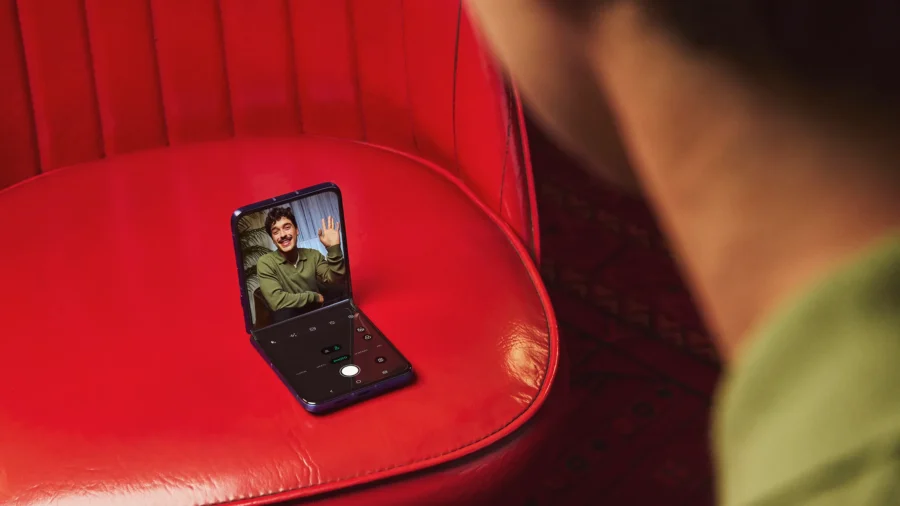
Motorola introduced its new 2026 model Razr foldable phone family. The company comes with three clamshell models again this year: Razr Ultra, Razr and Razr. However, this time Razr Fold, which was opened in book form for the first time, was also added to the series. The new models have some updates in screen brightness, battery capacity, camera processing side and software support. On the other hand, prices for clamshell Razr models increased and changes on the hardware side were limited.
Prices increased in the Motorola Razr series, Razr Fold joined the family. The new Razr family, introduced by Motorola at the event held in Los Angeles, largely maintains last year’s product line. While the Razr Ultra is positioned as the top model of the series, the Razr is in the upper middle level and the Razr is on the list as the more accessible option. In addition to this three-cover model, Motorola also made the Razr Fold model official, which it showed for the first time at CES 2026.
Razr Fold was the first book-type foldable phone developed by the brand other than the clamshell form. All new models come with price increases. Razr Ultra has a starting price of $ 1,500, Razr has a starting price of $ 1,100, and Razr has a starting price of $ 800. These prices mean an increase of $200, $100 and $100 respectively compared to the previous generation. Motorola’s new book-type foldable model, Razr Fold, comes with a price tag of $ 1,900.
This model is placed between the Google Pixel 10 Pro Fold and the Samsung Galaxy Z Fold7 in terms of price. Pre-orders for the phones will start on May 14. The sale date was announced as May 21. Motorola also introduced the Moto Buds 2 Plus wireless headset at the same event. The headset, which has a design reminiscent of Apple AirPods Pro, comes in blue color option. The price of Moto Buds 2 Plus will be $ 150 and will go on sale on April 30.
There are no major changes in the design side of the 2026 model Razr clamshell phones. Motorola has moved forward with more screen brightness, battery capacity, color and material options this year. Razr Ultra’s internal screen can now reach 5,000 nits peak brightness. The company also uses the phrase “Extreme AMOLED” panel in new models. Despite this, the basic display features are largely in line with the previous generation.
The models offer HDR10 and Dolby Vision support, come with 10-bit displays and cover the entire DCI-P3 color space. Razr Ultra has a durability update on the external display side. This model stands out as the first phone to use Corning Gorilla Glass Ceramic 3 on its external screen. Motorola says this glass offers over 75 percent better drop performance compared to previous devices. In Razr and Razr models, Gorilla Glass Victus is used on the outer screen, as was the case last year.
All models have IP48 certification. Although this certification offers protection against water, it does not meet the high dust resistance level of classic smartphones. Motorola notes that the base Razr model is the only foldable phone with a MIL-STD 810H rating. This rating shows that the device has passed certain endurance tests such as high altitude and extreme temperatures. Color and surface options are also one of the areas that Motorola highlights in this series.
Razr Ultra can be purchased with an embossed Alcantara surface in Pantone Orient Blue color or natural wood veneer in Pantone Cocoa color. The Razr model uses a jacquard-inspired surface that gives a woven feel. The basic Razr model has leather-inspired and acetate surface options. On the color side, there are Pantone Orient Blue Alcantara Finish and Pantone Cocoa Wood Finish options for the Razr Ultra. Razr comes in Pantone Mountain View color.
The Razr model includes Pantone Hematite, Pantone Violet Ice, Pantone Sporting Green and Pantone Bright White options. Razr Ultra comes with a 4-inch external display with a 165 Hz refresh rate. This screen supports HDR10 and reaches 3,000 nits peak brightness. The internal screen offers 7 inch size, 165 Hz refresh rate, HDR10 support and 5,000 nits peak brightness. The phone has a Qualcomm Snapdragon 8 Elite processor, 16 GB RAM and 512 GB storage.
Battery capacity is 5,000 mAh. The device supports 68-watt wired charging and Qi wireless charging. On the camera side, there is a 50-megapixel main camera, a 50-megapixel ultra-wide-angle camera and a 50-megapixel internal selfie camera. In the Razr model, the 4-inch external screen still comes with a 165 Hz refresh rate, but the peak brightness is at 2,400 nits. The internal screen is 6.9 inches in size, has a 165 Hz refresh rate and offers 3,000 nits peak brightness.
This model has Qualcomm Snapdragon 8s Gen 3 processor, 12 GB RAM and 256 GB storage. Battery capacity is 4,500 mAh. The phone has 45 watt wired charging and Qi wireless charging support. The camera system consists of a 50-megapixel main camera, a 50-megapixel ultra-wide-angle camera and a 32-megapixel internal selfie camera. The basic Razr model comes with a 3.6-inch external screen. This screen has a 90 Hz refresh rate and 1,700 nits peak brightness.
The internal screen has a 6.9-inch size, 120 Hz refresh rate and 3,000 nits peak brightness. The phone uses MediaTek Dimensity 7450X processor, 8 GB RAM and 128 GB storage. Battery capacity is at 4,800 mAh. On the charging side, there is 30 watt wired charging and Qi wireless charging support. On the camera side, there is a 50-megapixel main camera, a 50-megapixel ultra-wide-angle camera and a 32-megapixel internal selfie camera.
There is a noticeable regression on the storage side in the clamshell Razr models. The base Razr now starts with 128GB of storage instead of 256GB. On the Razr Ultra side, the 1 TB storage option has been removed. The only option in this model seems to be 512 GB. Despite the price increase, there is no major innovation on the processor side. Razr Ultra and Razr continue with the Snapdragon processors used in the previous generation.
A customized version of Snapdragon 8 Elite is used in the Ultra model. Motorola states that this version will offer slightly faster performance. The MediaTek Dimensity 7450X in the basic Razr brings minor improvements on the efficiency and AI performance side, and does not offer a big leap on the CPU and GPU side. The battery side has been one of the more significant updates of the series. Razr Ultra increased its capacity to 5,000 mAh thanks to silicon-carbon battery technology.
The Razr model carries a 4,800 mAh battery, while the Razr carries a 4,500 mAh battery. All models have standard Qi wireless charging support. However, Motorola did not switch to the Qi2 magnetic wireless charging standard in these models. The biggest innovation on the camera side is in the Razr Ultra. According to Motorola, Razr Ultra’s 50-megapixel main camera can capture up to six times more dynamic range compared to the 2025 model Ultra.
This difference can provide better results, especially in scenes with strong light and shadow transitions in the same frame. The company also states that it offers improvements in color, exposure and details on the image processing side. Improvements in software processing also come into play in cameras whose hardware remains largely the same, such as the 50-megapixel ultra-wide-angle camera. The security update period for software support for clamshell models has been increased from four to five years.
On the other hand, the situation has not changed on the Android version update side. Razr Ultra, Razr and Razr models will receive three major Android updates. Considering that Samsung and Google have been offering updates to their foldable phones for seven years, Motorola’s clamshell Razr models are lagging behind in this field. On the artificial intelligence side, the phones feature more than one assistant. Google Gemini, Perplexity, Microsoft Copilot and Motorola’s own Moto AI features are available on the devices.
Moto AI includes features such as “Catch Me Up” that summarizes notifications. The new Razr models also have a Google Photos feature that is available exclusively for now. The feature called Google Photos Wardrobe allows the user to recognize clothes in the Google Photos archive and create virtual combinations. Thus, users can see different combinations on the screen without physically trying on their clothes. Motorola’s real new move this year was Razr Fold.
The brand was previously known for clamshell foldable phones. With the Razr Fold, Motorola entered the book-type foldable phone market, which includes Samsung and Google. The phone offers a 6.6-inch external screen and a large 8.1-inch internal screen when opened. The external screen uses a pOLED panel with a 165 Hz refresh rate, offers HDR10 support and reaches 6,000 nits peak brightness. The inner screen comes with a 120 Hz LTPO pOLED panel, supports HDR10 and offers 6,200 nits peak brightness.
Razr Fold is not as assertive as the Samsung Galaxy Z Fold7 on the thinness side. The phone has a thickness of 4.55 mm when open and 9.89 mm when closed. Galaxy Z Fold7 offers a thickness of 4.2 mm when open and 8.9 mm when closed. Razr Fold has IP48/49 certification. This value is close to a similar level with Samsung’s model, but it falls behind the IP68 level of Google Pixel 10 Pro Fold. Qualcomm Snapdragon 8 Gen 5 processor is used in Razr Fold.
This processor is positioned one step below the Snapdragon 8 Elite Gen 5, which is used in the highest-end Android flagships of the year. The phone has 16 GB RAM and 512 GB storage. Battery capacity is 6,000 mAh. The device offers 80 watt wired charging and 50 watt Qi wireless charging support. On the camera side, Razr Fold differs from clamshell models. The phone has a triple rear camera system consisting of a 50-megapixel main camera, a 50-megapixel ultra-wide angle camera and a 50-megapixel 3x optical zoom camera.
There is a 32 megapixel selfie camera on the outer screen and a 20 megapixel selfie camera on the inner screen. The Razr Fold also supports Motorola’s new Moto Pen Ultra stylus. This pen is sold as a separate accessory and does not fit inside the phone like the Samsung Galaxy S26 Ultra or Moto G Stylus models. The software support of Razr Fold is stronger than the clamshell Razr models. Motorola provides seven years of software support for this model.
Thus, the Razr Fold looks closer to the same class as Samsung and Google’s high-end foldable phones in terms of update time. The new Razr family generally expands Motorola’s presence in the foldable phone market. Clamshell models come with brighter screens, larger batteries, some camera improvements and new material options. However, despite the price increase, there are limited changes on the processor, design and storage side.
The reduction of storage to 128 GB in the basic Razr and the removal of the 1 TB option in the Ultra model are among the notable decisions. Razr Fold, on the other hand, stands out in a different place for Motorola. With this model, the company entered the large-screen book-type foldable phone class for the first time. The 8.1-inch internal screen, 6,000 mAh battery, triple camera system and seven-year software support make this model the most comprehensive device in the series.
On the other hand, the $ 1,900 price and the processor choice one step below the flagship level take the device to a point where it can be directly compared to Samsung and Google models.




Comments
You can write your views about this story. Comments may be moderated according to site settings.