
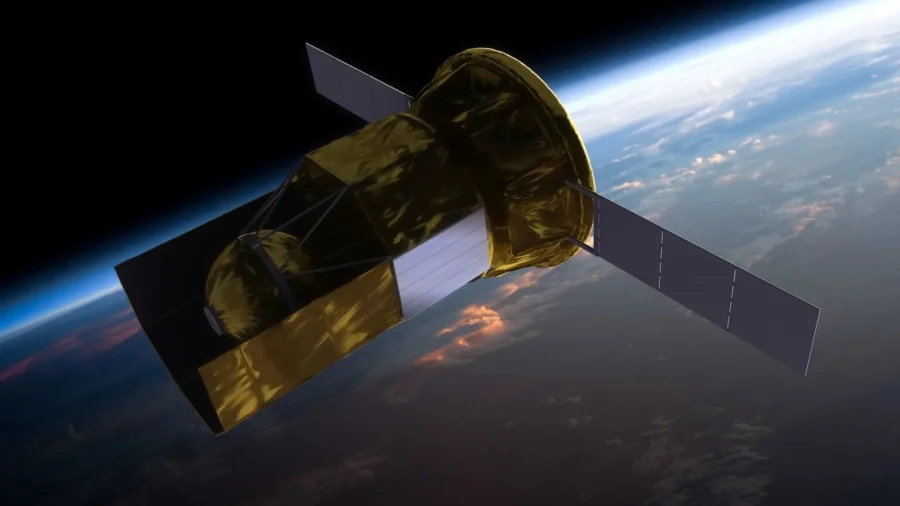
NASA is preparing for a new test mission for in-space refueling technology that will be used in future missions to the Moon, Mars and further afield. The mission called Liquid Oxygen Flight Demonstration, or LOXSAT, will test critical processes such as storing and transferring cryogenic fuels in microgravity, maintaining tank pressure and measuring the fuel level in low Earth orbit. New phase on the way to the Moon and Mars: Space refueling from NASALOXSAT stands out as a technology demonstration mission carried out by NASA together with Eta Space.
The payload, developed by Florida-based Eta Space, was integrated into Rocket Lab’s Photon satellite platform. The mission will be launched from Launch Complex 1 on the Mahia Peninsula in New Zealand with Rocket Lab’s Electron rocket. According to the calendar shared by NASA, the earliest date for the launch is July 17. The mission will last approximately nine months. During this process, LOXSAT will test a total of 11 different cryogenic fluid management technologies.
These technologies are among the basic parts of the infrastructure required to safely keep fuels stored at very low temperatures in space and transfer them to another vehicle. NASA states that the data obtained from these tests will be used in the development of fuel tanks that can be established in space in the future. Cryogenic fuels have an important place in deep space missions because they offer high efficiency.
However, these fuels need to be stored at very low temperatures. Accurate measurement of fluid behavior, tank pressure, heat exchange and fuel level in microgravity becomes much more complex than systems on Earth. The LOXSAT mission is therefore positioned not only as a satellite trial, but as a testing ground that will provide direct data for the logistics infrastructure of future Moon and Mars missions. In particular, four main topics will be tested in the mission: reducing evaporation loss in cryogenic fuels, fuel transfer, maintaining tank pressure and measuring the fuel level.
Each of these processes is critical to refueling in space. Cryogenic fuels can transition into the gas phase due to temperature changes. This situation causes an increase in pressure in the tank and some of the fuel may need to be thrown out to prevent damage to the systems. This loss turns into a serious planning problem in long-term missions. The structure NASA is working on paves the way for systems that will enable future spacecraft to receive fuel in Earth orbit and go to the Moon, Mars or more distant targets.
Large spacecraft use a significant portion of their fuel during launch to get into Earth orbit. For this reason, on-orbit fuel transfer has become a key technology, especially for heavy crewed vehicles and long-range exploration missions. The LOXSAT mission is part of the Cryogenic Fluid Management portfolio operated under NASA’s Space Technology Mission Directorate. There are more than 20 separate technology development activities in this portfolio.
The LOXSAT team includes teams from NASA’s Marshall Space Flight Center, Glenn Research Center and Kennedy Space Center. The mission was developed as one of the selected projects within NASA’s Tipping Point program. This program is carried out together with commercial companies to mature new technologies that can be used in space missions. In the case of LOXSAT, Rocket Lab provides both the spacecraft platform and launch service.
Eta Space is involved in the project as the company that developed the mission’s cryogenic fuel management payload. The technologies that LOXSAT will test are also important for the Artemis program. The new generation of landers and long-term space missions to be used in lunar landing missions go beyond the classical architecture in which fuel is filled and launched only on Earth. Fuel transfer in space and long-term cryogenic storage are among the main topics for the applicability of these mission architectures.
In NASA’s statement, it appears that LOXSAT is not a direct operational fuel station, but a technology demonstration mission. So the mission does not establish a full-scale operating fuel depot in space. Instead, it tests in orbit the storage, transfer, pressure management and measurement technologies required for the future installation of these warehouses.






Comments
You can write your views about this story. Comments may be moderated according to site settings.