
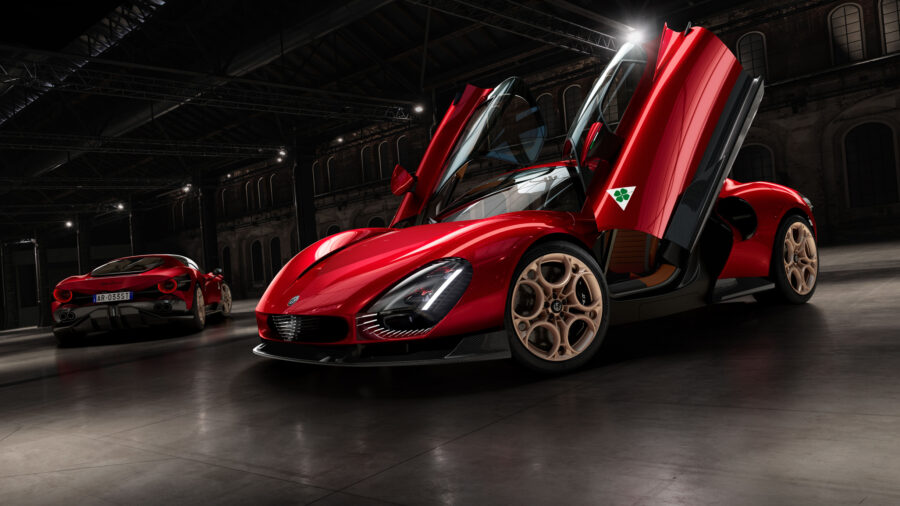
Alfa Romeo produced a special series by reinterpreting the 33 Stradale, which was the icon of the 1960s, considered one of the most beautiful cars of all time, and was produced using the infrastructure of Tipo 33, one of the legends of world motor sports.
The new 33 Stradale reflects the passion of the Alfa Romeo team to create a new project that can coincide with the history of the brand, as well as being the only one of its kind in the automotive world and among the Stellantis Group models. This special series, which is the opportunity of a lifetime for automobile lovers who have turned their passion into a profession, also represents the realization of a dream for the Alfa Romeo team.
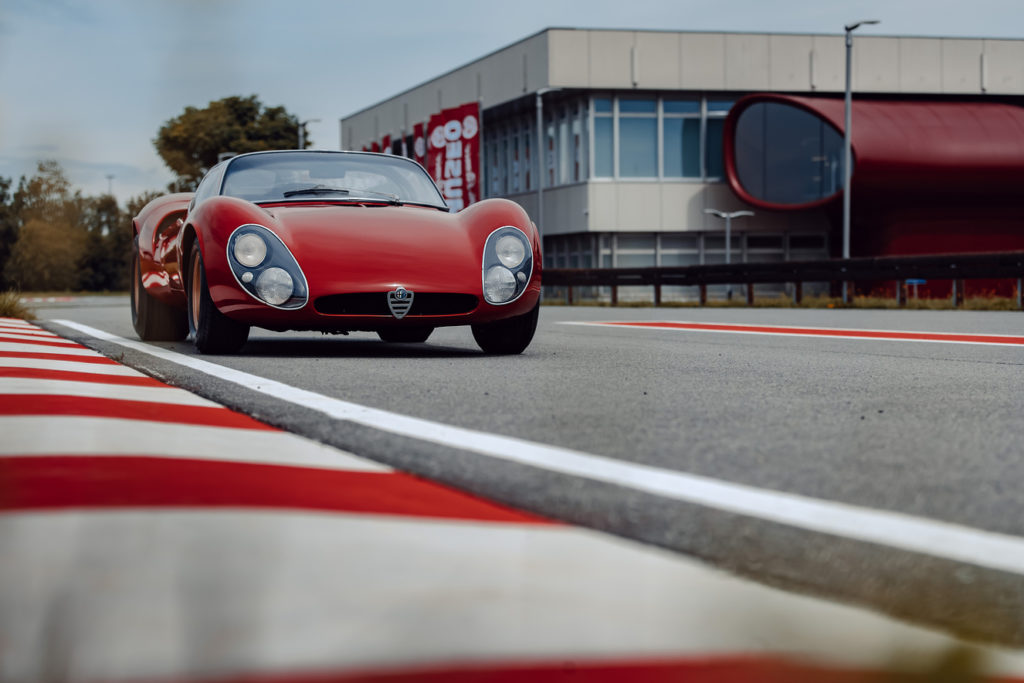
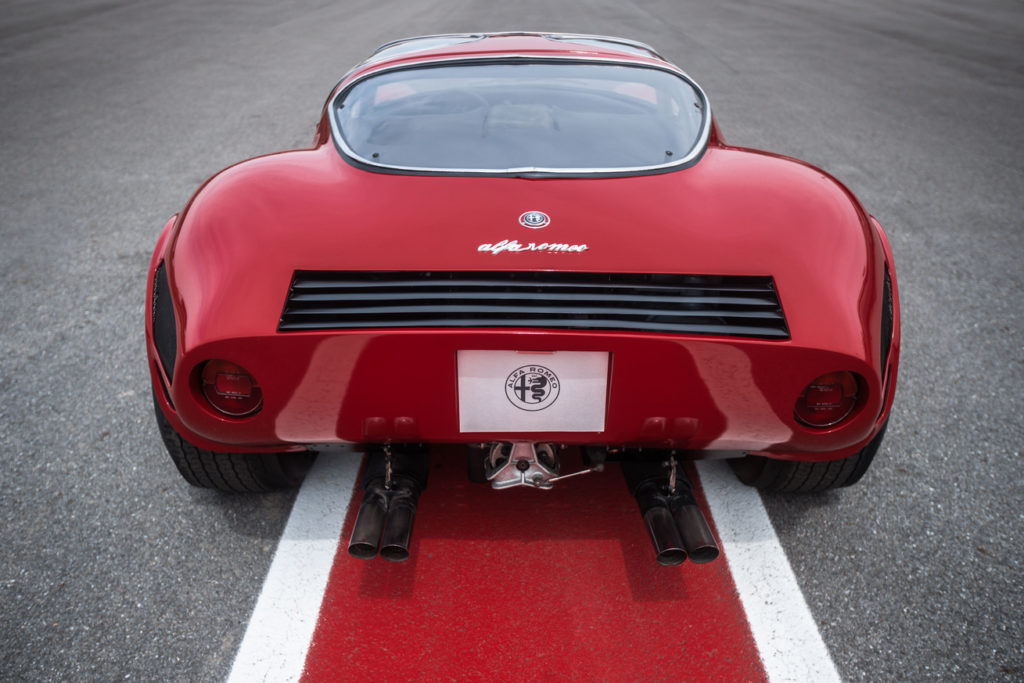
The new 33 Stradale, which salutes Alfa Romeo’s past and carries it to the future, is achieved by meticulously and respectfully reinterpreting the characteristic features of the 1967 model 33 Stradale, serving as a bridge between the internal combustion engines of the past and the electric future. Being a road car, the 33 Stradale also offers outstanding performance on the track; It also makes a difference by being designed without compromising comfort and ease of use.
Alfa Romeo CEO Jean-Philippe Imparato “With the new 33 Stradale, we wanted to create a car that reflects our past, serves the brand and will make Alfisti proud. Such a result could only be achieved thanks to the expertise, hard work and passion of our team, the support of management with a clear ambition to write new chapters in the brand’s future and full respect for the brand’s unique history. The new 33 Stradale is the brand’s first ‘fuoriserie’ car since 1969 and will not be the last, I promise.” he said.
Symbol of ‘necessary beauty’
Designed and produced by Alfa Romeo Centro Stile (Alfa Romeo Design Center), the new 33 Stradale emerged with the inspiration taken from the historic 1967 model and the main design elements of Alfa Romeo’s new style language, enriching its sculptural beauty. The exterior design features of the car reflect the perfect balance between proportions, volume and surfaces, thus becoming the symbol of Alfa Romeo’s ‘essential beauty’. At the front of the vehicle, which has a strong and muscular volume, the complex forms of the iconic shield and elliptical-based lights stand out. The profile of the vehicle has a dynamic and slim form with its “wing” type doors and two large air intakes on the sides. In addition, thanks to the positioning of the door hinges in the corners and the wide sunroof, the driver can enjoy a wide view similar to the cockpit of an airplane. While the ‘wild’ rear part of the vehicle is balanced with the curved front part, the height of the rear part is positioned in the middle of the ceiling, not at the level of the windshield as in other sports cars. It proves the aerodynamic efficiency of the vehicle by reaching a very low Cx value of 0.375 without any active system assistance.
The interior of the vehicle stands out with its minimalist design and materials designed to best integrate with the driving experience. In particular, the cockpit was designed with the aim of minimizing components that could distract the driver, as can be seen from the limited number of control buttons on the center console that have practical use while driving. Right in front of the driver, there is a screen with a 3D ‘telescope’ design that offers the driver a unique interaction opportunity. As in aircraft cockpits, the controls were located at different levels, on the low center console and on a higher plane, on the central lining on the inside of the roof. The interior is offered in two different equipment levels: ‘Tributo’ and ‘Alfa Corse’. Materials such as aluminum, carbon fiber, leather and Alcantara were used in the aviation-inspired instrument panel and central tunnel. Every detail has been designed to create a special and interesting environment, preserving the aesthetic and technical heritage of the 1967 model 33 Stradale.





Comments
You can write your views about this story. Comments may be moderated according to site settings.