
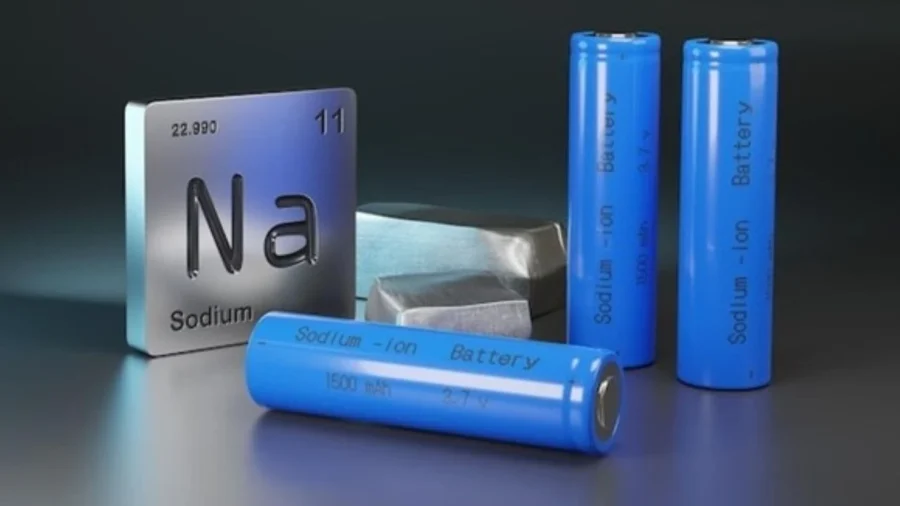
Summary in 10 SecondsCATL will supply 60 GWh sodium ion batteries to HyperStrong within three years. The deal stands out as the largest sodium ion battery order to date for energy storage systems. Sodium-ion batteries are based on a more abundant raw material than lithium. The financial value of the deal has not yet been disclosed. Sodium ion batteries, which have long been talked about as an alternative to lithium on the energy storage side, are now more visibly leaving the laboratory and pilot production limits behind.
The 60 GWh agreement signed between CATL and HyperStrong was one of the strongest steps that opened the door to the use of this technology in large-scale projects. The three-year cooperation directly concerns grid-scale energy storage systems rather than electric cars. So, the real issue is the growth of a new storage option based on lower cost and more common raw materials for renewable energy power plants, large battery fields and data centers with increasing need for uninterrupted power.
The alternative to lithium in energy storage is now entering a more serious field. The agreement signed by CATL and HyperStrong covers sodium ion batteries for energy storage systems. The total volume is 60 GWh and deliveries are planned to be spread over a three-year period. This scale shows that sodium ion technology is not only at the technical verification stage, but is starting to take on a more visible role in commercial projects.
The remarkable aspect of the agreement is not only the capacity. Partnership; It also covers technology research and development, product application and project implementation. Therefore, the issue is not just a simple cell supply; How to integrate sodium ion batteries into energy storage areas is also part of the work. Why is 60 GWh important? 60 GWh is a large volume on its own on the energy storage side. Additionally, this agreement represents approximately half of the total volume of energy storage batteries delivered by CATL in 2025.
Therefore, the agreement explains that sodium ion batteries have moved from being a usable technology in the future to a real order scale. CATL states that this cooperation shows that critical problems in the mass production chain of sodium ion batteries have been overcome. It is reported that the company has made progress especially in areas such as energy density, foaming in production and humidity control. These are among the manufacturing issues seen as critical for sodium ion technology to move from the laboratory to the field.
Where is the advantage of sodium ion batteries? Sodium ion batteries use sodium instead of lithium as the charge carrier. The fact that sodium is more widely available and has less price volatility on the raw material side makes this technology especially attractive for large-scale energy storage projects. The priority here is not maximum energy density, as in electric cars; cost, long life and reliable operating range.
On the sodium ion cell side developed by CATL for energy storage, a large format structure of over 300 Ah is mentioned. The technical information shared highlights an energy density of approximately 160 Wh/kg, 97 percent system energy conversion efficiency, a lifespan of over 15,000 cycles with 80 percent capacity conservation, and an operating range between -40 degrees and 70 degrees. These values are especially important for fixed energy storage applications.
Because in grid-scale systems, the battery’s operation with a high number of cycles for years plays a direct role in the return on investment costs. The wide temperature range also provides flexibility for projects to be installed in different climatic conditions. Compatibility with existing infrastructure can be another advantage. CATL’s sodium ion cells have a structure that is stated to be designed in the same dimensions as the company’s lithium ion products.
This detail is important in terms of using the new technology in harmony with existing supply chains and installation infrastructure. For energy storage integrators, this could mean making the switch without installing a completely new system architecture. HyperStrong and CATL already have a broader energy storage collaboration. The 10-year strategic agreement, announced in November 2025, established a longer-term framework that included system, capital and operation topics as well as cell supply.
The new sodium ion agreement is a more concrete and technology-oriented leg of this cooperation. Sodium ion batteries should not be expected to eliminate all areas of use of lithium ion batteries in the short term. However, in areas such as energy storage, where weight and volume limits are not as strict as automotive, the advantages of raw material access and cost may be met more quickly.



Comments
You can write your views about this story. Comments may be moderated according to site settings.