
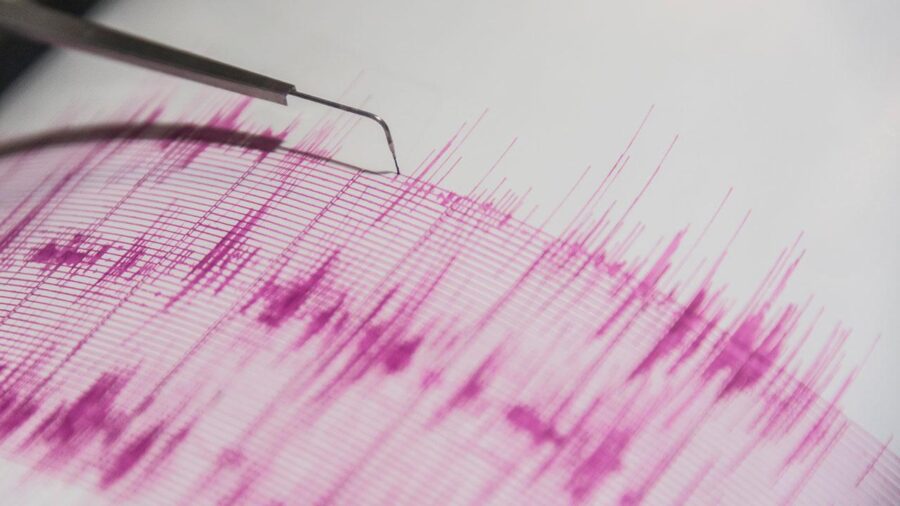
Today, at 04.26, a 4.9 magnitude earthquake occurred in the Saimbeyli district of Adana, at a depth of 8.6 kilometers underground. According to AFAD data, while there was no loss of life or property in the earthquake, citizens in the region experienced a short-term panic. While many experts made evaluations on the subject after the earthquake, 9 Eylül University Earthquake Research and Application Center Director Prof.
Dr. Hasan Sözbilir also made statements. Sözbilir stated that the fault where the earthquake occurred may continue to produce medium-sized earthquakes. EARTHQUAKE ACTIVITY CONTINUES Prof. Dr. Hasan Sözbilir stated that the earthquake occurred on the Savrun Fault in Saimbeyli district and said that this fault was one of the fault systems that triggered the February 6 earthquake disaster. Stating that most of the energy accumulated on the fault has been released due to the aftershock activities that have been going on for three years, Sözbilir noted that the earthquake activity continues.
Sözbilir, a member of the AFAD Earthquake Science Board, stated in his statement that the earthquake was also felt in surrounding provinces such as Kahramanmaraş, Osmaniye, Kayseri and Niğde. Sözbilir stated that the epicenter of the earthquake was located near the southwestern segment of the Savrun Fault, and that this fault started from the eastern end of the Çardak Fault, which broke in the second main shock of the February 6 earthquake disaster, and passed through the south of Göksun and extended to Kozan and Kadirli districts.
ENERGY MAY CONTINUE DRAINING Pointing out that there were many earthquakes reaching up to 4.9 magnitude in the three years after the Kahramanmaraş earthquakes, especially in the northeastern segment of the Savrun Fault, Sözbilir said: “This shows that the Savrun Fault, with its length exceeding 60 kilometers, is an active fault and is an important seismic source for the region. It is understood that the fault has the potential to produce medium-sized earthquakes.
However, under normal conditions It is considered that a large part of the accumulated energy on the Savrun Fault, which has the ability to produce devastating earthquakes up to magnitude 7 when completely broken, has been discharged due to the aftershock activity that has developed in the last three years. “This development confirms that the Savrun Fault was triggered by the February 6 earthquake disaster and continues to release the accumulated energy through the numerous earthquakes that have occurred since then.”





Comments
You can write your views about this story. Comments may be moderated according to site settings.